Four days into the Artemis II space mission, the crew captured a stunning photo of the far side of the moon.
The image, which features the Orientale Basin, “marks the first time the entire basin has been seen with human eyes,” according to NASA.
History in the making
In this new image from our @NASAArtemis II crew, you can see Orientale basin on the right edge of the lunar disk. This mission marks the first time the entire basin has been seen with human eyes. pic.twitter.com/iqjod6gqgz
— NASA (@NASA) April 5, 2026
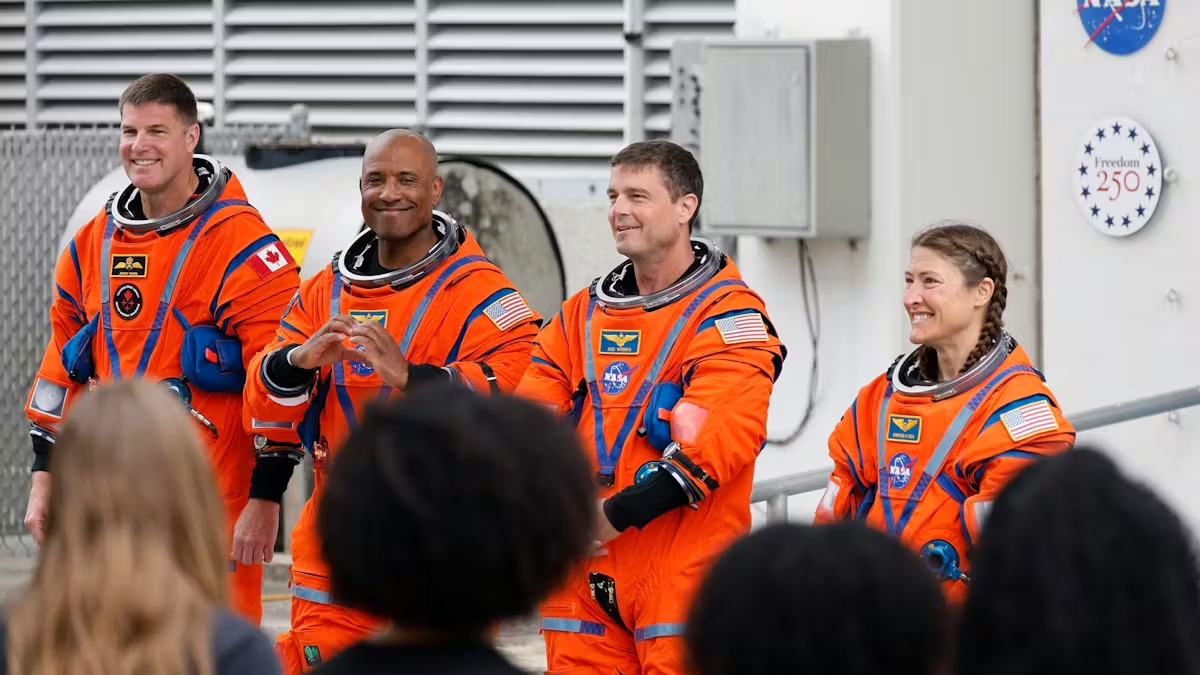
The photo of the moon was released just days after the crew of the Artemis II — Reid Wiseman, Victor Glover, Christina Koch, and Canadian Space Agency astronaut Jeremy Hansen — shared spectacular images of Earth.
These two images were taken by @astro_reid only minutes apart. The stark difference is the result of camera settings. In the first, a longer shutter speed let in much more light from Earth, while the shorter shutter speed in the second emphasizes our planet’s nighttime glow. pic.twitter.com/4H5gFymlcl
— NASA (@NASA) April 3, 2026
While Artemis II will not touch down on the lunar surface, the mission lays the groundwork for more launches. Artemis III is scheduled to launch in 2027 and will test “rendezvous and docking capabilities between Orion and commercial spacecraft needed to land astronauts on the Moon.” Artemis IV is scheduled to launch in 2028, and will finally bring mankind back to the surface of the moon after more than 50 years.
On Sunday, NASA posted a “last look” at Earth before the Artemis II crew reach the moon.
One last look at Earth before we reach the Moon.
This view of the Earth was captured on April 5, the fourth day of the Artemis II mission, from inside the Orion spacecraft. The four astronauts will reach their closest approach of the Moon tomorrow, April 6. pic.twitter.com/z2NJUGWkKc
— NASA (@NASA) April 5, 2026
“Artemis II is a test flight, and the test has just begun. The team that built this vehicle, repaired it, and prepared it for flight has given our crew the machine they need to go prove what it can do,” said NASA Associate Administrator Amit Kshatriya. “Over the next 10 days, Reid, Victor, Christina, and Jeremy will put Orion through its paces so the crews who follow them can go to the Moon’s surface with confidence. We are one mission into a long campaign, and the work ahead of us is greater than the work behind us.”
NASA’s long-term plan is to create a permanent American presence on the moon by building bases. Additionally, by the end of 2028, NASA is scheduled to launch the unmanned “Space Reactor‑1 Freedom, the first nuclear powered interplanetary spacecraft,” to Mars.