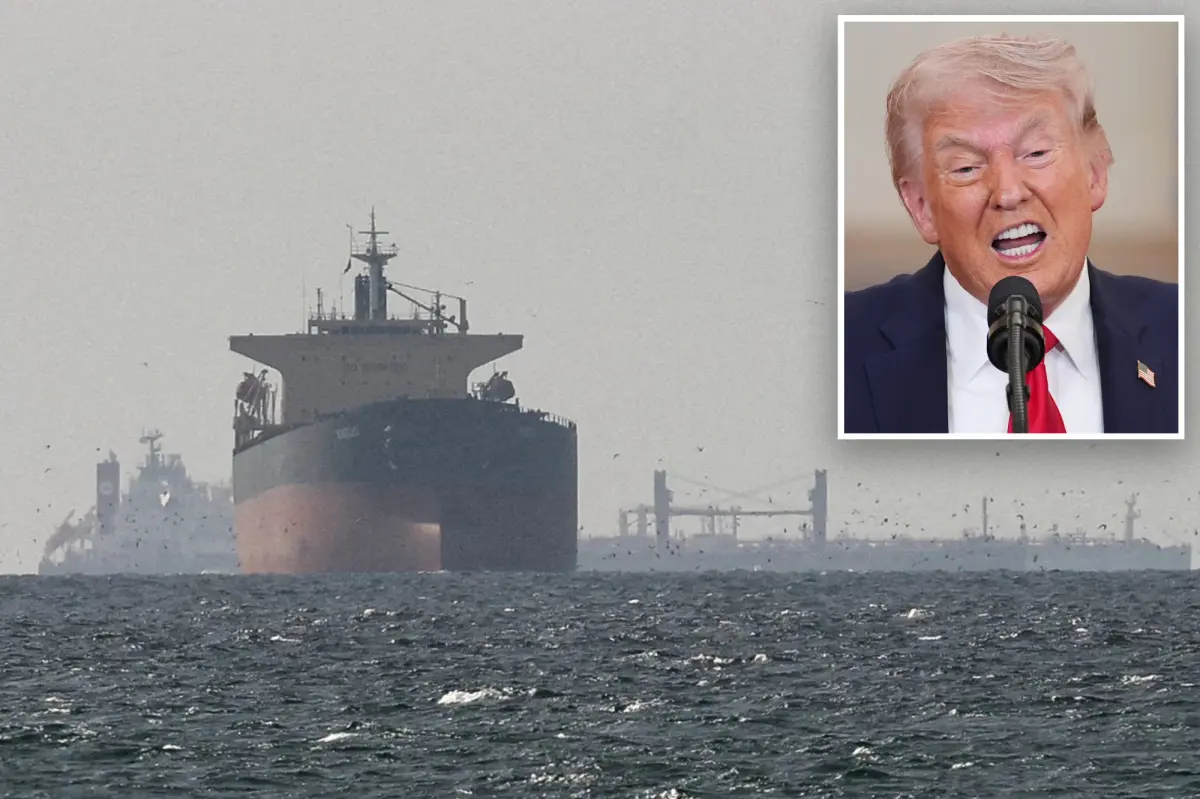
Oil prices seesawed Monday morning as the next stage of the Iran war remained unclear — with President Trump threatening heavy attacks but reports indicating regional mediators are working on a 45-day ceasefire.
Brent crude prices had risen 0.2% to $109.19 a barrel as of 9:45 a.m. ET. West Texas Intermediate jumped 1.2% to $112.86 after both benchmarks regained losses earlier in the morning.
National average gasoline prices – which typically lag behind energy supply shocks by a few weeks – continued to climb, hitting $4.12 a gallon.
President Trump on Sunday warned Iran that it is facing a new deadline of by 8 p.m. ET Tuesday to reopen the Strait of Hormuz – a vital maritime route for 20% of the world’s oil – or face brutal attacks on its infrastructure.
“Tuesday will be Power Plant Day, and Bridge Day, all wrapped up in one, in Iran. There will be nothing like it!!! Open the F–kin’ Strait, you crazy bastards, or you’ll be living in Hell – JUST WATCH! Praise be to Allah,” the commander-in-chief wrote in a Truth Social post.
Hours later, Iran vowed “much more devastating and widespread” retaliation if Trump follows through with his threat to ramp up strikes.
Trump said last Wednesday that the US would leave Iran in two to three weeks, but investors have been concerned that the exit could come without a deal to reopen the strait.
Iran’s effective blockade of the route has caused the worst-ever energy supply disruption – with an estimated 1 billion barrels to be lost by the end of the month, according to TD Securities.
The US, Iran and regional mediators have been discussing a deal for a potential 45-day ceasefire that could lead to a permanent end to the war, Axios reported on Sunday night.
Source familiar with the talks acknowledged getting a deal before Trump’s deadline was a long shot, but cast it as a last chance to prevent a major escalation of the conflict.

Since the US and Israel launched air strikes on Iran on Feb. 28, the International Energy Agency has approved a record release of 400 million barrels of oil from its strategic reserves. Trump ordered the release of 172 million barrels from the US Strategic Petroleum Reserve.
But there are not enough reserves in the world to make up for the vast amounts of oil that typically traverse the strait, experts say.
Analysts have also warned that strikes on key energy facilities in the Middle East could keep oil prices elevated even if the war ends soon, since it will take significant time and money to repair damages.
Economists have cautioned that energy shocks tend to ripple across consumer prices, reheating fears of inflation and interest-rate hikes – though Fed Chairman Jerome Powell has said there is no need to raise rates yet.