Listen to this article
Estimated 4 minutes
The audio version of this article is generated by AI-based technology. Mispronunciations can occur. We are working with our partners to continually review and improve the results.
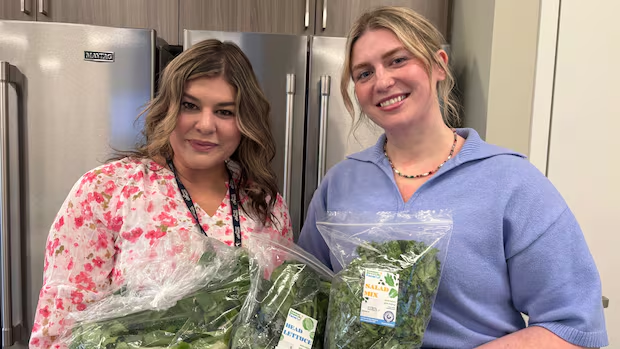
Most people go to their health clinic to get medicine or tests, but in New Glasgow, N.S., the Highland Health Home and Learning Centre is also offering its patients some vegetables.
The initiative is a pilot program pushing the idea that prevention is also a cure.
“They’re shocked sometimes that they receive free product,” said Brittany Currie, a social worker at the centre who came up with the idea.
“I feel really rewarded that we’re able to give back to people.”
Currie said with rising prices, she became increasingly worried about food insecurity in the area.
A few months ago, she heard about Summer Street Farm, a local non-profit organization that hires people with diverse abilities. One of its latest initiatives is a greenhouse where farmers grow greens for the food bank.
Currie reached out to ask if they could share some of their donations with the clinic.
Summer Street agreed to a 12-week pilot, which is being funded by a donation from Jamie MacGillivray, a local philanthropist.
“Food is medicine,” said Cathy Munro, the farm operations manager at Summer Street. “This is a really special opportunity to help those who can take more control over their own health through food.”

Highland now receives 20 bags of greens a week, stuffed with things like spinach, bok choy and kale.
The health centre offers some to families with kids 24 and under, which Currie said is the largest demographic for food insecurity in Nova Scotia.
They also give out recipes designed by their dietitian.
“We have return patients who don’t actually have appointments, and they’ll continue to come back every week just to pick up our greens.”
Haley Kirby, the primary health-care co-ordinator at Highland Health, is tracking the data and interviewing patients after they receive their food, hoping to build a case to justify continuing the program after the pilot wraps up at the end of April.
She said so far, they’ve helped about 170 people or 40 families.
“It’s hard to afford groceries period, but healthy groceries are another thing altogether,” Kirby said of the need.
“I do think this has a lot of potential to create healthy habits in young people and young families and just the culture of healthy eating overall.”
Kirby said other clinics have been asking about the program, and she sees the potential for it to spread provincewide.
Currie agrees.
She said a benefit of the program is that it reduces the stigma of going to a food bank. She pointed out it’s not tied to any income restrictions, which can also prevent people from accessing help.
“Nutritional security for me is really important to me for the prevention of chronic disease as well as when we look at bone and teeth density. We also know in Nova Scotia that children’s teeth decay is one of the leading causes for chronic diseases in children so offering something healthy is my dream to continue.”

At Summer Street Farm, the partnership has been something to celebrate.
Munro said the initiative isn’t just helping patients at the clinic.
“Our farmers just feel so much pride in the work that their hands are physically feeding people. I see it every day — just the joy that they have in their jobs.”
MORE TOP STORIES