You have full access to this article via your institution.
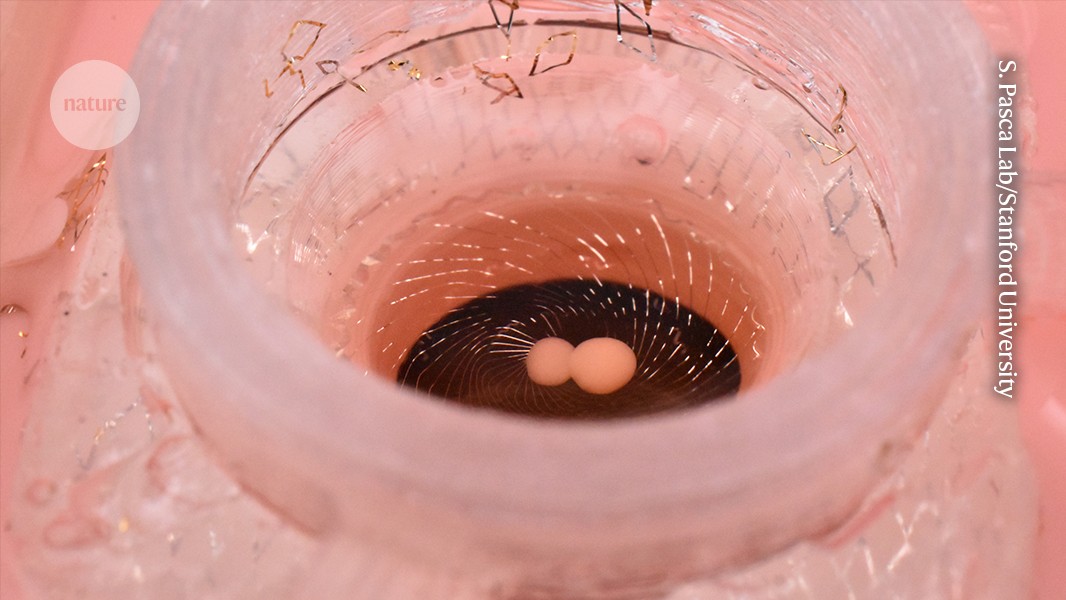
Tiny spheres of brain-like structures called organoids can be used to study neurodevelopmental conditionsCredit: S. Pasca Lab/Stanford University
The ‘brain in a jar’ is one of science fiction’s most enduring tropes. Stripped of its body but not of its will, the isolated brain is most often portrayed as a malevolent force, able to impose its evil intentions on the world through proxies.
This is implausible fantasy. But, on a smaller scale and in the real world, researchers can now make tiny, functioning models of parts of the brain known as organoids. The science has come on in leaps and bounds in little more than a decade, as a News Feature in this week’s issue lays out. Brain organoids will be a force for good — for fundamental research, medicine and helping us to understand what makes us human. But as neuroscientists strive for greater improvements to better mimic particular brain systems, ethical and social considerations of the work are becoming apparent that require serious — and prompt — attention. Efforts to start public discussions should be welcomed and supported, so that appropriate guidelines are in place before they are needed.
Mini models of the human brain are revealing how this complex organ takes shape
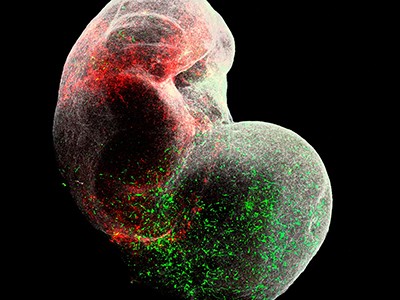
Brain organoids are tiny spheres of simple brain-like structures that are made from human stem cells. They self-organize in a dish much as they would during development and provide a much-needed source of research material. Access to human brain tissue is otherwise scarce; other animals make poor substitutes and conventional 2D cultures of brain cells cannot address issues of how the brain develops and functions in its accustomed 3D space.
Improved techniques have allowed organoids to be made more reliably and endowed with ever-greater complexity, representing several brain areas. As a result, neuroscientists are slowly beginning to piece together the vast and intricate sequence of molecular steps that underlie human brain development in the womb. Researchers are using human brain organoids to help understand, and even develop treatments for, a range of genetic and neurodevelopmental conditions.
But, as useful as brain organoids are, they are not free of ethical challenges. Human brain organoids obviate the need for a lot of animal research, but it can be difficult to keep them functioning optimally in culture for a sustained period of time. Some scientists transplant them into the brains of living rodents, which provide supportive and more natural environments for longer-term development. Further research will be needed to determine the effects of human and rodent brain tissues interacting in this way. There is a lot of unease among researchers about breaching the boundary between humans and other animals for brain tissue. Guidelines for how such studies should be done and where the appropriate ethical boundaries lie must be determined now.
The age of animal experiments is waning. Where will science go next?
Perhaps most crucially for this field is the concern that emergent properties, such as consciousness, might arise in complex organoids. So far, there has been no evidence that any form of sentience could emerge, but researchers would like this to be monitored continuously.
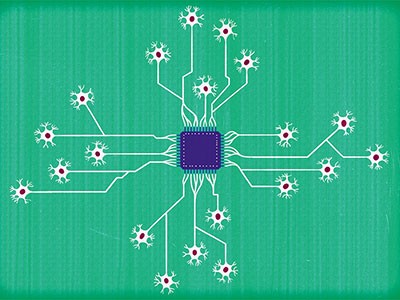
There are also other ethical considerations. Could it be possible to integrate brain organoids with computers, and what might the consequences of that be? Would donors of the cells used to make organoids be able to specify what research their tissues could be used for? Even with concerns that seem far-fetched now, the sooner guidelines are in place, the better.
Some of these worries echo those around emerging genetic-engineering technologies in the 1970s that were poised to revolutionize research in the life sciences. Fears that the methods could pose unforeseen risks to people’s health and the environment led molecular biologists to impose a moratorium on their own work. The pause gave researchers time to prepare for a conference involving all stakeholders to assess the potential dangers of the technologies and suggest safeguards. That meeting, held at the Asilomar Conference Grounds in Pacific Grove, California, in 1975, prompted the US National Institutes of Health and similar authorities in other countries to create guidelines that enabled research to proceed safely and fruitfully.
The computers that run on human brain cells
The concerns about human brain organoids do not warrant a moratorium, not least because researchers are already actively engaging in discussions. A group of scientists organized a conference last November to discuss how to handle the issues, together with ethicists, lawyers, patient advocates and others. The group pointedly chose the same Asilomar venue.
The conference organizers plan to publish a report from the meeting later this year. In an article published just before the conference, some of the attendees called for a new or existing international entity to commit to long-term, regular monitoring and reporting of advances of organoid research, organization of public outreach and provision of guidelines for future studies (S. P. Paşca et al. Science 390, 574–577; 2025).
This is a start, although the details of how this all might work are scant. Finding a way to support and sustain a dedicated international effort over decades could be tough, but the authors argue that occasional committees would be insufficient. The start of discussions is a step in the right direction, but developments must not fall further behind the extraordinary pace of advances in organoid research. Without winning the public’s confidence for this emerging technology and how it is regulated, the powerful brain-in-a-jar image could easily drive unwarranted fear and opposition.