As peace talks between America and Iran fell apart over the weekend, President Trump has called for the US military to take control of the Strait of Hormuz and clear the water of Tehran’s mines.
The strait, which oversees 20% of the world’s oil transports, has remained closed since the war began on Feb. 28, with Iran filling the passage with deadly, underwater mines.
To clear the waters, the US will tap its own navy and that of allied nations to deploy minesweepers and clear the Strait of Hormuz to resume global trade, Trump said Sunday.
“We have minesweepers there now,” Trump told Fox News’ “Sunday Morning Futures.”
“We have highly sophisticated underwater minesweepers, which are the latest and the greatest, but we’re also bringing in more traditional minesweepers,” he added.
“I understand the UK and a couple of other countries are sending minesweepers. A lot of countries don’t have minesweepers.”
US Central Command (CENTCOM) said operations to clear the Strait of Hormuz began on Saturday after two American destroyers passed through the waters for the first time since the war began.
The US Navy will be deploying “underwater drones” to locate Iran’s mines and take them out “in the coming days,” CENTCOM added.
The US military has several underwater UAVs capable of traversing the strait, including the 1,7000 pound Knifefish drone, developed by General Dynamics.
“The Knifefish UUV provides the mine warfare commander with enhanced mine-hunting capability by detecting, classifying and identifying both buried mines and mines in high clutter environments,” according to the company.
The navy is also equipped with the Mod 2 Kingfish, a missile-shaped drone outfitted with sonar that scans the ocean floor for potential mines.
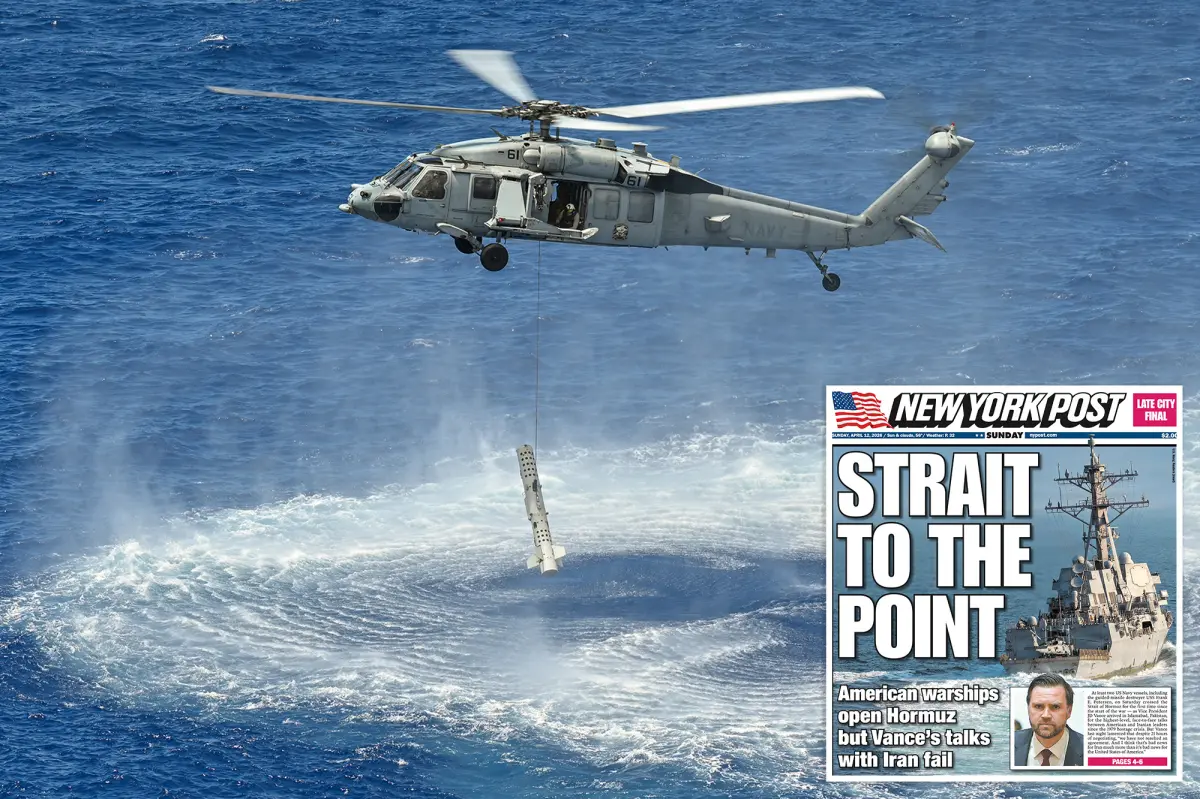
Along with the underwater drones, the navy also has the MH-60S helicopters, which are equipped with the Airborne Laser Mine Detection System (ALMDS) and Airborne Mine Neutralization System (AMNS).
The systems allow the choppers to quickly locate underwater mines in the area and send out small warheads to detonate the explosive, according to the Navy.
“Today, we began the process of establishing a new passage and we will share this safe pathway with the maritime industry soon to encourage the free flow of commerce,” CENTCOM commander Adm. Brad Cooper said in a statement.
More than 2,000 ships have been stranded near the Strait of Hormuz since the war began, with only a handful of boats crossing each day after negotiating with Iran.
Trump slammed the move as “world extortion,” vowing to open the waterway and use US destroyers to escort commerce ships threatened by Iran’s retaliation.