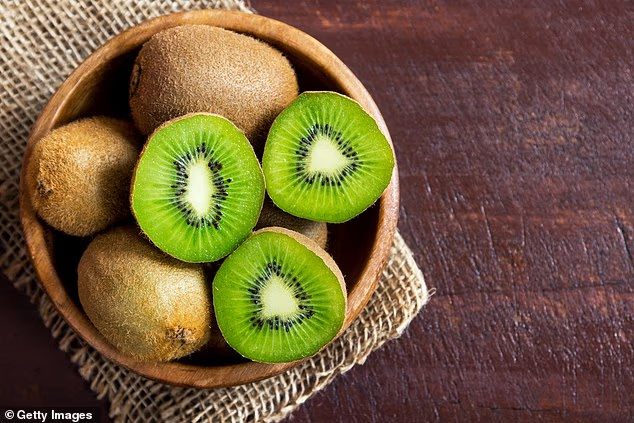
Whether they’re sliced into fruit salads, blended into smoothies or scooped straight from their furry skin with a spoon, kiwis have become a staple in many households.
They’ve picked up a reputation as a slightly quirky fruit, thanks mostly to their fuzzy exterior, and are often overshadowed by more common options like apples or bananas.
In recent years, however, kiwis have gained traction in wellness circles, increasingly promoted as a nutrient-dense choice with a surprising range of health benefits – they more Vitamin C than oranges, for example.
Unlike many sweeter fruits, they strike a healthy balance between their tartness and natural sugars, and they’re packed full of fibre and antioxidants. So their bright green flesh, which also comes in golden varieties, is functional and distinctive – especially when combined with the skin.
‘Kiwis are the unsung heroes of the fruit bowl,’ says dietitian Nichola Ludlam-Raine, author of How Not to Eat Ultra-Processed.
‘I often tell my clients to aim for one to two a day, as they’re packed with fibre, Vitamin C and gut-friendly compounds that support bowel regularity and overall health, too.’
With health influencers and gurus alike hailing the small but nutrient-packed furry fruits, kiwis have been nudged into the conversation around so-called ‘functional foods’ – those everyday food types that offer go above and beyond basic nutrition.
But are kiwis actually as healthy as they’re made out to be? We asked the experts.
One kiwi contains nearly a tenth of your daily recommended fibre intake
What are the health benefits of kiwi fruit?
Nutritionally speaking, kiwis are a great all rounder.
Firstly, they won’t have much of an impact on your calorie count, with one medium sized fruit providing roughly 40 or 50 calories, around just two per cent of the 2,000 to 2,500 calorie daily guideline for adults, making them a very light addition to a balanced diet.
They are naturally low in fat, coming in way under 1g per fruit, a fraction of the NHS’ daily fat guideline of 20g for women and 30g for men.
And despite their small size, each fruit contains around 2 to 3g of fibre. Have a couple per day and you’ll be making a solid contribution to your 30g daily fibre recommendation.
Ludlam-Raine says: ‘One kiwi a day contributes to around 10 per cent of the NHS’ recommendation of 30g fibre per day, while remaining a low-calorie choice.’
Carbs-wise, you’re looking at 10 to 12g per fruit, mostly from natural sugars.
Kiwis are also particularly rich in Vitamin K, Vitamin E, potassium and antioxidants.
One kiwi can provide a significant amount of Vitamin C, which, depending on the fruit itself, can even be more than the full daily requirement – or what you’d get from eating a (much bigger) orange.
Vitamin C is essential for immune function, plus it helps the body absorb iron and plays a role in collagen production for skin, joints and tissues.
It’s also one of the main antioxidants which help to protect our cells from damage.
Green vs gold kiwis, what’s the difference?
Overall, it’s less about which is ‘better’ and more about preference and what you’re looking for nutritionally.
As anyone who’s a regular at most supermarkets will know, green kiwis are the more common variety. They have more tang, higher fibre content and slightly lower sugar levels.
Gold kiwis, on the other hand, are sweeter, less acidic and have a smoother, thinner skin. Nutritionally, both contain high levels of Vitamin C, but gold kiwis often contain higher amounts per serving.
Green kiwis are the go to for digestion due to their fibre and enzyme content.
Can you eat kiwi skin – and is it safe?
Last year, Wednesday actress Jenna Ortega sparked debate when she shared a social media video of herself eating a kiwi, chomping down on its fibrous brown skin as if it was an apple.
She wasn’t just doing it for ‘likes’ – kiwi skin is safe to eat and actually boosts the fibre content of the fruit significantly.
As well as a good helping of fibre, which contributes to gut health and digestion, the skin also contains additional antioxidants and can increase the fruit’s total fibre intake by up to 50 per cent.
However, for some, the fuzzy texture of green kiwis can be off-putting and those with sensitivities may find it irritates their mouth. If you find that texture is an issue, hunt down some gold kiwis – they’re easier to eat whole due to their smoother skin.
A key point to note here is that washing the fruit thoroughly is essential to remove pesticides or dirt.
How many kiwis can you eat a day?
Kiwis may be small, but their size belies their powerhouse health benefits.
Not only do they support immune function, digestion and skin health thanks to their high vitamin C and antioxidant content, but they also provide fibre and potassium. Both of these contribute to heart health and normal bodily function.
Expert Ludlam-Raine says: ‘One to two kiwis a day is a sensible, evidence-based amount to gain benefits without overdoing fruit sugars.’
The amount suggested by our expert helps contribute to fibre and micronutrient targets without adding excessive sugar – or calories.
As with most guidance around healthy food, consistency helps a lot more than quantity.
Can kiwis help with constipation? Gut health benefits explained
This is where kiwis come into their own. The fruit is well known for supporting digestion, largely due to their fibre and a natural enzyme called actinidin.
This enzyme is adept at breaking down proteins – such as those found in yoghurt, cheese, fish and raw eggs – making the digestive process more efficient. So having a kiwi as dessert after a protein-heavy meal can help you digest it better.
Studies have shown that eating one to two kiwis daily may also help relieve constipation and improve bowel regularity.
In October last year, new dietary guidelines drawn up by experts at King’s College London and endorsed by the British Dietetic Association named kiwifruits as a natural way to beat constipation, along with other roughage-rich staples such as rye bread.
After analysing data from 75 clinical trials, the researchers challenged long-standing assumptions about constipation, overturning some familiar home remedies while singling out others as genuinely effective.
They found that eating two to three of the fruits a day for at least four weeks led to measurable improvements in bowel movement frequency.
Can kiwis help you sleep better?
There is some evidence from a small study suggesting kiwis may support better sleep, largely due to their serotonin content and antioxidant profile.
Serotonin plays a role in regulating our sleep cycles, which might explain the effect.

Gold kiwis have a less hairy skin and slightly sweeter
Ludlam-Raine says: ‘Eating two kiwis before bed has been linked to improved sleep quality in small studies, although more research is needed.’
That said, the bottom line is, if you’re having trouble sleeping, kiwis are not going to be a miracle cure. But they are a low-risk experiment worth trialing.
Worst-case scenario, you’ve had a healthy pre-bed snack. Best case, you may sleep a bit deeper.
Is kiwi fruit good for weight loss?
While they’re not fat burners, kiwis can support weight loss practically. They’re great allies for appetite management, with the fibre content especially, making them relatively filling.
Their natural sweetness can also keep sugar cravings under control without pushing your calorie intake too high.
If you’re working within daily calorie guidelines, swapping out things like this can compound over time, which in turn can aid the weight loss process.
Ludlam-Raine says: ‘While no food directly ‘boosts’ metabolism significantly, kiwis support weight management indirectly through fibre, hydration and nutrient density, helping regulate appetite and energy intake.
‘Kiwis can support weight management as they are low in calories but high in fibre, which helps you feel fuller for longer. They’re a great alternative to more calorie-dense snacks.’
What foods should you pair kiwis with for maximum nutritional benefit?
Perhaps their most potent pairing is with foods rich in iron. This is due to their vit C content enhancing iron absorption. So chickpeas, lentils and pumpkin seeds, and oats – with your morning porridge, for example – are ideal.
Ludlam-Raine’s nutritional expertise comes into play here. ‘Pairing kiwi with iron-rich plant foods (like oats, nuts or spinach) can enhance iron absorption thanks to its Vitamin C content,’ she says.
‘Combining it with protein sources like yoghurt can also support satiety and balanced blood sugar levels.
‘My go-to supper for patients struggling with constipation though is always one to two kiwis with a pot of live yoghurt or kefir and one to two tablespoons of linseeds on top.’
Does eat kiwi interfere with any medications?
Generally, kiwis are safe, but there are a few medical considerations – especially for those who’ve been prescribed blood thinners.
Their Vitamin K content may interact with medications like warfarin, although levels are not as high as in leafy greens. That said, it’s always best to check with a healthcare professional first if you’re taking blood-thinners.
Interestingly, latex (which is made from rubber trees) contains proteins that have a similar structure to those found in kiwis.
If you have a latex allergy, there’s potential for your immune system to mistake kiwi proteins for latex, triggering an allergic reaction. This is commonly known as latex-fruit syndrome.