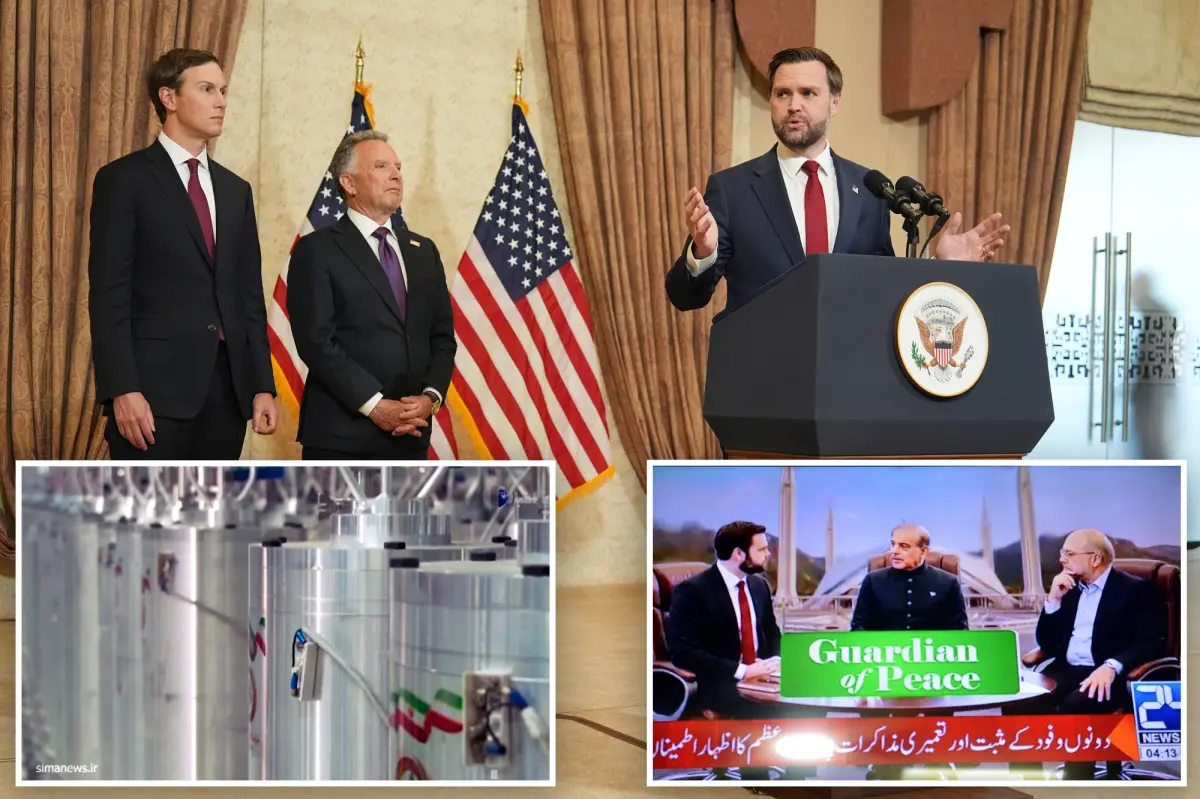
WASHINGTON — The US asked Iran to suspend its uranium enrichment program for at least two decades during weekend cease-fire negotiations in Pakistan, a source familiar with the talks told The Post Monday.
“The United States suggested 20 years at a minimum with all kinds of other restrictions,” said the person, apparently indicating that the White House had budged on what President Trump had previously described as a red line for his administration.
The US offer was first reported by Axios.
Discussions led by Vice President JD Vance broke up in Islamabad after 21 hours with no agreement announced — though President Trump claimed Monday that Tehran was ready to try again.
“We’ve been called by the other side,” he told reporters outside the Oval Office. “They’d like to make a deal very badly, very badly.”
Trump acknowledged that the future of Tehran’s nuclear program was the sticking point, insisting: “Iran will not have a nuclear weapon. And we agreed to a lot of things, but they didn’t agree to that. I think they will agree to it. I’m almost sure of it. In fact, I am sure of it.
“If they don’t agree, there’s no deal. There’ll never be a deal. Iran will not have a nuclear weapon, and we’re going to get the [uranium] dust back. We’ll get it back. Either we’ll get it back from them or we’ll take it.”
The White House later confirmed the US and Iran were in “continued engagement” with “forward motion,” without elaborating.
With the war in its seventh week, economic pressure is building on both nations. Oil prices briefly surged back above $100 per barrel after the US Navy began a blockade of Iranian ports on the Strait of Hormuz, while regular gas prices remain above $4.12 per gallon on average nationwide.
But Tehran is also feeling the heat. With the strait blocked, Iran has lost its main route to distribute oil and receive cargo.
Only 14 vessels went through the strait on both Saturday and Sunday as the Pakistan peace talks collapsed and Trump issued the blockade order, according to maritime data firm Kpler.
Oil accounts for more than half of Iran’s exports and almost all of its government’s income.
The blockade is a “significant pressure tactic designed to choke the regime. It is a natural step before something more serious,” Jason Greenblatt, White House Middle East envoy in the first Trump administration, told The Post.
Trump “needs to see a real, credible offer on uranium enrichment with Iran having no chance for a nuclear weapon. There is little to no flexibility from President Trump on that point,” he added.
Iran accused the American president of “piracy” in response to the blockade, with parliament speaker Mohammad Bagher Ghalibaf mocking American consumers on social media.
“Enjoy the current pump figures,” he wrote on X. “With the so-called ‘blockade’, Soon [sic] you’ll be nostalgic for $4–$5 gas.”
Meanwhile, America’s longtime European allies were staying away from the blockade, with the leaders of Britain and France making clear their countries would not be involved.
“We are not supporting the blockade,” British Prime Minister Keir Starmer told BBC Radio, adding that London was “not getting dragged in” the conflict.
And French President Emmanuel Macron announced Monday that his nation and the United Kingdom would host talks about reopening the Strait of Hormuz via a “strictly defensive mission.”
“We will, together with the United Kingdom, organize in the coming days a conference with countries willing to contribute alongside us a peaceful multinational mission aimed at restoring freedom of navigation in the strait,” Macron said in a statement shortly before the US blockade took effect.