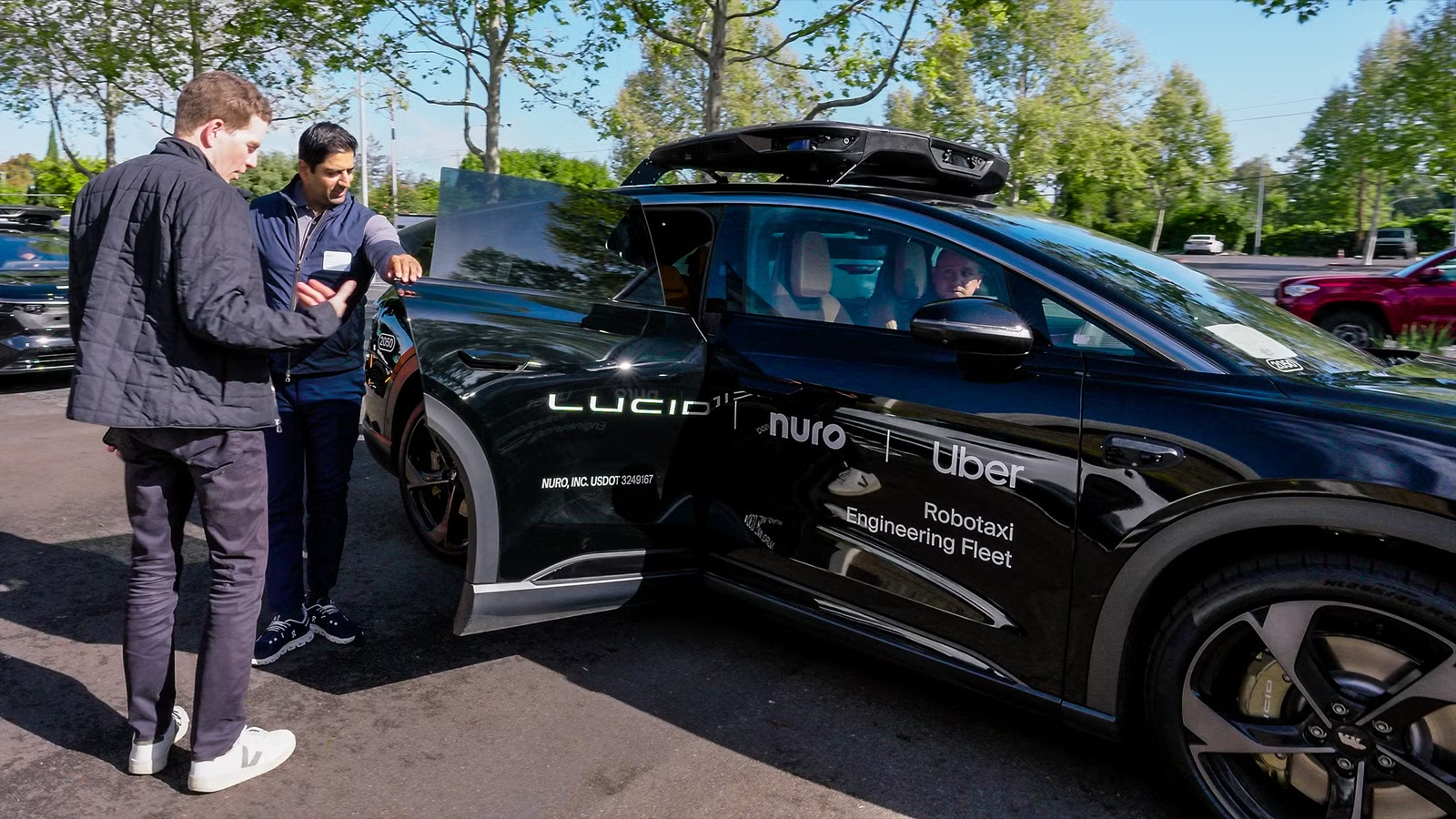
Uber is expanding its robotaxi empire for the second time in as many weeks. The ridesharing giant has started taxi test rides for employees in the San Francisco Bay Area, using Lucid Gravity SUVs upgraded with Nuro’s autonomous car technology.
The test still has a safety driver on hand, but will let Uber staff hail self-driving cars through its app. They’ll help validate the vehicles and the overall ride in real world settings. This will help “refine the service” as Uber and partners get closer to a commercial launch, according to Nuro.
Partnership history
Public rides expected this year
Uber first unveiled its partnerships with Nuro and Lucid in July 2025, when they outlined plans to roll out 20,000 Gravity robotaxis starting in 2026. The companies revealed the “production intent” version of the modified Gravity this January, including a roof-based sensor array with cameras, LiDAR, and radar. In-cabin screens help passengers customize their trips and see the robotaxi’s intended path.
Public rides are expected later in 2026, with service coming to “dozens” of markets worldwide in the next six years.

10 Companies Leading the Charge in Autonomous and Electric Vehicles
These top innovators are shaping the future of electric and autonomous vehicles with groundbreaking technology and sustainable solutions.
You can hail robotaxis through Uber right now
Waymo and other providers are already available

You don’t have to wait for Uber, Nuro, and Lucid to make their autonomous rides available. You can ask for Waymo rides through Uber’s app in Atlanta, Austin, and Phoenix. Avride provides service in Dallas, and travelers in Saudi Arabia and the Middle East can hop aboard WeRide vehicles.
Uber and VW’s mobility unit MOIA just recently said they would offer robotaxi service in Los Angeles by late 2026. In the long term, Uber is collaborating with brands like Amazon’s Zoox, Motional, NVIDIA, and Rivian.
What the future may hold
However, the alliances with Nuro and Lucid should play a key role in Uber’s strategy. Since Uber sold its in-house robotaxi division to Aurora Innovation in 2020, it has focused on partnerships that will help it become synonymous with self-driving rides. A fleet of 20,000 cars would represent a significant expansion at a time when Uber’s existing coverage is still limited.
Rivian has also announced a new partnership with Uber, which will see the latter invest $1.25 billion through 2031 towards the development of fully self-driving vehicles.
While this will lead to some competition with partners like Waymo, it’s mainly intended to fend off more direct competition from Lyft and other ridesharing heavyweights that are either establishing their own team-ups or developing their own technologies. Tesla, for instance, is offering limited robotaxi service in the Austin area using its own platform.