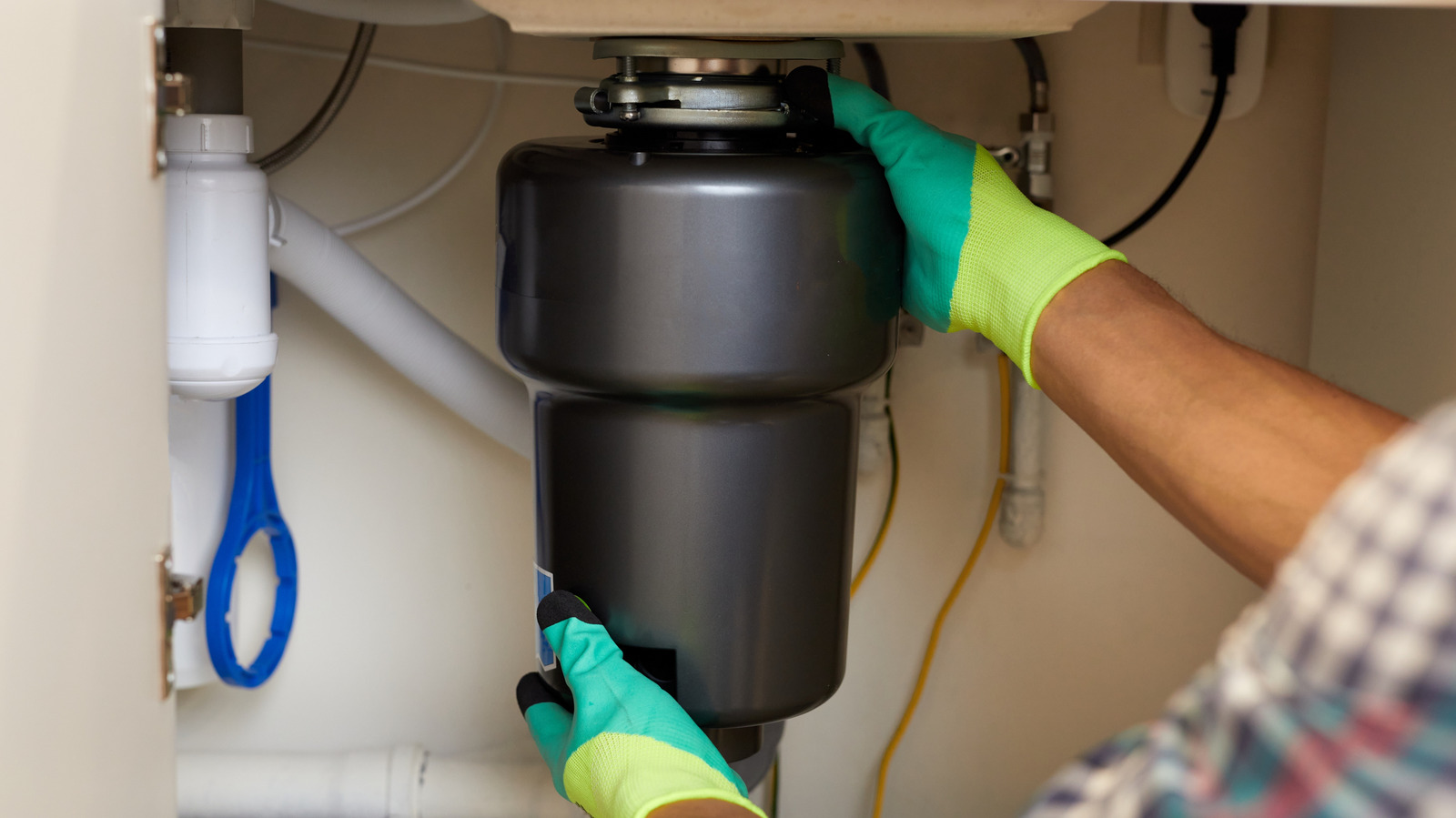
In North America, the garbage disposal is often seen as a kitchen essential, alongside a range of other useful kitchen cleaning gadgets. In fact, Intel Market Research reports that more than half of all newly built homes on the continent are designed to include one. It can be important, then, to understand what makes them tick, particularly regarding issues like maintenance and expected lifespan.
The International Association of Certified Home Inspectors notes that a disposal for food waste typically lasts about 12 years, approximately twice as long as that of a trash compactor (just 6 years on average) and very close to the average lifespan of a microwave. The body does note, though, that “these life expectancies have been determined through research and testing based on regular recommended maintenance and conditions of normal wear and tear.” As with all appliances, the better it’s cared for, the longer it tends to last.
Fellow professionals note that this seems to be about standard for such an appliance. Reliance Plumbing Sewer & Drainage Inc. of Northbrook, Illinois, gives a slightly lower estimate of about 10 years, while Mr. Rooter Plumbing offers a broader range of 8-15 years. Both conclude that these crucial appliances can be taken rather flippantly by users, given what they’re put through when they clear away food, and that factors such as the machine’s age and how it’s treated affect how long it will ultimately last. This is why only an average number or a broader range can be provided.
Let’s take a look at some things users can do to get the longest, most effective life from their disposal, as well as some tell-tale signs that it’s time to service or replace the unit.
Extending the life of a garbage disposal
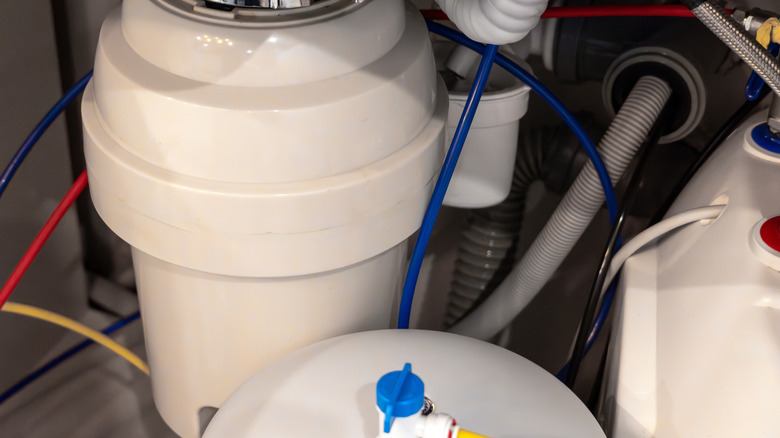
A garbage disposal works by grinding down food waste in special chambers, its motor forcing the debris through these components via an impeller plate and out of the disposal. The more difficult we make that job, given the size and type of the waste we dispose of, the more strain our disposals are under. Only allow it to handle waste of an appropriate size, which isn’t too tough either.
Very hard waste, such as bones and nuts with tough shells, should be avoided, and congealed cooking oil or similar can harm the machine as well as your plumbing system more broadly. They are designed for softer, more manageable waste. Anything else can be disposed of in the trash, so there’s really no need to risk damaging or increasing wear and tear to the motor or the mechanism.
It’s also likely that, from time to time, you’ll inadvertently cause a blockage in your disposal. If it’s a minor issue, an equal blend of vinegar and baking soda can help break it down and clear it away, and it can also be used regularly as part of a simple maintenance routine. By making careful use of tools such as brushes with special long handles, it’s also important to directly clean the components of a disposal. The key is to monitor your disposal’s contents regularly to ensure that nothing’s building up, while not taking any risks such as using your hands or, as Molly Maid president Marla Mock puts it to Today, “us[ing] chemical drain cleaners to clear a clog, which can damage your disposal and splash back onto you.” All of these things will help to extend a machine’s life.
How to tell if there’s a problem with your garbage disposal
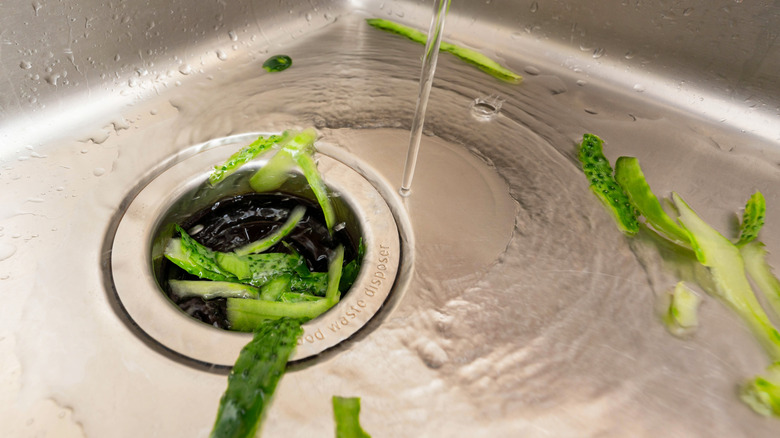
Of course, you can develop all the best habits when using your appliances, but nothing will stop them from aging and ultimately developing defects. It’s all about recognizing the danger signs. A garbage disposal can worsen and become more dangerous the more it’s used with an existing defect, so you have to pinpoint when it’s time to stop repairing or using it.
Liberty Homeguard provides guidance about the kinds of issues you might encounter. You might simply notice that the machine runs less efficiently, more slowly, or noisier over time. As with anything related to a home’s water supply, a leak, whether extensive or small and persistent, is a sign that something’s very wrong with the system and needs to be addressed ASAP. Smaller problems, like a jam, can be rectified by a professional or a confident user, while something more existential for the device, like its motor giving out, might mean the end.
The 10 to 12 year estimate given by this outlet for the lifespan of a garbage disposal means that, when these typical issues develop, they can be more severe and potentially more expensive, the older the system is. For instance, even a major problem is typically repairable if it’s less than five years old, according to the outlet, while with systems that have been in use for over a decade, the more practical course could be a replacement, even for a smaller problem. This ties closely to the average lifespan of the systems that other professionals suggest.