They’re the small molecules with the big buzz.
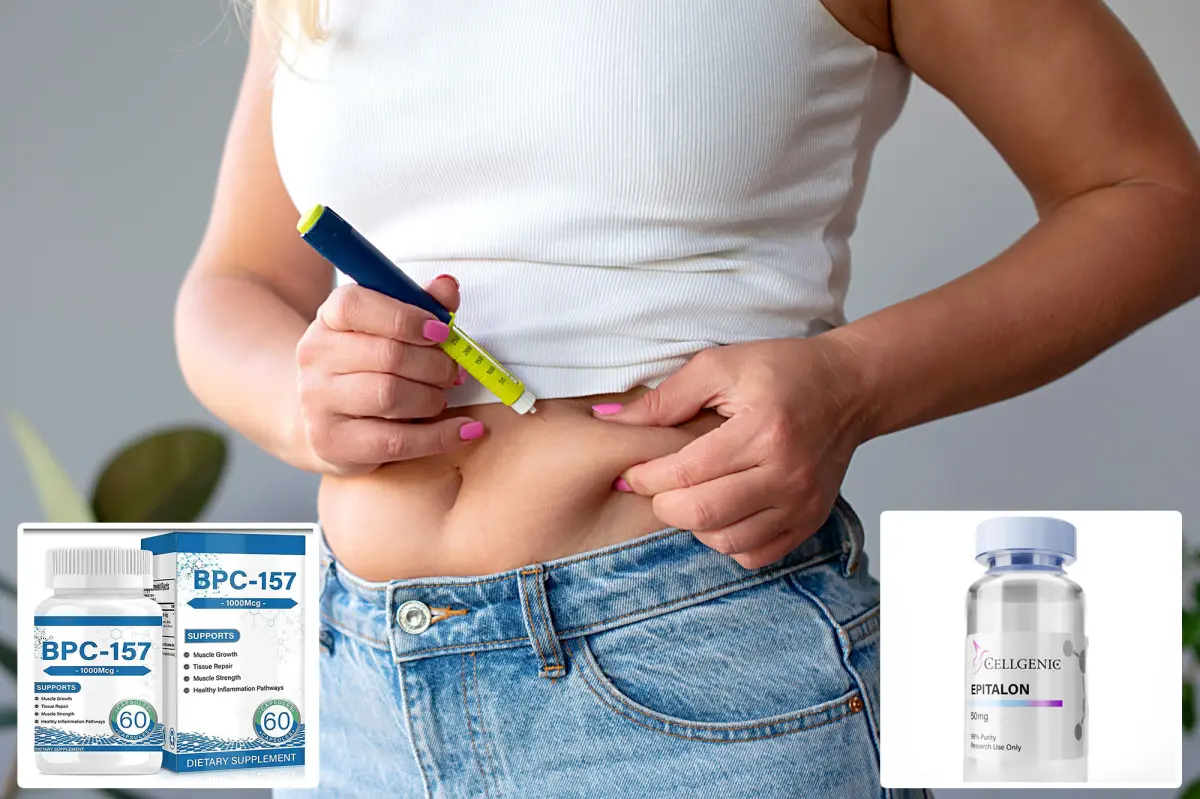
In the past couple of years, peptides have become the hottest tool for biohackers, beauty buffs and even bodybuilders, many of whom are injecting them in the hopes of losing weight, improving skin and living longer.
While our bodies create peptides naturally, synthetic versions have become big business — but since 2023, 19 of the manmade ones have been stuck on the government’s naughty list. The FDA reclassified these peptides as Category 2 Bulk Drug Substances, essentially barring compounding pharmacies from producing them due to safety and quality concerns.
Now, Health and Human Services Secretary Robert F. Kennedy, Jr. is pushing to ease restrictions on 14 of these molecules so licensed compounding pharmacies can make them for patient use.
The body naturally produces thousands of peptides, like collagen and oxytocin, which regulate essential functions such as metabolism, tissue repair and immune response. Some are now also sold as synthetic compounds, like Ozempic and GHK-Cu.
Kennedy, 72, is a “big fan of peptides” you can buy, having seen “good effect” when he’s used them for injury recovery. Some of Kennedy’s allies also promote and sell peptides.
“I’m very anxious to move — probably not all of those peptides, some of them are in litigation — but about 14 of them back to making them more accessible,” Kennedy said in February on Joe Rogan’s podcast. “I think within a couple of weeks we will have announced some kind of new action.”
An HHS spokesperson didn’t respond to a Post request for comment.
Here’s a look at the power and potential of peptides as doctors weigh in on the possible FDA move.
Which peptides may be reclassified?
An HHS representative didn’t name the 14 peptides that could return to Category 1, but these are widely believed to be among those under consideration:
- AOD-9604: Fat loss
- BPC-157: Tissue repair and gut health
- CJC-1295: Growth hormone release
- DSIP/emideltide: Sleep regulation
- Epitalon: Anti-aging
- GHK-Cu: Skin rejuvenation
- Ipamorelin: Growth hormone release
- Kisspeptin-10: Hormonal regulation
- KPV: Anti-inflammatory
- MOTS-C: Metabolic regulation
- Selank: Anti-anxiety and brain function
- Semax: Cognitive enhancement
- TB-500: Tissue healing
- Thymosin alpha-1: Immune support
What are the pros of peptide use?
Peptides are short chains of amino acids that play a versatile role in the body, helping with everything from wound healing and muscle building to cell signaling.
Patients inject them to lose weight, improve their skin and sleep better.
Peptides are often superior to conventional small-molecule drugs because they can be delivered more precisely and efficiently, with fewer side effects.
“I have been using peptides such as BPC-157, TB-500 and GHK-Cu in my postoperative patients for about five years,” Dr. Lisa Cassileth, a board-certified plastic and reconstructive surgeon and founder/CEO of The Practice Healthcare in Beverly Hills, told The Post.
“In my experience, patients report faster recovery and, interestingly, a range of additional benefits they weren’t necessarily seeking, such as improvements in gastrointestinal symptoms, skin sensitivity and chronic musculoskeletal issues.”
Dr. Sue Decotiis, a triple board-certified NYC weight-loss physician, has found injectable BPC-157 and CJC-1295/ipamorelin to be “particularly promising.”
“Growth hormone–related peptides can be especially helpful for anti-aging and maintaining body composition when used appropriately under medical supervision,” she told The Post.
What are the safety concerns?
The FDA’s decision to reclassify the 19 popular peptides did not stifle demand — instead, it gave rise to a “gray market” of products labeled “research use only” to evade regulatory oversight.
The absence of oversight means unknown product quality, potential contamination and the possibility of severe side effects like infections, hormone disruption and skin changes.
“There is no clear evidence that specific peptides among the group [of 19] are inherently dangerous when used appropriately,” Decotiis said.
“The greater concern lies not in the peptides themselves, but in how they are sourced, prescribed and used,” she added. “Poor-quality manufacturing or unsupervised use increases risk significantly.”
Decotiis recommends more large-scale, long-term clinical studies to fully understand peptide safety profiles, optimal dosing and long-term effects.
For her part, Cassileth would like to see “more robust study” and “careful long-term evaluation” of the growth hormone secretagogues, including ipamorelin.
“Growth hormone itself can accelerate tumor growth and is not something I would recommend for long-term use,” she explained.
“Because secretagogues increase the body’s natural growth hormone levels, I would want to see thorough data on longer-term safety before broadly recommending extended dosing.”
Will these peptides receive FDA approval?
The easing of peptide restrictions does not mean they will receive FDA approval. In fact, most peptides are not approved by the FDA.
One reason is that many of these molecules — like insulin and BPC-157 — exist naturally in the body, so they are difficult to patent.
Because many peptides cannot be patented, major pharmaceutical companies are not incentivized to fund expensive, rigorous clinical trials needed for FDA approval.
“Many peptides are unlikely to ever receive FDA approval, not necessarily because they are unsafe, but because the pharmaceutical companies producing them cannot afford the extensive and costly studies required for approval,” Decotiis said.
Would reclassification be a good move by the FDA?
Cassileth said the change would “bring peptides — and their potential clinical value — out of the shadows and into the mainstream.”
“Most physicians don’t consider a substance a ‘real drug’ until it has some level of FDA clearance,” she noted.
“With formal clearance, peptides are far more likely to be incorporated into physician education, attract meaningful research funding and gain broader clinical acceptance,” she added. “That shift should ultimately make physicians more comfortable using these biologically active compounds in a safe, structured and evidence-driven way.”
What should you know before starting a peptide regimen?
“Many of these peptides are already available today through legitimate channels, particularly via licensed 503A compounding pharmacies that operate under state oversight and produce sterile, regulated products,” Cassileth said, “but access is inconsistent and varies by state depending on how regulations are interpreted and enforced.”
Cassileth said your peptides should be sourced from licensed pharmacies and prescribed by qualified, appropriately trained clinicians who understand their indications, dosing and potential risks.
Definitely don’t try to diagnose and treat yourself.
“Even if a peptide is relatively safe, it can mask an underlying condition that remains undiagnosed and untreated,” Decotiis said. “There must be a structured, individualized treatment plan for safe and effective outcomes.”