
Tuesday, April 14, 2026
Home Business / FinanceJPMorgan has stark message for investors on market weakness

JPMorgan has stark message for investors on market weakness

by admin7
0 comments


Markets have been under pressure for weeks. Sentiment has turned. Most investors have already de-risked. That is exactly when JPMorgan chose to publish its latest note.

In a note published April 13, JPMorgan strategist Mislav Matejka laid out the bank’s clearest position yet on what investors should be doing right now, arguing that conditions support another V-shaped recovery, despite ongoing geopolitical uncertainty.

“Our base case remains that any further escalation is unlikely to be sustained indefinitely, and that dips driven by geopolitical shocks should ultimately prove to be buying opportunities,” Matejka said, according to Reuters.

Matejka’s key argument is that the current sell-off looks driven by fear, not fundamentals. Bearish sentiment had become the consensus view just two to three weeks into the conflict, with oil prices widely expected to spike further and investors heavily de-risked, according to Yahoo Finance.

JPMorgan’s view is that this kind of sentiment capitulation is itself a signal. When everyone has already sold, the risk of being caught on the wrong side of a recovery becomes the bigger danger.

More Wall Street

“Military conflicts inherently display fat tails and drive elevated volatility, but we argued against succumbing to bearish views as the risk of getting whipsawed increases significantly,” Matejka wrote.

JPMorgan first made this call on March 23. The bank has maintained it through the subsequent volatility, according to Yahoo Finance.

Matejka was direct about why 2026 is not a repeat of 2022. He said the current environment differs meaningfully in terms of inflation pressures, corporate pricing power, real rates, and the labor market.

S&P 500earnings per share estimates for 2026 have continued to move higher through the conflict. JPMorgan also said central banks should look through an anticipated 1.5 percentage point rise in year-on-year inflation, viewing it as a temporary spike rather than a structural shift, according to Yahoo Finance.

The global economy entered the conflict with relatively strong fundamentals, including solid activity momentum and earnings growth. That backdrop makes a sustained bear market harder to justify.

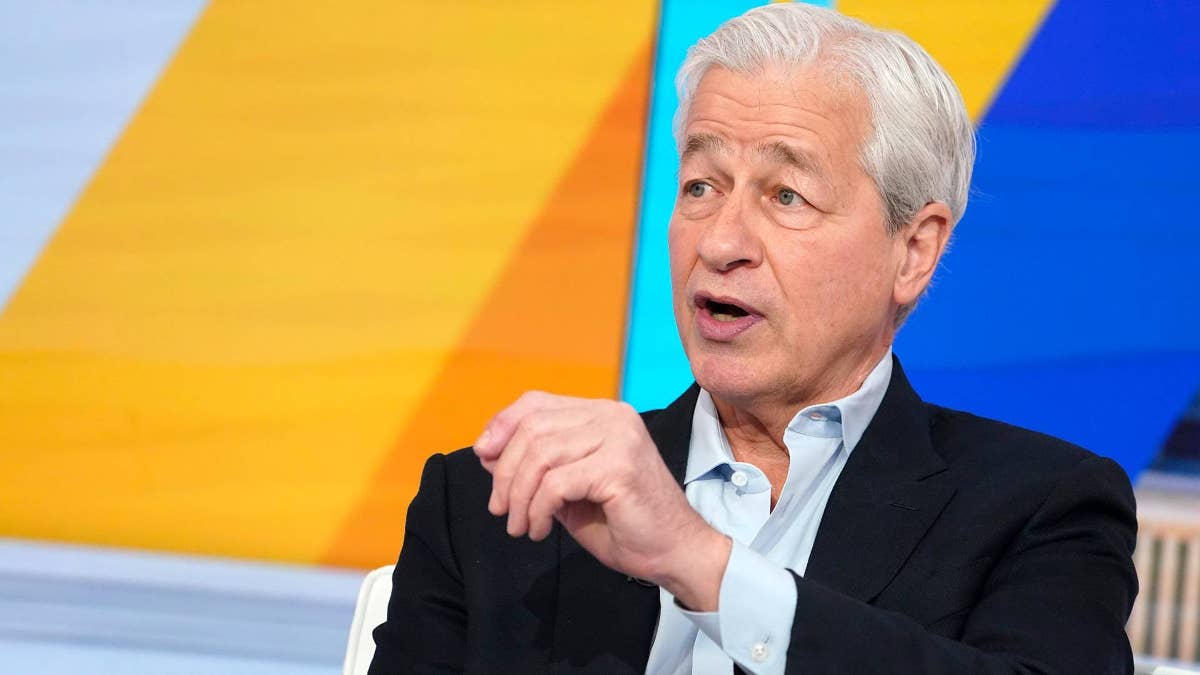
JPMorgan argues against succumbing to bearish views.Zamek/Getty Images

JPMorgan is not calling for broad, indiscriminate buying. The bank recommends cyclical sectors including capital goods, semiconductors, and consumer cyclicals, as well as emerging markets and the eurozone.

The bank also expects international stocks, emerging markets, small caps, and value shares to resume outperforming, consistent with its year-ahead outlook, according to Yahoo Finance. Those are the areas JPMorgan believes got oversold during the conflict-driven rotation into defensive assets.

  • Time horizon for adding risk: 3 to 12 months

  • First “add exposure” call: March 23, 2026

  • S&P 500 decline since war began: Approximately 8% at its worst, Investing.com noted

  • S&P 500 recovery from March low: Approximately 8%, according to Investing.com

  • JPMorgan S&P 500 year-end target: 7,200

  • Favored sectors: Capital goods, semiconductors, consumer cyclicals

  • Favored regions: Emerging markets, eurozone

JPMorgan is not alone. Morgan Stanley strategists led by Michael Wilson said the recent S&P 500 sell-off looks more like a correction than the start of a prolonged downturn, and attributed the support to improving earnings fundamentals.

The alignment between the two banks on this point is notable. When multiple major institutions reach the same conclusion about a market dislocation, it tends to carry more weight than a single outlier call.

The bank’s bullish stance comes with a clear caveat. If the conflict escalates further, oil volatility persists, or the situation begins to damage growth and supply chains in a more lasting way, the recovery thesis weakens.

JPMorgan has already trimmed its S&P 500 year-end target to 7,200 from 7,500, reflecting the uncertainty. The “buy the dip” call is a tactical one, not an all-clear signal. It rests on the assumption that the conflict stays contained and that the macro backdrop holds.

For investors, the message from JPMorgan is straightforward. Volatility may not be done. But if the selloff is driven by fear rather than broken fundamentals, the bigger risk may be sitting on the sidelines when the market turns.

Related: JPMorgan identifies a massive investment opportunity

This story was originally published by TheStreet on Apr 14, 2026, where it first appeared in the Investing section. Add TheStreet as a Preferred Source by clicking here.


Source link

You may also like

Leave a Comment