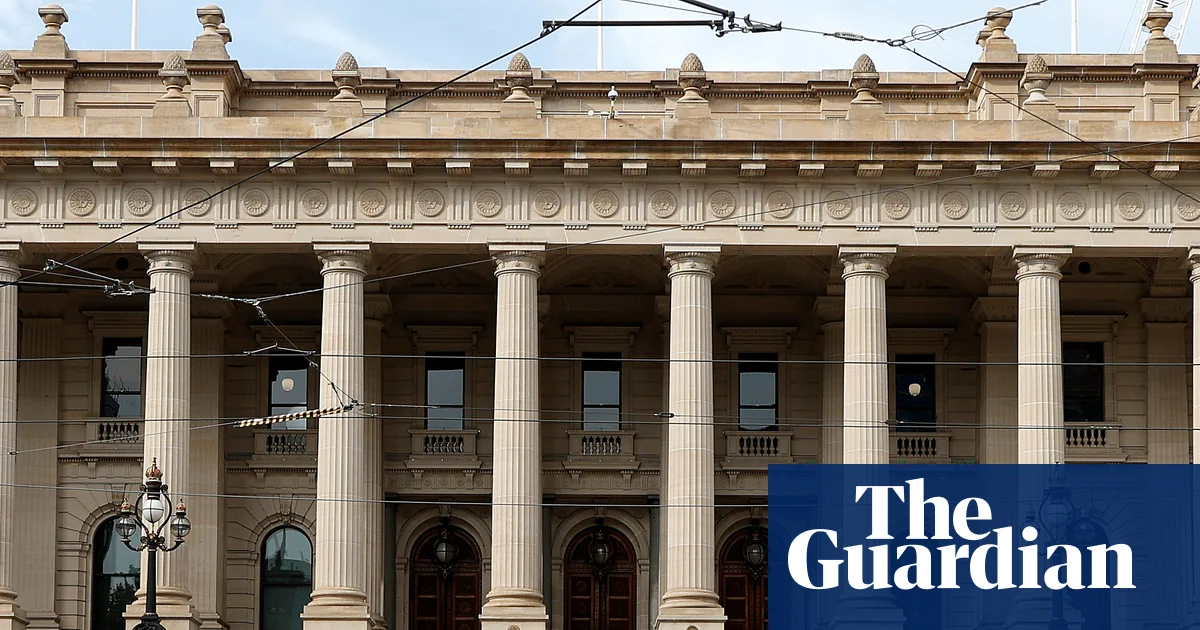
The high court has ruled Victoria’s political donation laws are unconstitutional, in a move that has been described as “enshrining a level playing field”.
The unanimous decision, handed down by Australia’s highest court on Wednesday, struck out an entire section of Victoria’s electoral act that introduced caps on political donations but carved out an exemption for major parties.
The ruling is likely to have major implications ahead of the November state election, as well as for similar campaign finance laws introduced by the South Australian and federal governments.
Victoria’s laws, which were introduced in 2018 and came into effect ahead of the 2022 election, capped campaign donations at $4,970 per individual per term but provided an exemption for funds transferred to registered political parties through their “nominated entities”.
The only parties with nominated entities registered with the Victorian Electoral Commission are Labor, and the Liberal and National parties. While laws allowed for the creation of new nominated entities, any set up after 1 July 2020 were subject to the donation cap.
The case was brought by Paul Hopper and Melissa Lowe, two independent candidates who contested the 2022 state election and plan to stand again in November. Hopper will run with the new West Party, which intends to field candidates in seats in Melbourne’s west.
Their counsel, Ron Merkle SC, had told a hearing in February that the nominated entity exemption should be scrapped as it was “solely enacted for the benefit of the three legacy parties”.
But the high court went further in its ruling, declaring the entire part 12 of the Electoral Act was invalid as it “impermissibly burdens” the constitution’s implied freedom of political communication.
In a statement, Lowe said it was a “great day for democracy”.
“[The judgment] goes a long way to enshrining a level playing field in our elections and chink in the armour of the two major parties’ duopoly,” she said.
Hopper said the “days of major parties rigging elections to serve themselves were over”.
Hopper and Lowe noted the ruling went further than they had asked by scrapping spending and donation caps, and it was now on the government to “fix” the “unintended consequence of the case”.
Their lawyer, Kiera Peacock, said: “Today the court has decided that it couldn’t just strike through the nominated entity exception – the way it passed through parliament meant it was a package deal and therefore the remaining campaign finance laws were also declared invalid.”
She said had the government removed the nominated entity exception as Hopper and Lowe has requested in a letter they sent in 2024, the case would never have made it to the high court.
The Victorian premier, Jacinta Allan, on Wednesday said the government would need time to consider the decision.
“The decision has just been handed down whilst we’ve been addressing you here today, so it would not be appropriate for me to comment,” Allan told reporters following a cabinet swearing in ceremony at Government House.
The federal government is facing a challenge to its campaign finance laws on similar grounds by former independent MPs Zoe Daniel and Rex Patrick.
The Centre for Public Integrity executive director, Catherine Williams, said the Victorian decision sent a clear warning to governments across Australia.
“Today’s judgment makes it clear: governments cannot rig electoral laws in favour of major parties and expect to get away with it,” she said.
“This is not just a Victorian issue. Any government attempting to entrench political advantage through funding laws is now firmly on notice from the high court.”