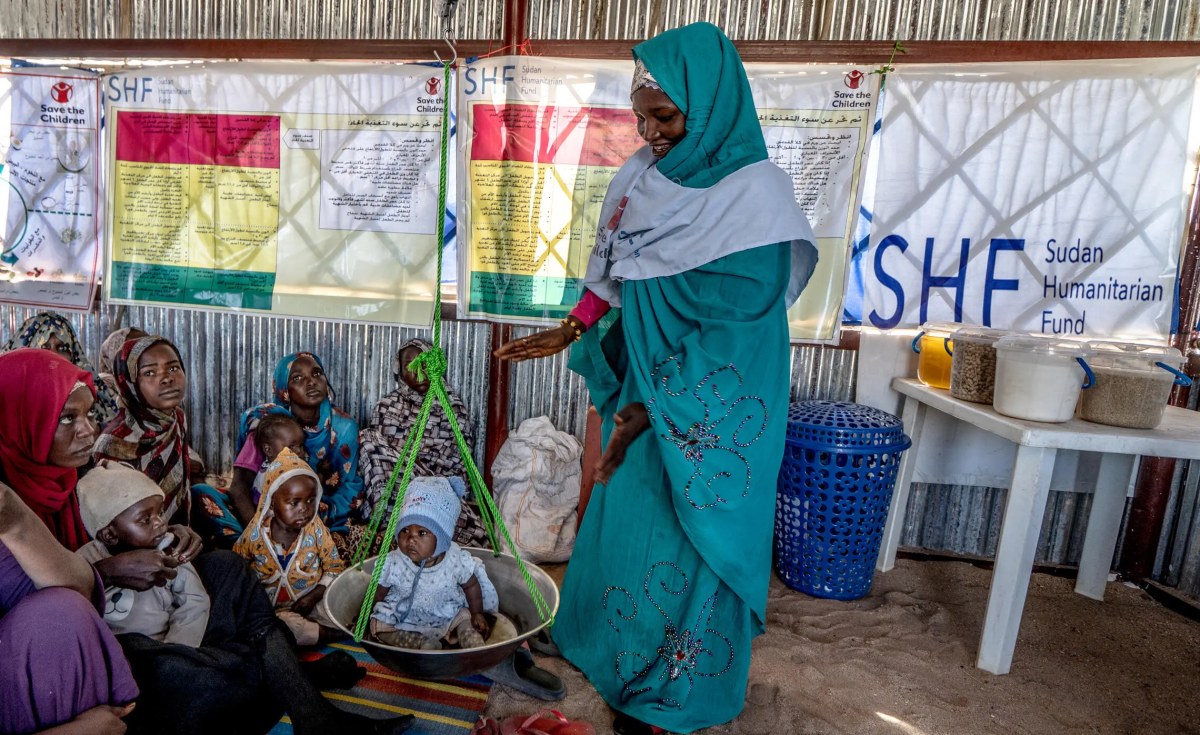
Sudan remains the world’s biggest humanitarian crisis on the three-year anniversary of the current conflict that has torn apart the country’s immense promise, the UN Emergency Relief Coordinator says, signalling that the response has been crippled by severe underfunding.
Tom Fletcher, the UN’s head of Humanitarian Affairs and Emergency Relief Coordination (OCHA), said at an April 14 press conference in Geneva, “Nearly 34 million people – or almost two out of every three people – need humanitarian support: the world’s largest humanitarian crisis.”
He said, “Millions have been driven from their homes across Sudan and beyond its borders, with entire communities emptied and families uprooted time and again,” said Fletcher in his words read by Jense Laerke, a Geneva spokesperson for OCHA.
Follow us on WhatsApp | LinkedIn for the latest headlines
“The risk of wider regional instability is high,” said Fletcher as other speakers cited the use of sexual violence as a weapon of war in the conflict.
Last year, humanitarians reached 17 million people with vital support, and the aim is to support 20 million people this year, but the UN action is “critically underfunded,” said Fletcher.
In the first three months of this year, nearly 700 civilians were reportedly killed in drone strikes.
The continuing armed conflict began on April 15, 2023, between the Sudanese Armed Forces and the group calling itself the Rapid Support Forces (RSF), with other warring parties involved, according to the United Nations.
Doubling of gender-based violence
A new Gender Alert published on April 14 by UN Women found that sexual violence continues to surge across Sudan, with the number of women and girls requiring support after experiencing gender-based violence nearly doubling in two years.
The needed support has quadrupled since the start of the war three years ago, according to the new Gender Alert: Three years of war: Sudanese women on the frontlines of humanitarian and local peacebuilding efforts.
“Women and girls are being raped and killed in their homes, and as they flee, seek food, water and medical care,” said Anna Mutavati, UN Women regional director for East and Southern Africa, speaking from Berlin. “The use of sexual violence has been embedded in the blueprint of Sudan’s war.”
Mutavati said that more than 4.3 million women and girls are now displaced inside Sudan, whilst 17.1 million require humanitarian assistance in 2026.
Still or many, especially in active conflict areas, there is limited or no access to food, shelter, or medical care. “All violations designed to inflict terror, humiliation and control over women and girls are compounded by blockades and ongoing instability and are being carried out with widespread impunity,” Mutavati explained.
“Ending this war means ending the impunity that sustains it and recognising that there can be no peace whilst sexual violence remains.”
UN Women said there must be accountability for perpetrators, access to justice for victims and survivors, and the full, equal and meaningful participation of women in peace processes and decision-making.
Statement by Under-Secretary-General Tom Fletcher
Sudan Remains a Test the World Is Failing, Says Tom Fletcher
Three Years of War in Sudan Have Shattered Water and Health Services: UN