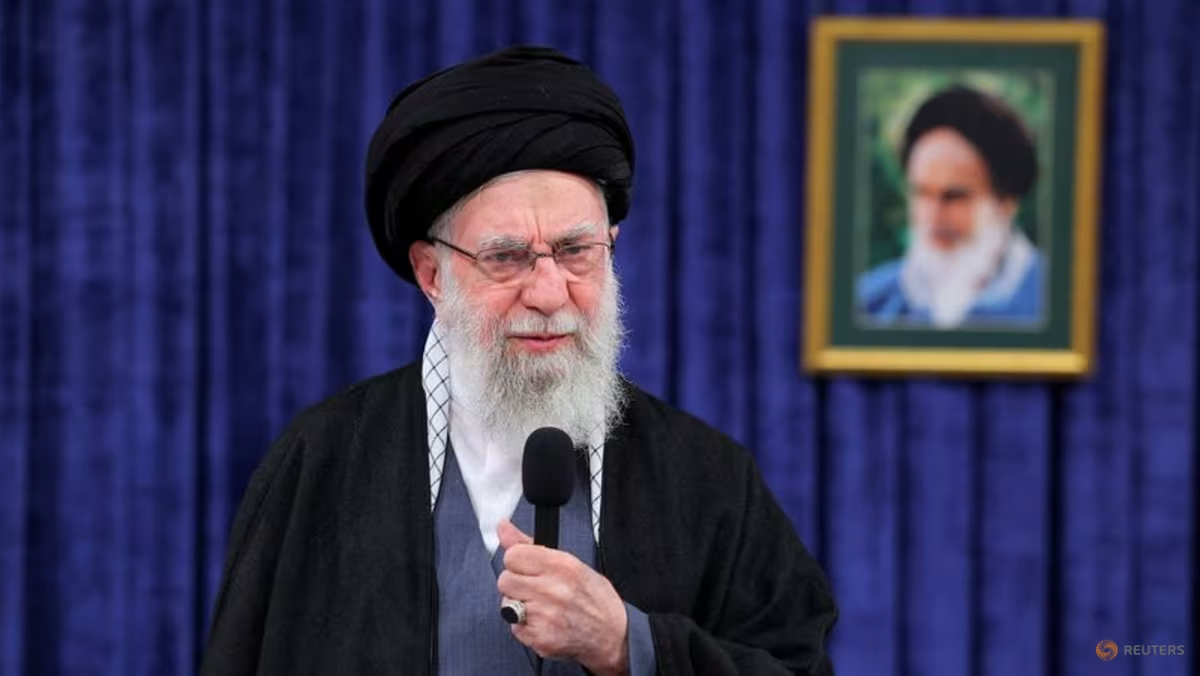
KHAMENEI BECAME AYATOLLAH IN 1989
Khamenei, 86, became Iran’s highest authority in 1989, following the death of the Islamic Republic’s founder, Ayatollah Ruhollah Khomeini. As supreme leader, he held ultimate control over Iran’s political, military and religious institutions, shaping domestic policy and guiding foreign relations.
Israel long saw him as a destabilising force in the Middle East, citing his backing for Iran’s network of militant allies, including Palestinian Hamas and Lebanon’s Hezbollah.
When Israel and Iran fought a 12-day air war in June 2025, Israeli Defence Minister Israel Katz threatened to assassinate him, saying the supreme leader “cannot continue to exist.”
That war saw Israel launch a surprise strike that struck Iran’s underground nuclear site, killing senior commanders and nuclear scientists, and wiping out much of the military leadership. Khamenei’s killing deals another blow to a country already reeling from war and economic hardship.
Khamenei upheld the conservative vision of his predecessor, Khomeini, quashing the ambitions of elected presidents who sought more open policies at home and abroad. Under his rule, authorities crushed repeated protests and sidelined reformists pushing for less confrontation with the West.
Iran became a powerful regional anti-US force under Khamenei, extending its influence across the Middle East. He backed the 2015 nuclear deal brokered with world powers and pragmatist President Hassan Rouhani, which briefly eased Iran’s isolation. But tensions spiked after Trump abandoned the accord in 2018 and reimposed sanctions.
Since the Hamas-led attack on Israel on October 7, 2023, Iran has seen its allies weakened. Hamas and Hezbollah suffered heavy blows from Israel, while Syrian President Bashar al-Assad, long propped up by Tehran, was toppled in December 2024.
The post of Supreme Leader was created after the 1979 revolution and enshrined in Iran’s constitution, giving a top cleric ultimate authority over the president and parliament. The Assembly of Experts, an 88-member clerical body vetted by a hardline watchdog aligned with Khamenei, formally selects the leader.