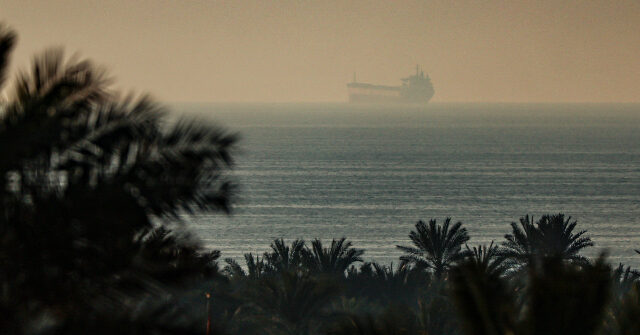
Iran’s Islamic Revolutionary Guard Corps (IRGC) announced on Saturday afternoon that the strategically vital Strait of Hormuz was closed to all shipping traffic, implicitly threatening to attack any commercial vessel attempting to pass between the Persian Gulf and the Gulf of Oman.
The UK Maritime Trade Operations Agency said on Saturday it has received multiple alerts from ships in the region that the IRGC broadcast radio warnings that passage through the Strait of Hormuz was “not allowed.”
Sources in the trading industry told Reuters that “several tanker owners, oil majors and trading houses had suspended crude oil, fuel and liquefied natural gas shipments via the Strait of Hormuz.”
“Our ships will stay put for several days,” said an executive at one trading desk.
Reuters cited satellite tracking data that showed oil tankers “piling up near major ports such as Fujairah in the United Arab Emirates” to avoid passing through the Strait of Hormuz.
The Financial Times (FT) reported that insurance companies are threatening to “cancel policies and raise coverage prices for vessels travelling through the Gulf and Strait of Hormuz.”
FT quoted industry analysts who said insurance prices for ships could increase as much as 50% in the coming days, and insurance companies are already moving to cancel war risk policies before trading resumes on Monday morning. Insurance prices for ships sailing to Israel could increase by similar amounts.
“On Saturday at least three ships turned away from the strait, rather than pass through it, as shipowners assessed the risk of being attacked in the narrow waterway,” FT reported.
Bloomberg News, on the other hand, cited tracking data that showed “seven ships were seen exiting Hormuz while six were entering after the warnings had been issued.”
“Japanese giant Nippon Yusen KK earlier told its fleet not to navigate Hormuz, while Greece told its vast merchant fleet to reassess passage,” Bloomberg said.