The weekend began as it often does in Dubai. By late morning on Saturday, the beach clubs on Palm Jumeirah were already at capacity. Along the waterfront promenade, running clubs gathered beneath the towers, filming their warm-ups before setting off in neat formation.
On Instagram, the city appeared untouched: blue skies, a flat sea and the steady churn of shoppers inside the Dubai Mall. Across the Gulf, however, the largest regional war since the 2003 invasion of Iraq was intensifying.
While US and Israeli missiles were being launched and airspace was closing across parts of the Middle East, Dubai carried on with its carefully maintained normality.
For years, the city has presented itself as a sanctuary for capital and stability, a place of order and predictability in a volatile region, insulated from the political storms that shape its neighbouring countries. That illusion held until sunset.
Shortly after dusk, the first Iranian drones and missiles approached the Gulf states in retaliation. Air defences in the United Arab Emirates, as well as in Qatar, Saudi Arabia and Bahrain, activated in response, interceptors streaking into the night sky.
Several tourists said they were caught completely off guard. There were no air raid sirens and while residents with local phone numbers began receiving official alerts, others did not immediately understand what was happening.
“At first we thought it was fireworks,” said Natalia Veremeenko, who was staying near the Fairmont The Palm, a five-star resort whose entrance caught fire after what appeared to be a drone strike.
Veremeenko initially believed the fire was a one-off incident and, within minutes, the streets began to fill again. “They cleaned everything up quickly,” she said.
Crowds were seen gathering as usual around the fountains outside the Dubai Mall for the nightly light and water show. But the holiday mood did not hold.
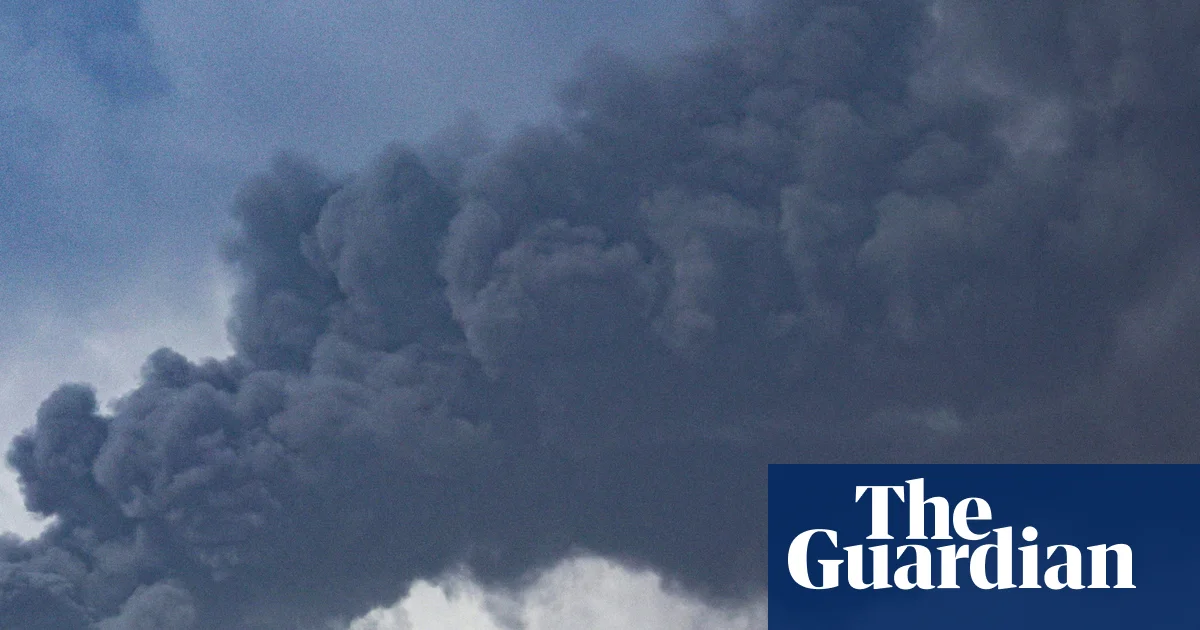
Later in the evening, fires and thick plumes of smoke were reported at Dubai and Abu Dhabi’s airports after drone debris struck the sites, killing one person and injuring about a dozen others, according to local authorities.
Dense columns of smoke rose from the Jebel Ali port area in Dubai – the world’s ninth-busiest port and the busiest in the Middle East – where one berth caught fire. The sail-shaped Burj Al Arab – widely regarded as Dubai’s most recognisable landmark – was also struck by falling drone debris, prompting a brief fire.
It remains unclear whether Iran was directly targeting hotels and other UAE landmarks – major revenue earners for the emirates – rather than the US military facilities it had vowed to strike.
But for the UAE, the attacks marked a rare rupture in the business-friendly reputation Gulf states have spent years cultivating. The overwhelming majority of Dubai’s residents are foreign nationals, drawn by the city’s promise of safety and low taxes.
By nightfall, many luxury hotels were ushering guests from exposed rooms and terraces into underground car parks and service corridors. The scenes resembled images more commonly associated with cities in Ukraine, though here the response carried a distinctly Dubai gloss.
“A state of emergency, but make it fashion,” wrote one Russian lifestyle blogger, posting a photograph of herself in silk pyjamas from a hotel basement.
Yekaterina, a Russian resident in Dubai, said she first felt “panic” when she received a midnight message on her phone telling her to seek shelter at her tower block. In her car park, rumours began circulating that the Burj Khalifa, the world’s tallest building, had been hit – claims that later proved false, but which captured the uncertain mood of the night.
By morning, authorities moved quickly to calm nerves, reassuring residents and visitors that the situation was under control and pledging flight reimbursements for those affected by the disruption.
UAE air defences appeared to have functioned effectively. The defence ministry said 137 missiles and 209 drones had been fired towards UAE territory, the majority of them intercepted by its air defence systems.
“You can return to normal now. The UAE is 100% safe. Life and business continue as normal,” the Emirati commentator Amjad Taha wrote on X
Western influencers based in Dubai, some of whom say they relocated to escape what they describe as crime-ridden European cities and high taxes, were quick to echo the message.
“Greetings from a very relaxing dog walk in the best and safest city in the world,” Joule Sullivan, an Australian living in Dubai, told his half a million Instagram followers. “Sorry haters. Dubai is still the best city in the world,” he added.
But with Iran showing no sign of de-escalating and thousands of cheap drones believed to remain in its arsenal, that confidence may yet be tested. Airports remain closed, leaving tens of thousands of tourists stranded with no clear timeline for when flights would resume.
On Sunday morning, tourists started to receive messages from the authorities, urging them to stay indoors and await instructions. Some said they remained undeterred, continuing with their daily business.
“I am still planning to go to the Dubai Mall to shop today,” said Veremeenko. “I hope this will all blow over soon.”