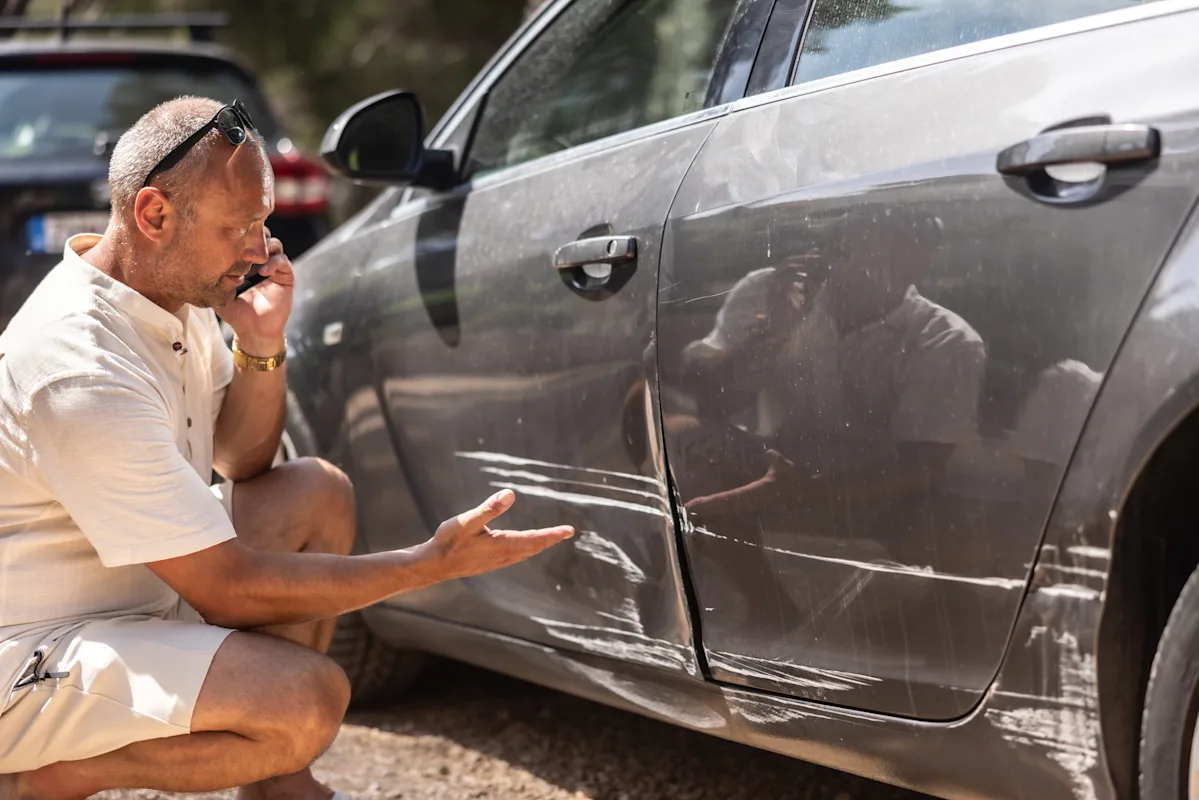
Filing a car insurance claim is when your coverage really gets tested. Affordable rates matter, but so does having a car insurance company that communicates effectively, pays claims fairly, and works smoothly with repair shops when it counts.
To identify the best-rated car insurance for claims filing, we analyzed NAIC complaint data and CRASH Network grades, which reflect insurers’ handling of repairs and interactions with body shops. Here are the car insurance companies that stood out for claims performance.
Farm Bureau earned the top spot for best car insurance for claims satisfaction because it outperformed every other insurer in our analysis. It received the highest CRASH Network score in our study, including an A+ grade in North Carolina. It also had the lowest three-year NAIC complaint ratio of any insurer we evaluated. Together, these metrics indicate strong claims handling and fewer customer complaints relative to its size.
Farm Bureau was also the top insurer in our analysis for the best usage-based insurance.
Farm Bureau pros and cons
Pros
-
Highest CRASH Network claims handling score in our study
-
Lowest NAIC complaint ratio among evaluated insurers
-
Very competitive full coverage rates
Cons
-
Availability varies by state chapter
-
Fewer total coverage options than national insurers
-
Below-average mobile app ratings
-
Average cost for full coverage car insurance: $151
-
Availability: Varies by state and regional chapter
-
Crash Network grade for claims handling: A+ to B-(varies by chapter)
-
Coverage offerings: 6 options
-
Available discounts: 8 types
-
Digital experience score: 1.8 (out of 5)
Learn more: Farm Bureau car insurance review
American Family ranked second for best car insurance for claims satisfaction, largely because it has competitive rates and one of the lowest three-year NAIC complaint ratios in our study. That said, its CRASH Network grade came in at C+, which put it behind Farm Bureau.
American Family scored at the top of our analysis for the best car insurance overall.
American Family pros and cons
Pros
Cons
-
Average cost for full coverage car insurance: $151
-
Availability: Regional (mostly the Midwest and West)
-
Crash Network grade for claims handling: C+
-
Coverage offerings: 11 options
-
Available discounts: 17 types
-
Digital experience score: 3.95 (out of 5)
Learn more: American Family auto insurance review
Farmers ranked third overall in our claims satisfaction analysis. Its three-year NAIC complaint ratio was above average compared to other national insurers, but its CRASH Network grade came in at C-. This shows good claims experiences overall, with a bit of mixed feedback from repair shops. Those results kept it behind Farm Bureau and American Family in this category, although it still ranked highly.
Farmers also scored near the top of our analysis for the best rideshare insurance
Farmers pros and cons
Pros
-
Low NAIC complaint ratio compared to many competitors
-
Competitive full coverage rates
-
Broad range of coverage options and discounts
Cons
-
Average cost for full coverage car insurance: $182
-
Availability: Nationwide
-
Crash Network grade for claims handling: C-
-
Coverage offerings: 17 options
-
Available discounts: 19 types
-
Digital experience score: 4.75 (out of 5)
Learn more: Farmers auto insurance review
The Hartford tied for third place in our claims satisfaction analysis. It had a solid complaint record and earned a C+ from CRASH Network — better than Farmers and matching American Family, though not as strong as Farm Bureau. It also offers some of the most competitive pricing in our study.
The Hartford also performed well in our analysis of the best post-accident car insurance.
The Hartford pros and cons
Pros
-
Low NAIC complaint ratio compared to many competitors
-
Competitive full coverage rates
-
CRASH Network grade stronger than Farmers
Cons
-
Average cost for full coverage car insurance: $153
-
Availability: Nationwide
-
Crash Network grade for claims handling: C+
-
Coverage offerings: 13 options
-
Available discounts: 11 types
-
Digital experience score: 4.7 (out of 5)
Learn more: The Hartford auto insurance review
Nationwide placed just behind the top four insurance companies for best claims handling. Its three-year NAIC complaint ratio was great, and it earned an average grade of C from the CRASH Network. Overall, Nationwide’s results suggest a generally dependable experience, but not one that clearly outperformed the highest-ranked competitors.
Nationwide also scored well in our analysis for the best senior car insurance.
Nationwide pros and cons
Pros
-
Solid NAIC complaint ratio compared to many competitors
-
Broad range of coverage options
-
Strong performance in usage-based insurance programs
Cons
-
Average cost for full coverage car insurance: $199
-
Availability: Nationwide
-
Crash Network grade for claims handling: C
-
Coverage offerings: 14 options
-
Available discounts: 9 types
-
Digital experience score: 4.6 (out of 5)
Learn more: Nationwide car insurance review
Travelers tied with Nationwide in our analysis of the best car insurance for claims satisfaction. Its NAIC complaint ratio was stronger than many national competitors. However, its CRASH Network grade came in at a C — below American Family, The Hartford, and Farm Bureau. Overall, it ranked well for car insurance claims, but a few factors, such as its CRASH Network grade, placed it near the bottom of this best list.
Travelers also scored among the top insurers in our analysis for the best car insurance for teens.
Travelers pros and cons
Pros
-
Solid NAIC complaint ratio compared to many competitors
-
Competitive full coverage rates
-
Broad range of coverage options
Cons
-
Average cost for full coverage car insurance: $183
-
Availability: Nationwide
-
Crash Network grade for claims handling: C
-
Coverage offerings: 14 options
-
Available discounts: 14 types
-
Digital experience score: 4.65 (out of 5)
Learn more: Travelers car insurance review
We evaluated 20 major insurers to determine which companies offer the best car insurance claims experience. Farm Bureau earned the top spot with 5.0 stars, thanks to the strongest CRASH Network score in our study and the lowest NAIC complaint ratio. American Family followed with 4.4 stars. Farmers and The Hartford tied for third at 3.4 stars, and Nationwide and Travelers rounded out our top group with 3.2 stars.
Below are the full claims satisfaction ratings for every insurer we analyzed.
Learn more: Cheapest car insurance companies
It’s easy to forget about your car insurance when nothing goes wrong. But when it comes time to file a claim, you’ll be thankful you spent time researching the best car insurance for filing a claim.
When the company you choose has a strong reputation for claims services, you can generally expect to experience faster repairs and fewer disputes over parts or payouts. But when the company you choose has a checkered reputation, it could open up the door to more delays or disagreements between your insurer and the repair shop.
So, how can you tell which insurance companies are the best at paying claims? There are two key indicators:
-
CRASH Network grades tell you how repair professionals view insurers’ claims practices (including how fairly they pay and how easy they are to work with).
-
NAIC complaint data shows you how often customers formally report issues.
Here’s how to file a car insurance claim if you’re in an accident:
-
Make sure everyone is safe and document the scene. Once you’re safe, call emergency services if needed and take photos of the damage, the vehicles, license plates, and the surrounding area. You’ll also want to exchange insurance and contact information with the other driver(s).
-
Notify your insurer as soon as possible. Even if the accident wasn’t your fault, your insurer should know what happened. You can usually start a claim through the company’s app, website, or by phone.
-
Decide whose policy will handle the claim. If another driver caused the accident, you can file a car insurance claim against their liability coverage. You may also choose to use your own collision coverage and let your insurer seek reimbursement from the at-fault driver’s company.
-
Work with the claims adjuster. After you file a car insurance claim, your insurer will most likely assign an adjuster to your case to review the damage, confirm what would be covered, and help you coordinate payment or repairs.
Learn more: How to file a car insurance claim
As you evaluate the best auto insurance for claims, look beyond how a company handles paperwork and consider what your policy actually covers when something goes wrong.
At a minimum, most states require liability insurance, which pays for damage or injuries you cause to others. You may also need medical payments or personal injury protection. If you have an auto loan or want extra protection for your own vehicle, you may want collision and comprehensive coverage, too.
Beyond core coverage, certain add-ons can make the claims process smoother and reduce out-of-pocket surprises:
Learn more: Most common types of car insurance explained
The best car insurance for claims isn’t always the most expensive. In fact, several top-ranked insurers in our study also have some of the lowest full-coverage rates.
Among the companies we analyzed, the average monthly premium for full coverage is $188, based on data from Savvy Insurance Solutions. That includes liability coverage, plus collision and comprehensive. Here’s how average monthly costs compare.
Learn more: Cheapest full coverage car insurance
Many variables can affect your claims experience with a car insurance company, including how quickly and smoothly your claim is processed.
Some common factors may include:
-
Number of vehicles involved
-
Who’s determined to be at fault
-
State laws
-
Severity of damage
-
Internal claims processes
Learn more: Car insurance rates are climbing. Here are 4 reasons why and 11 ways to save.
Here are tips for finding the best car insurance company for filing claims.
Start with NAIC complaint ratios. These show how often customers file formal complaints relative to an insurer’s size. A lower ratio doesn’t guarantee perfection, but it suggests fewer systemic issues.
CRASH Network surveys repair shops about how insurers handle claims, including how fairly they pay and how easy they are to work with. Since body shops deal with insurers every day, this can give you insight into what happens behind the scenes during repairs.
Before you buy a policy, ask practical questions about logistics, so you understand how the process will go if you need to file a car insurance claim. Here are example questions you can ask:
-
Can I file and track a claim in the app?
-
How quickly are adjusters assigned?
-
Are estimates handled digitally or in person?
-
Do I have access to a network of preferred repair shops?
-
How are disputes handled?
The right coverage features can make the car insurance claims process feel much easier, too. For example, some insurers let you file a cracked windshield claim in their app and schedule repairs instantly.
Add-ons like rental car reimbursement or accident forgiveness can also reduce your stress after a crash. These features won’t change an insurer’s claims process, but they can make a difficult moment easier to deal with. As you shop around for the best car insurance for claims handling, compare quotes to ensure you find the right coverage.
Learn more: How much car insurance coverage do I need?
It depends on the cost of the damage and your deductible. If repairs cost less than your deductible (or only slightly more), filing a claim may not make financial sense if it could raise your rates at renewal. However, if another driver is at fault or the damage is more than you could comfortably cover out of pocket, filing a claim could be the right move.
After you report an accident, your car insurance company will typically assign a claims adjuster to review what happened and confirm your coverage. This adjuster may inspect the damage, request photos, or coordinate directly with a repair shop. Once they approve your claim, the insurance company will then pay for covered repairs, minus your deductible. If the vehicle is totaled, you may receive a settlement based on its value.
There’s no public database showing which insurer pays the highest percentage of claims. Instead, complaint data and repair shop feedback tend to be better indicators of how fairly and efficiently a company handles claims. In our analysis, Farm Bureau stood out for its strong CRASH Network grade and low complaint ratio.
Tim Manni edited this article.
To determine the best auto insurance companies for claims handling, we evaluated 20 major insurers using a weighted scoring model. Because this ranking focuses on claims service, we placed greater emphasis on complaint data and repair shop feedback.
Each insurer’s score was based on the following:
1. NAIC complaint data: 30% of score. We analyzed each company’s three-year average complaint ratio from the National Association of Insurance Commissioners (NAIC). Insurers with fewer complaints relative to market share earned higher scores.
2. CRASH Network grade: 30% of score. We incorporated 2025 CRASH Network Insurer Report Card grades, which reflect repair shop feedback on insurers’ claims practices, payment fairness, and overall handling experience.
3. Rates: 20% of score. We evaluated average monthly full-coverage premiums to identify insurers with competitive pricing. For this analysis, rates were modeled using a standard “full coverage” profile. Full coverage car insurance includes liability insurance, any state-required coverage, plus collision and comprehensive coverage. Insurers with more competitive full coverage rates earned higher scores.
4. Coverage breadth and discounts: 20% of score. We considered the number of available coverage options and discounts to assess overall policy flexibility.
Unless stated otherwise, the estimates above are provided by Savvy Insurance Solutions (“Savvy”). Savvy operates a marketplace for home and auto insurance, plus an agency licensed in all 50 states. Estimates are generated using Savvy’s in-house machine learning models based on over 3 million data points, and include more than 15 of the largest insurance companies in Savvy’s nationwide data set. This includes data from more than 2 million insurance accounts connected through Trellis Connect, an in-house technology allowing consumers to “link” their insurance accounts before searching for insurance, and tens of thousands of policies bound by Savvy’s own agents. It takes into account a myriad of factors to create predictions, such as:
-
Policyholder age
-
Number of vehicles
-
ZIP code
-
Vehicle age
-
Insurer
-
… and more
Savvy creates estimates by running models against multiple inputs to the parameters of interest. For instance, the “teen driver” estimates were created by adjusting the policyholder age input into the pricing model while keeping all other variables steady from the baseline for “full coverage.” The models enable hyper-personalized estimates that take into account a plethora of user attribute permutations (e.g., teen drivers in specific states, teen drivers with new vehicles, teen drivers in specific states with new vehicles) to provide individuals with a unique and tailored experience. The charts above are a subset of the kinds of personalization Savvy can do.
The following are definitions used by Savvy when providing its rate estimates for various types of coverage.
Full coverage car insurance: A policy with comprehensive, collision, and liability coverage.
Average policyholder: A 48-year-old driver who owns a 13-year-old vehicle and lives in an average-income ZIP code.
Senior driver: A 70-year-old policyholder with full coverage car insurance.
Good driver: Drivers across all coverage types, vehicle types, and locations who have no tickets, accidents or DUIs.