The border between Ireland and Northern Ireland used to draw smugglers, paramilitaries, police and soldiers, but the landscape of twisting lanes and hedgerows may soon entice a new type of visitor: literary pilgrims.
A plan is under way to rebrand it as Ireland’s “northern literary lands” and to create the world’s first Unesco region of literature.
The initiative from Arts Over Borders, a group that organises festivals on both sides of the border, aims to create nine “literary ways” to guide travellers through 11 counties that produced or inspired writers ranging from Jonathan Swift to Samuel Beckett and Lisa McGee.
“We have this constellation of extraordinary writers associated with border counties,” said Seán Doran, the group’s artistic director. “We’re revealing a map of this heritage – an unsurpassed concentration of literary greatness crammed into one small corner of Europe.”
Doran hopes that rebranding a 310-mile border roiled by the Troubles and Brexit will encourage inhabitants to recognise a shared cultural heritage and draw visitors to villages and towns that are off the usual tourist trail.
The nine ways, or routes, include the “Nobel way” that encompasses parts of Sligo, County Fermanagh and County Derry that are respectively associated with WB Yeats, Beckett and Seamus Heaney. The “poetic way” takes in areas of Monaghan, Tyrone and Derry that are associated with Patrick Kavanagh, Paul Muldoon, John Montague and Tom Paulin.
The “Wilde romantic way” includes a walking route through Enniskillen, the Fermanagh town where Oscar Wilde attended boarding school and which he drew on for his children’s story The Happy Prince.
“We’re putting this out there for people to pick and do their own journeys,” said Doran. “The nine routes crisscross and you can do each in a day. It’s a way of illuminating how to join the dots.”
The initiative will incorporate forthcoming festivals such as the Beckett Biennale, which will feature the first Ulster-Scots translation of Waiting for Godot.
Doran, who co-authored a Rough Guide to Ireland in the 1980s, is working on a new independent guidebook to the literature trail. In addition to a map of greats, there will be one of modern writers, such as the novelist Maggie O’Farrell, who is from Derry, and the Donegal poet Annemarie Ní Churreáin.
The “northern literary lands” – a concept Doran conceived with his late colleague Liam Browne – encompasses five counties in Northern Ireland and six in the republic. It incorporates a third of the island’s landmass and a mostly rural population of 1.2 million people.
Doran said foreign visitors flock to the coasts – marketed by tourist authorities as the “ancient east” and the “wild Atlantic way” – but often overlook the counties in between. He added: “These are hidden heartlands.”
Other regions around the world have rich literary heritages but few, if any, have the density of the Irish borderlands, Doran said. Some authors, such as the playwright Brian Friel, are intimately connected to the region, while others, like Beckett, only stayed for a few years.
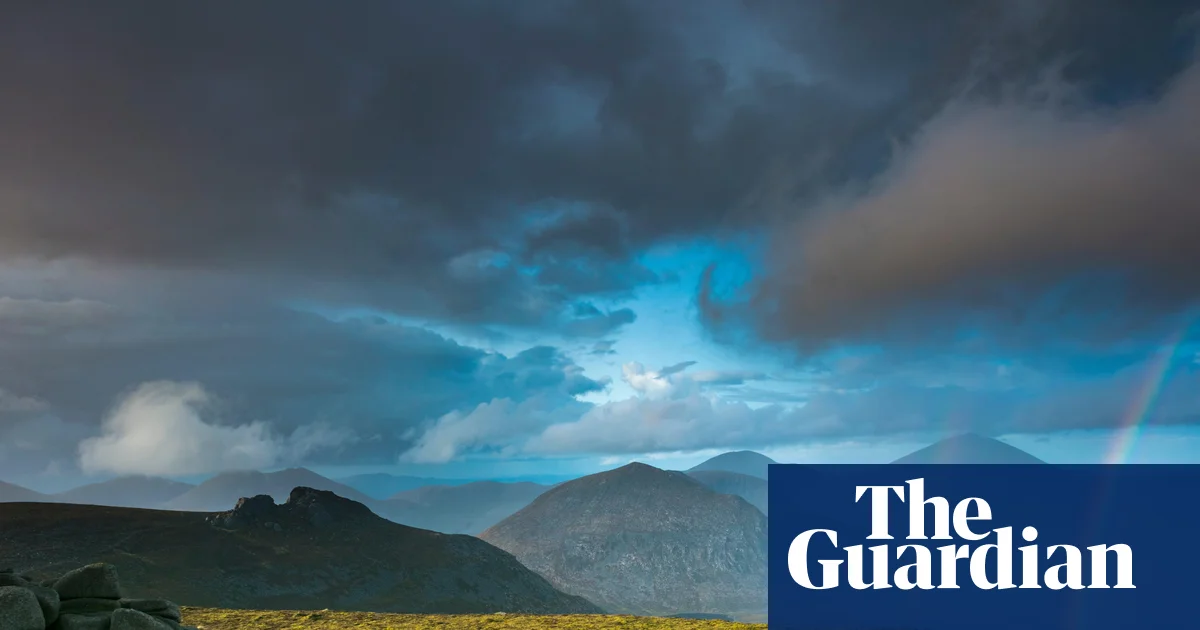
The “spiritual way” includes the Neolithic rock art of Newgrange, the stone iconography of Monasterboice, the Mourne Mountains, which inspired CS Lewis’s Chronicles of Narnia, and sites in Armagh linked to Swift. The nearby Cooley peninsula is associated with the mythological epic Táin Bó Cúailnge.
The “northwest dramatic way” threads George Farquhar, who wrote Restoration-era comedies, with the creator of the TV shows Derry Girls and How to Get to Heaven from Belfast. “The penny just drops: Farquhar and McGee, three centuries apart but with this connection,” said Doran.
Unesco recognises 63 “cities of literature”, including Abuja, Dublin, Edinburgh, Norwich and Tangier. Arts Over Borders will petition the UN agency to create a new regional category, starting with the Irish border.