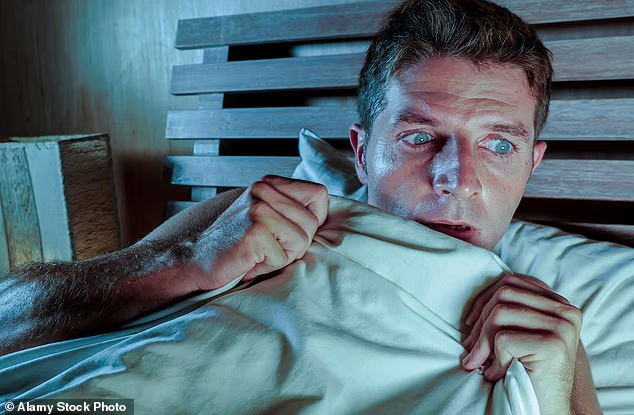
Just about everyone experiences a nightmare or unusually vivid dream from time to time – particularly during periods of stress, anxiety or major life changes.
However, experts say certain strange or intense or disturbing dreams could also be an early warning sign that illness is about to strike – even before the first physical symptoms appear.
Psychologists believe that these ‘prodromal dreams’ may occur when the brain detects subtle biological changes in the body during the earliest stages of illness.
The theory suggests that when infection first begins, the body produces subtle internal signals before symptoms appear, alerting the brain that something is wrong.
During REM sleep – the stage when dreaming occurs – the brain processes these signals as it scans the body for signs of disturbance.
These signals are thought to be processed in paralimbic regions of the brain, including the amygdala, which plays a key role in detecting threats when we are awake.
If a threat is detected, the brain may create symbolic or unsettling imagery that reflects the disturbance inside the body – even though no diagnosable symptoms have yet appeared.
Professor Patrick McNamara, a psychologist specialising in sleep at Boston University School of Medicine, said: ‘The brain is constantly monitoring signals from the body’s internal organs to keep our physiological systems in balance.
Known as prodromal dreams, some say that certain hallmarks during the night can predict the onset of illness before any other overt symptoms manifest
‘These signals are integrated in paralimbic regions such as the anterior insula, which track the body’s internal state. During REM sleep the brain effectively compresses and synthesises this information, producing a kind of snapshot of what’s happening inside the body.’
Dreams and illness have been linked for millennia. In Ancient Greece, patients visited specialised temples called Asklepieia, where they performed rituals and slept in the sanctuary in the hope of receiving a healing dream.
However, Professor McNamara’s theory paper, published in the journal Frontiers last August, is one of the first attempts to outline a possible biological mechanism explaining how dreams might precede illness.
He hopes the idea will prompt larger long–term studies into the phenomenon.
The strongest evidence supporting the theory so far comes from research into neurological conditions such as Parkinson’s disease and dementia.
A 2017 study of more than 1,200 people with REM sleep behaviour disorder – a condition where people physically act out their dreams – found that within 12 years of first reporting the disturbance, 73 per cent had been diagnosed with Parkinson’s disease or dementia.
Reviews of similar research have also suggested dreams may act as warning signs in a range of conditions, including gastrointestinal, lung, gynaecological, dental problems and arthritis.
A small 2015 study even reported that warning dreams preceded a breast cancer diagnosis, with women saying the dreams they experienced were more vivid, real or intense than ordinary dreams in 83 per cent of cases.
‘When we are talking about prodromal dreams though, we are not just talking about serious life threatening illnesses, they could also come before a cold or the flu,’ says Professor McNamara.
Based on the research so far, he believes certain recurring dream patterns may signal that the body is detecting a threat.
‘Dreams that are detecting threats are often presented in similar ways,’ says Professor McNamara.
‘One of them is that there will be unwarranted aggression from somebody towards the dreamer, it may seem unusual but it is a metaphorical signal from the body.
‘The other strong signal is the appearance of male strangers, who are mildly threatening.’
Other research cited by the professor suggests insects may also appear in dreams before illness develops.
A 2022 study analysing 2,888 dream reports from people later diagnosed with Covid found that in the days before testing positive, many described dreams involving maggots or snake bites.
Professor McNamara believes the level of threat portrayed in a dream may help distinguish illness–related dreams from ordinary stress dreams.

Theresa Cheung, a self-proclaimed dream decoder, says she has recieved countless messages from people saying that dreams have saved her life
Theresa Cheung, a self–described dream decoder who runs ITV’s Good Morning Britain segment Your Dreams Explained, says she has heard many anecdotal accounts from people who believe their dreams alerted them to serious health problems.
‘Over the years I have received countless messages from people who say that dreams have saved their lives,’ she said.
‘One woman messaged me to say that a dream with a shadowy man pointing at her breast led her to go to the doctor, where she was diagnosed with stage three cancer.’
For now, Professor McNamara stresses that the theory remains largely speculative and requires much more research before it could be used in medical practice.
However, he believes the concept may eventually have practical applications in some areas of healthcare.
One possibility could be monitoring changes in dreams among people at high risk of severe mental health crises.
‘We know that those with suicidal ideation experience threatening dreams for weeks before they consider an attempt on their life,’ says Professor McNamara.
A 2022 study of 89 patients found that 80 per cent reported altered dreams in the months before attempting suicide.
‘There is a world where these high risk patients are given an AI recorder for their dreams, which monitors them and flags when they are at risk to their care management teams,’ says Professor McNamara.
‘However that is a long way off at the moment, we have the theory but we need large scale studies to support it.’