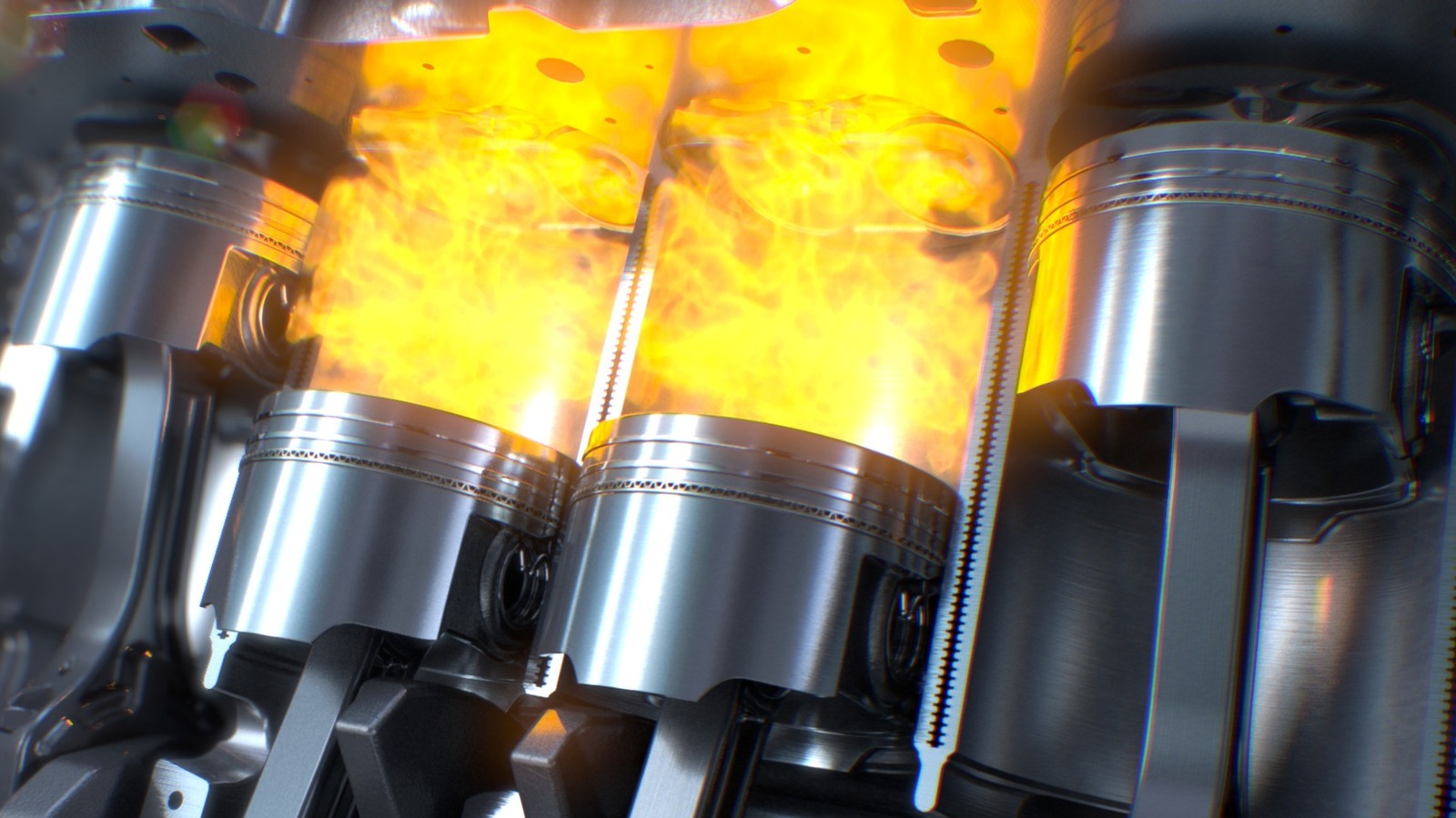
When comparing engine specs for nearly any combustion engine automobile, we see a number of variations available with differing outputs of horsepower and torque. We often have a choice of gasoline or diesel engines with a range of cylinder counts, arranged in inline or V formations.
If we really dig into the minutia of engine specifications, we’ll find a figure for compression ratio that looks something like 9.5:1. The compression ratio relates to the engine cylinder’s maximum volume with the piston at the bottom of its stroke compared to the volume at the top of the stroke where the combustion chamber is at its smallest.
Increasing the gasoline engine’s compression ratio, say from 9.5:1 to 10.5:1 means that the air-fuel mixture inside the cylinder gets compacted into a tighter package at the top of the stroke before ignition. For example, a 5.0-liter V8 engine contains about 0.625 liters per cylinder. At a 9.5:1 compression ratio, the cylinder’s 625 cc volume is squished into a 65.8 cc space, while at 10.5:1 that space shrinks to 59.5 cc.
YouTuber Engineering Explained tells us that increasing an engine’s compression ratio increases its thermal efficiency. Their calculations show the mathematical differences between 9.2:1 and 14.0:1 compression ratios give the higher compression engine a 6% power advantage. Hot Rod doesn’t share the math, but claims, in simple terms, that increasing the ratio by 1.0 within the range of common automotive compression ratios could deliver power gains between 2% and 4%. The magazine also points out that the published compression ratios relay theoretical static compression values, while dynamic compression ratios found in the real world are affected by factors such as valve timing.
Higher compression diesel engines are more efficient than gas
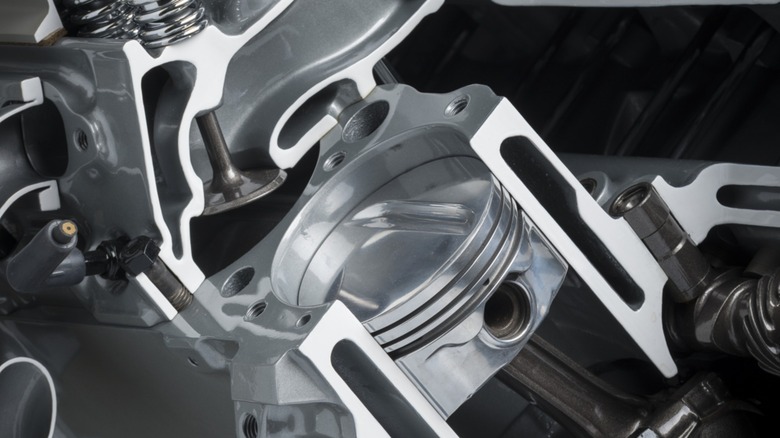
Diesel engines are more efficient than gas engines, thanks, in part, to their relatively high compression ratio. It also helps that diesel contains 15% more energy density than gasoline, but that’s a story for another time.
Diesel engines typically operate with compression ratios ranging from 14:1, which is the upper end of high performance gasoline engines, all the way up to 25:1. One way that diesel engines benefit from higher compression ratios is the heat generated by compressing air beyond 16:1. While a gasoline engine uses a spark to ignite the compressed gasoline mixture, a diesel engine relies on glow plugs for cold starts and high compression ratios to create temperatures up to 1,000 degrees Fahrenheit, more than enough to trigger combustion of its precisely-timed diesel fuel injections.
Generating such high compression ratios takes away some internal combustion engine efficiency. However, the increased cylinder pressure at the time of combustion translates into more power, primarily the torque for which diesel engines are known. In addition, the smaller combustion area of high compression engines (up to 16:1) allows the fuel load to burn quicker and more thoroughly, reducing ignition delay, reducing emissions, and increasing fuel economy.
Why don’t all engines use higher compression ratios?
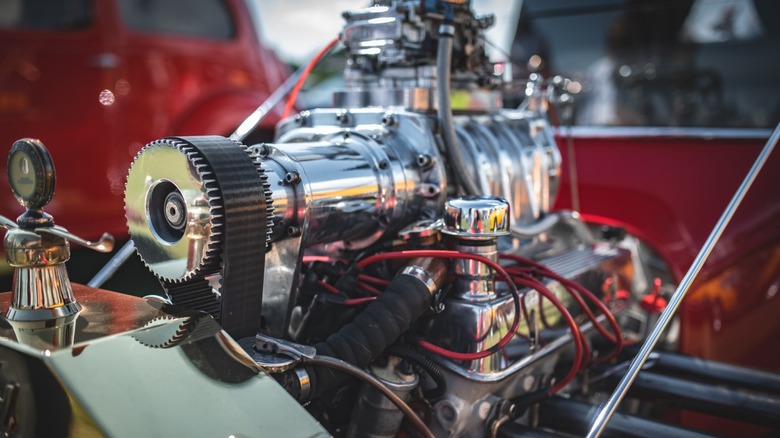
If diesel engine efficiency and performance benefit from increasing compression ratios, why not use the same formula for gas engines? While it’s true that diesel engines exhibit greater efficiency and better performance with higher compression ratios than those typically found in gas engines, there is a point of diminishing returns, and like most mechanical things, there are tradeoffs.
Among the leading factors limiting compression ratios in gasoline engines are detonation and pre-ignition of the fuel load inside the cylinder. While internal combustion engines rely on the combustion of the fuel load during the engine’s power stroke to drive rotation of the crankshaft, the process must be controlled and precisely timed for optimum efficiency.
In a gasoline engine, combustion timing is ultimately controlled by the spark plug. If a gas engine develops excessive dynamic compression, whether from designed static compression ratios, forced air induction, or valve timing, higher internal cylinder temperatures could cause the air-fuel mixture to spontaneously combust sooner than designed, resulting in pre-ignition.
Detonation inside the cylinders is also caused by excessive heat and pressure. However, it occurs after the spark. Instead of a controlled fuel burn radiating through the combustion chamber from the spark plug located near the center, the fuel explodes, or detonates, violently.