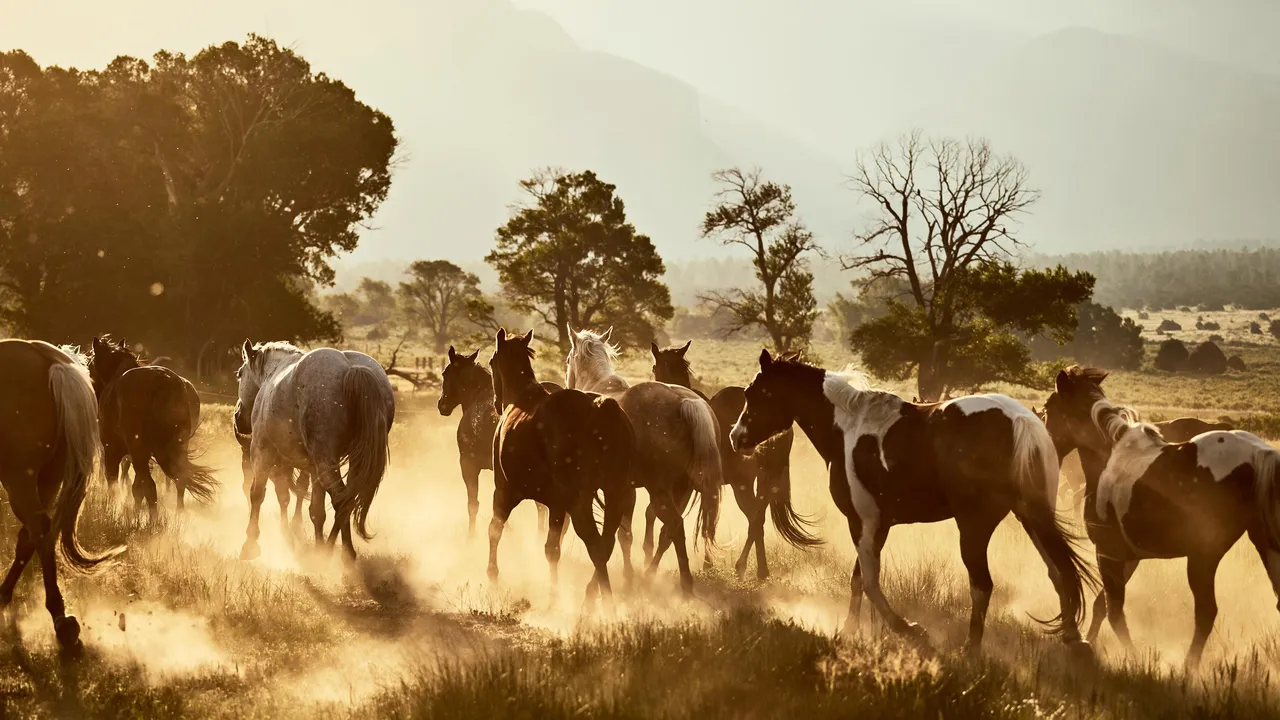
My guide was a well-versed local who knew the area as well as she knew the horses, telling stories about the wild animals that other guests had been able to glimpse while riding (my goal, which unfortunately went unfulfilled, was to see a bear), the surrounding forests and flower fields, and what it was like to work with the property. Gently padding through leaf-strewn paths, shaded from the brilliant overhead sunshine by a canopy of trees, I felt like I could finally take a deep breath that filled up the very deepest corners of my lungs. —Jamie Spain
Read our full The Lodge at Primland review
PHILIP VILE
Castello di Reschio, Tuscany, Italy
Reschio, an 11th-century castle on a hilltop on the Tuscany-Umbria border, comprises 3,700 outrageously beautiful acres of rolling hills, olive groves, vineyards, forest, farm buildings, and, looming darkly over it all, a curtain-walled 11th-century castle. The most radical of the many changes Castello di Reschio has undergone in its long history is the most recent: its transformation from a place designed to keep people out to one redesigned to welcome them in. After a thousand or so years as a fortress, the castle opened in 2021 as a 36-room hotel.
Within the grounds, activities include hiking, cycling, wild swimming, tennis, boating, foraging, truffle-hunting, cooking classes, and riding. Riding above all, because Reschio happens to be—along with everything else—a noted breeding and training ground for Andalusian horses. The equestrian facilities are world-class, and lessons at all levels are available. Even if you don’t want to ride, you’d be mad not to go and pay a visit to the stables and see with your own eyes these extraordinary, otherworldly creatures. The hotel’s head concierge, Sara Rocco, will help get you organized and, if you wish, saddled up. —Steve King
Read our full Castello di Reschio review
Sophie Knight
Nihi Sumba, Indonesia
One of Indonesia’s chicest hideouts sits on the sleepy, vast, and raw Sumba–a remote island in East Nusa Tenggara province and reminiscent of Bali before it became a tourist hotspot. Enter Nihi, an hour and a half’s drive from the airport through rural villages, where houses are built from bamboo and over windy mountain roads where the occasional buffalo herd blocks the way. Here, villas, built with traditional Sumba sky-high roofs (culturally representing being closer to god) in all natural materials, emerge from the coastline with manicured gardens and private pools.