Students are being warned about the symptoms of meningitis after the deaths of two people in Kent.
A University of Kent student and a Year 13 pupil from Queen Elizabeth’s Grammar School in Faversham died following the confirmation of 13 cases in the area of Canterbury.
A further 11 people have fallen ill with signs of meningitis and septicaemia, the UK Health Security Agency (UKHSA) said.
Here is everything you need to know about the disease, including the symptoms to spot, how it’s spread and what can be used to treat it.
Meningitis outbreak live updates
What is meningitis?
Meningitis is an infection of the protective membranes that protect the brain and spinal cord.
Dr Simon Clarke, associate professor of cellular microbiology at the University of Reading said it can be caused by a range of organisms “most commonly bacteria and viruses”.
He says bacterial meningitis, including meningococcal disease, is more serious than other forms like viral meningitis, but it is also the most uncommon.
The University of Kent said the student died following a case of invasive meningitis.
This occurs when meningococcal bacteria spread through the body infecting the bloodstream and fluid surrounding the brain and spinal cord causing both meningitis and sepsis – when the body damages vital organs when fighting infection.
How is it spread?
Dr Clarke says transmission requires close, prolonged contact such as coughing, sneezing or kissing.
The outbreak in Kent is believed to be connected to a “social event” involving university students, Sky News science correspondent Thomas Moore said.
The owner of Club Chemistry said she was told someone who has been diagnosed with meningitis was in the club and that she is now working with UKHSA to try and trace anyone affected.
The specific strain of the disease has not yet been identified.

Chemistry night club in Canterbury. Pic: PA
Dr Clarke adds that the bacteria that causes meningococcal disease is often carried harmlessly in the nose and throat, with only around 10% of carriers ever becoming ill.
In adolescents and young adults, carriage can be higher, with large UK studies reporting rates of 7%-18%, depending on the year and setting.
What are the symptoms?
Symptoms can appear suddenly and may resemble flu at first, Dr Clarke says.
Other symptoms to spot include:
• A high temperature
• Cold hands and feet
• Vomiting
• Confusion
• Breathing quickly
• Muscle and joint pain
• Pale, mottled or blotchy skin
• Spots or a rash that doesn’t fade under pressure
• Severe headache
• Stiff neck
• Dislike of bright lights
• Being sleepy or difficult to wake
• Fits or seizures
What to do if you think you have symptoms
Some early signs of meningitis and measles can also be mistaken for a hangover, meaning it is critical that individuals seek medical help if they or a friend develops any symptoms – particularly if they are getting worse.
It advised students in this case to call 999 or visit the closest A&E department.
In a letter to students the university said: “Trust your instincts and do not wait for all the symptoms to appear or until a rash develops. Someone with meningitis or sepsis can get a lot worse very quickly.”
Can it be treated?
Most people with bacterial meningitis who are treated quickly will make a full recovery and generally do not suffer from any long-term complications.
However, they may need to be treated in hospital for at least a week.
Treatments include antibiotics and fluids given directly into a vein or oxygen through a face mask.
The University of Kent said antibiotics have started to be given out to affected students around Canterbury.
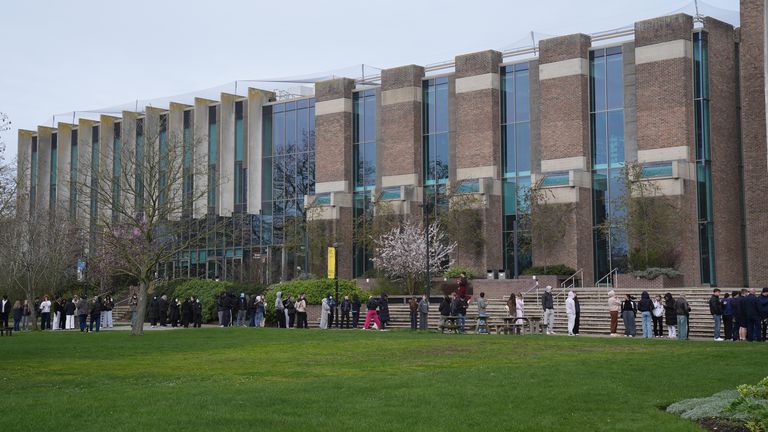
University of Kent in Canterbury. Pic: PA
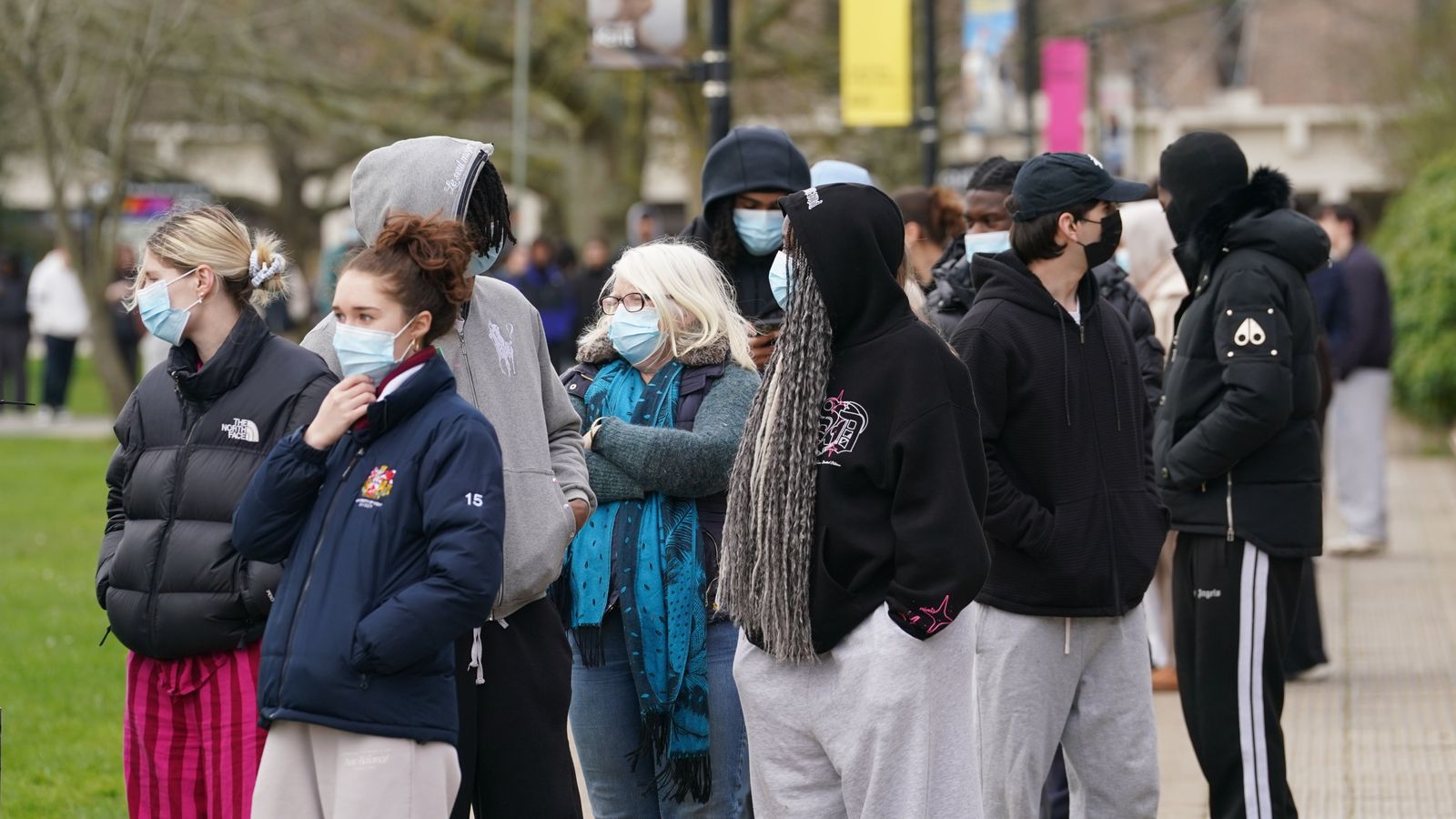
Sky News correspondent Emma Birchley said a mix of students and people from the local community are “not taking any chances” and queuing up for antibiotics.
However, a spokeswoman for the UKHSA said only those who are regarded as “close contacts” of those affected, such as living in the same accommodation block, will be given medication.
Those with viral meningitis typically get better on their own.
What about vaccines?
Dr Clarke says vaccines remain the “best protection” for meningitis.
Anyone can check with their GP practice to find out which vaccines they have had or need.
The MenACWY vaccine is a single dose jab that protects against four strains of meningococcal bacteria.
It is offered to teenagers in school and is also available to those entering university, up to the age of 25.

Invasive meningitis is when meningitis and sepsis occurs at the same time. Pic: iStock
Andrew Preston, a professor of microbial pathogenicity at University of Bath, said that uptake among teenagers was about 73%.
He said given the size of the student cohort a large number are likely to be unvaccinated.
Read more from Sky News:
15 vehicles involved in motorway crash
Key moments from the Oscars
Other vaccines including the MenB, 6-in-1, pneumococcal and MMRV can provide protection for some causes of meningitis in babies and children.
Infants receive MenB jabs at eight weeks, 12 weeks, and one-year, while teenagers from school Year 9, receive MenACWY.
According to data by the UKHSA, uptake of the MenB vaccine dropped by 0.6% for those aged 12 months in England from July to September last year. An estimated 90.8% of one-year-olds were given a third dose.
For teenagers and young adults the MenB vaccine is only available privately through highstreet and supermarket pharmacies.