Canadian filmmaker Michael Zelniker didn’t come up through the traditional documentary ranks. A former actor who appeared in films such as Clint Eastwood’s “Bird” and David Cronenberg’s “Naked Lunch,” Zelniker built his career in fiction before pivoting toward environmental storytelling.
“I’m not from the documentary film world. I had a lovely career as an actor… then I spent some years teaching. But about a month into the pandemic, I learned that the boreal forest was being cut down for toilet paper. And I thought, ‘Oh my God,’” Zelniker says.
That discovery led him to make his first documentary, “The Issue With Tissue — a Boreal Love Story,” a personal exploration of Canada’s endangered forest ecosystems and the Indigenous communities who live there.
For his latest project, the eight-part docu series “The Struggle for Mother Water,” he embarked on an even bigger and bolder adventure. Shot over 219 days across 21 countries, the series examines the escalating water crisis through the voices of those living on its frontlines. The lushly-lensed project was acquired for world rights by Montreal-based Filmoption and two episodes were screened at the Berlinale Series Market Selects.
Zelniker is now eyeing a festival to host the world premiere, and is also aiming to spur action from policymakers. As such, a preview episode will screen at the United Nations headquarters in New York on March 22, World Water Day.
“I’m trying to uplift the voices of those who have for too long been ignored,” he says. “Because I not only believe it’s the right thing to do — I believe it’s our last best hope.”
The scale of the crisis he encountered during the making of the film is staggering: more than 2 billion people lack access to safe drinking water, and nearly 4 billion lack adequate sanitation. But Zelniker was determined to avoid reducing the issue to a distant or localized problem.
“I wanted to avoid anyone turning to me and saying, ‘Oh, it’s only happening over there,’” he says. “So I went everywhere — to show the full dimension of what this crisis looks like.”
Zelniker, who shot, directed, edited and financed the project himself, grounded his film in lived experience and captured some highly emotional scenes with his subjects, mostly women because they’re ones who are tasked with securing water for their families.
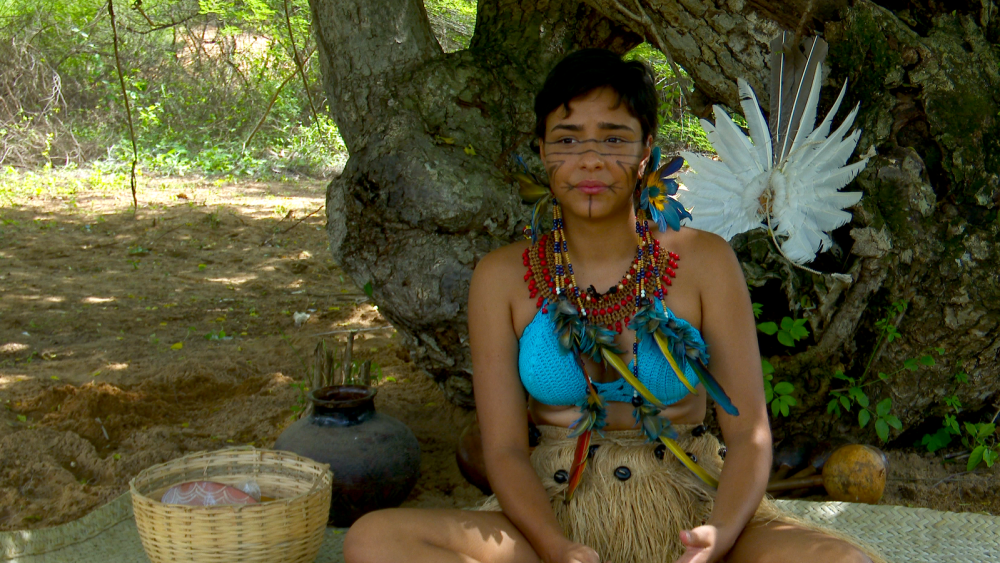
“In communities all over the world, women and girls are leading the fight to protect and defend water,” he says, noting that “about 90% of our documentary is voiced by women.”
Dalit Farmer Maharashtra India Dry Field
The most heart-wrenching part of the series sees Zelniker witnessing women and children collecting contaminated water, fully aware it would make them sick. “I would ask them, ‘How does it feel to bring this home to your children?’” he says. “And they would say, ‘It feels terrible. We know it’s contaminated. But what can we do? This is all we have.’”
The film also shows these women say “water is life” in 26 different languages which Zelniker says came spontaneously, highlighting how universal this plight to access safe drinking water has become.
“I never asked anyone to say it. But everywhere I went, I kept hearing it. Because when you don’t have water, you know that without it there is no life,” he says.
The final episode underscores that perspective with a montage of women staring directly into the camera, and, by extension, the viewer.
“It’s a kind of private moment between them and the audience. A silent appeal: ‘Hear me. See me. Understand the struggle I’m facing,’” he says.
Beyond its human stories, “The Struggle for Mother Water” is also meant to highlight how natural resources are treated within modern economic systems. Zelniker argues that the commodification of water, and nature more broadly, lies at the heart of the crisis.
“We’ve taken the things we depend on for our survival — water, trees, plants — and turned them into commodities for commercial profit. To me, that’s like trading your brother or sister into prostitution,” he says.

Ethiopian Woman Fetching Contaminated Water
The series also frames nature as a network of relationships rather than a resource to exploit. “There’s a broken relationship between us and the rest of creation,” Zelniker says. “Indigenous peoples understand that these are family. They must be treated with respect, with reverence, because they give us life.”
That message has struck a chord with international institutions. Following the Berlinale Series screening, Stefan Mager, head of energy, water and mobility at Germany’s development agency GIZ, praised the series on social media, saying it aligns with global efforts ahead of the U.N. Water Conference 2026, noting that it “does not only document crisis — it documents courage, resilience, and community-led solutions.”
Zelniker is hoping to leverage that momentum as screenings are being planned with organizations including UN Water and UN Women, as well as government agencies such as GIZ which has invited the director back to Germany to present the series to policymakers.
Aside from filmmaking and advocating, Zelniker has established the Mother Water Fund, a nonprofit initiative that channels all proceeds from the series back into the communities featured in the film. Some early projects in the pipeline include funding a borehole at a school in Cameroon, where children currently walk kilometers each week to fetch water, as well as initiatives in South Africa and Uganda.
“The way to change people’s minds is through their hearts. If people watch this and aren’t moved, I think they don’t have a heart,” Zelniker says, before quoting James Baldwin. “Not everything that is faced can be changed. But nothing can be changed until it is faced.”