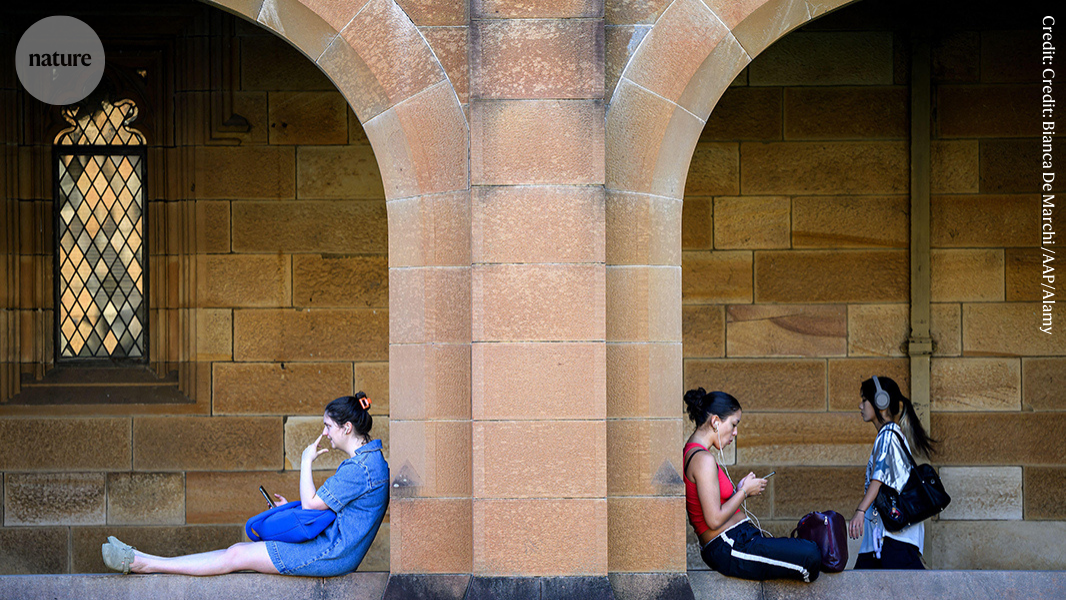
An increase in the price of an Australian visa might make it more difficult for graduates to stay in the nation after they complete their degree.Credit: Bianca De Marchi /AAP/Alamy
University and postgraduate groups in Australia are urging their government to exempt PhD graduates from the surprise doubling of a key visa fee, warning that the price increase will drive international research talent away.
On 1 March, the Australian Department of Home Affairs said that the fee charged for higher-education temporary graduate visas (a category called subclass 485) would double with immediate effect, from Aus$2,300 (around US$1,600) to Aus$4,600.
The visa allows international students who have graduated from Australian universities less than six months previously to remain in the nation for a few years (usually two or three depending on the type of qualification they receive) after completing their degrees. It lets graduates either continue their studies or find work and can serve as a bridge for those transitioning from PhD programmes to postdoctoral positions or into other research careers.
On 10 March, the Council of Australian Postgraduate Associations (CAPA) wrote to Tony Burke, the home affairs minister, arguing that the increased fee risks cutting off Australia’s “critical pipeline” of foreign research talent. The organization called on the government to exempt people who are completing research-based master’s or PhD degrees from the price hike. For PhD students who would like to stay in Australia after graduating, this visa is, on average, the equivalent of 13% of their yearly stipend. PhD students already cite cost of living as their biggest concern, CAPA said. “Doubling the cost of their ticket into early-career research … will turn the talent elsewhere,” said the organization.

Australia must boost R&D investment to reclaim global research standing
In 2023, international candidates made up 40% of all PhD enrolments in Australia, compared with an average of 25% in 2022 across Organisation for Economic Co-operation and Development (OECD) nations. The visa fee hike could add to other pressures that universities face when recruiting research talent, such as a lack of funding available for PhD stipends — which often sit close to the poverty line — and a cap on university spending that limits the proportion of doctoral funding that can be offered to international students to 10%.
One international PhD student at an Australian university, who asked not to be identified owing to concerns about future visa applications, told Nature that the increased fees might affect the pipeline of postdocs into Australian research. “Universities will potentially lose some often-exceptional candidates that can’t afford to put that much money upfront, way before they start getting paid,” he said.
Extra measures
The visa fee increase is the latest in a series of tightened immigration measures flowing from a migration strategy launched by the Australian government in December 2023. The strategy aimed to fix what it described as a “broken” migration system, tackling serial ‘visa hopping’, a tactic that enabled visitors to stay in the nation for a long time by moving between visa types. The measures also seek to protect Australia’s higher-education system from “unscrupulous” actors, including “ghost schools” that allow students to enroll without attending real classes as a route to live and work in the nation.
Since then, changes to migration policies have come in quick succession. In 2024, the maximum eligible age for the 485 visa was reduced from 50 to 35, although postgraduates with research-based degrees were exempt from the change. From January this year, further restrictions on visa hopping will prevent holders of 485 and visitor visas from applying for student visas while in Australia.