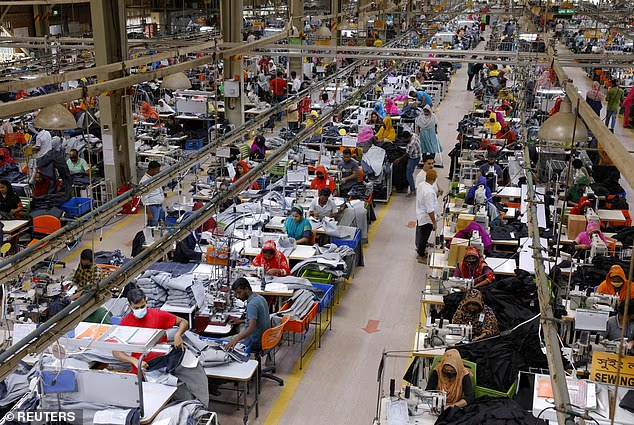
A toxin that could trigger cancer, autism and brain damage has been detected in popular ‘fast fashion’ clothing.
Fast fashion, churned out quickly using synthetic materials, is sold by global giants such as H&M, Shein and Zara for a little as just a few dollars. The US fast fashion market is extremely popular, valued at about $21 billion in 2024.
While more awareness has been raised on the environmental impact of fast fashion, less is known about the health impacts.
But now, researchers have put that to the test and found many items may contain lead, a heavy metal that can enter the bloodstream and damage the brain and neurons, potentially raising the risk of autism and behavioral problems, and blood vessels, raising the risk of high blood pressure.
Experts say there is no safe level of lead exposure. However, the Consumer Product Safety Commission sets a limit of 100 parts per million for children’s clothes.
In their study, the team in Indiana tested 11 fast fashion children’s shirts that were dyed red, pink, orange, yellow, gray and blue and found all of them contained lead levels above the recommended safe limit.
Overall, the garments that were brightly colored, such as red or yellow, were found to have the highest levels of the heavy metal.
The clothing was sold at four fast fashion and discount retailers, which were not named, and were for children.
But, because of the detection of the lead in children’s fast fashion, it is likely that the heavy metal is also present in rapidly-produced garments meant for adults.
Fast fashion, churned out quickly using synthetic materials, is sold by global giants such as H&M, Shein and Zara for a little as just a few dollars (file photo)
Cristina Avello, an undergraduate biology student at Marian University who led the research, said: ‘Not only are children the most vulnerable to the effects of lead, but they are also the population that is going to be putting their clothes in their mouths.’
It was not clear why lead was in the clothing, but the researchers said it could be linked to how the color is added.
Fast fashion manufacturers often soak clothes in lead acetate, an inexpensive substance that helps dyes stick to clothes, creating long-lasting colors.
There are natural alternatives, such as tannins from oak bark and pomegranate peels, but these are generally not used as they tend to be more expensive.
In the study, the researchers tested all the garments to check whether they contained lead levels exceeding those set by the Consumer Product Safety Commission (CPSC) – and found they did.
As part of the study, they also simulated digestion in the lab to determine the amount of lead that would be absorbed by the body.
This was to simulate the impact of chewing clothes, which children often do.
Results showed that the levels of lead in the body following digestion would be above 100 parts per million.
Researchers did not specify which fast fashion brands were tested or whether the clothes were laundered before the research, which may reduce lead levels.

Scientists warned that sucking on these clothes for just a short period could cause lead exposure above the safe level (stock image)
The research is set to be presented at the spring meeting of the American Chemical Society, held this week in Atlanta, Georgia.
Dr Kamila Deavers, a biologist and the project’s principle investigator, said the study was carried out after she found her young daughter had a brief spike in blood levels of lead after she was exposed to certain toy coatings.
Deavers said: ‘I started to see many articles about lead in clothing from fast fashion, and I realized not too many parents knew about the issue.’
Previous research has found high lead levels in metal parts of some children’s clothes, including zippers and buttons, which have led to product recalls.
Deavers has called for consumer pressure on manufacturers, warning that, without it, it was likely that the industry would keep making fast fashion products using lead.
Now, the researchers are planning to study more shirts and examine their data to find out if there is a relationship between lead levels in the fabric and the amount that children could absorb.
They are also planning to investigate how laundering affects lead levels in clothing.
Children and adults can be exposed to lead from multiple sources, including paints, water pipes, toys and zippers. About 500,000 children in the US are estimated to have lead levels in their blood that is above the safe limit, according to the CDC.
Warning signs of elevated lead levels include behavioral problems, speech and hearing problems and learning difficulties. Adults are also at risk from the toxin.
Officials say the best way to treat lead exposure is to remove the main source of lead from the home environment.
If parents are concerned, children may also be offered tests to check the lead levels in their blood.