Shoppers are being ‘tricked’ into assuming snacks are healthier than they are, say nutritionists – because they’re frequently sold by brands that market themselves as health food stores.
Snacks such as yoghurt raisins, for example, can often contain more fat and calories than a standard Mars Bars.
Major high street and online stores such as Holland & Barrett, Grape Tree and The Source Bulk Foods are ‘confusing’ shoppers, they say, by selling snacks that can be ultra-processed and high in fat, sugar and salt, on shelves next to vitamins, supplements and whole foods, which may make them seem like a healthier choice.
Products including fried and salted nuts, vegetable and lentil crisps, chocolate, ‘yoghurt’-covered fruit and nuts and even old fashioned sweet shop confectionary are amongst the products being marketed as ‘treats’.
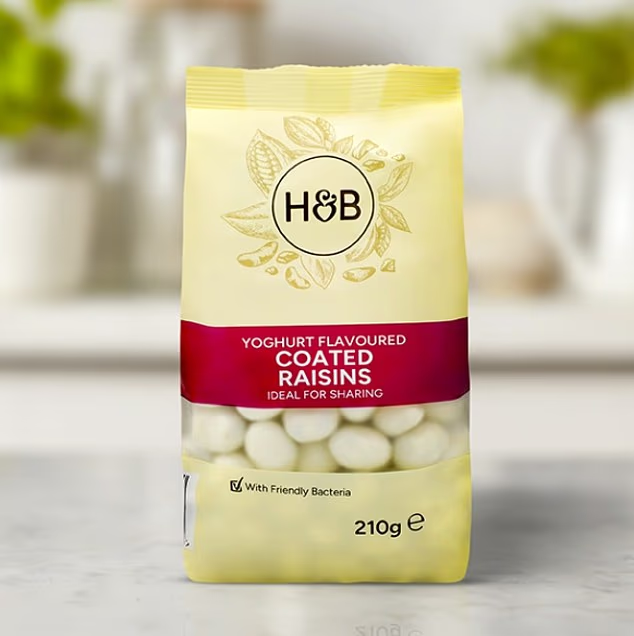
Yoghurt raisins, for example, are sold by most healthy food stores, and are advertised by Holland & Barrett as a ‘great alternative to chocolate’.
But according to nutritionists, not only do the coated raisins contain a lengthy list of ingredients – 13 – there’s barely any yoghurt in them beyond a very small amount of ‘yoghurt powder’.
Yoghurt raisins are a popular choice with health-conscious snackers – and sold by Holland & Barrett and Grape Tree…but they have little to offer nutritionally, say experts. A packet sold in Holland & Barrett contains over 1000kcal


What experts call the ‘health halo’ means that products can seem healthier than they are – including salted pretzels, left, and Bombay mix, right, when sold in the same stores as genuinely healthy food
In the Holland & Barrett version, there is ‘friendly bacteria’, which appears to comes instead from Bacillus Coagulans Powder, a probiotic.
The snack, which is particularly appealing to parents who want to make healthier choices for young children, say nutritionists, contains 24.2grams of fat, 58.5g of sugar and 506Kcal per 100grams.
By comparison, a 51gram Mars Bar contains 442kcal per 100grams and 16grams of fat. It contains marginally more sugar than yoghurt raisins, with 61grams per 100 grams.
Many shoppers will baulk at the price too; at £5.49 for a 210-gram bag, it’s a high calorie, high sugar treat with an extravagant mark-up.
Nutritionist Charlotte Stirling-Reed says consumers are being misled with the ‘health halo’ – by using words often associated with healthy foods to promote a product…and yoghurt raisins are the perfect example.
She told the Daily Mail: ‘Parents think they are raisins dipped in yogurt, and they’re not. They’re raisins with a really sugary coating, and raisins don’t need added sugar – they’re already sweet!’
‘We need to be much clearer with packaging and the way that we market foods.’

Nutritionists say sugar-laden confectionery sits alongside the nuts and dried fruits that have made Grape Tree’s name

Grape Tree, founded in 2012 and an increasing presence on UK high streets – says it’s dedicated to ensuring products ‘are the finest natural whole foods’ but sells a variety of sugar-laden treats
Holland & Barrett calls itself ‘the UK’s leading health and wellness store’, with the brand, which was established in 1870, saying it’s dedicated to making ‘health and wellness a way of life for everyone, adding quality years to life’.
Over at Grape Tree, which was founded in 2012 and now has more than 140 stores nationwide, sugar-laden confectionery sits alongside the nuts and dried fruits that have made the relative newcomer’s name.
Garishly coloured sweets by The Jelly Bean Factory – which contain more than 20 ingredients and a teeth-damaging 74g of sugar per 100g, sit alongside other ‘vintage’ sweets including cinder toffee, flying saucers and aniseed balls on the brand’s website and in-store shelves.
The brand’s vision statement, published on its website, says Grape Tree is dedicated to ensuring their products ‘are the finest natural whole foods, offering exceptional value, choice and quality second to none’.
It’s a familiar story in many health food brands’ stores…buywholefoodonlines.co.uk, for example, sells a wide range of salted, roasted nuts.
A 250gram packet of dry roasted peanuts contains 35% salt, which negates any health benefits of eating nuts, say experts. The snack’s lengthy ingredient list also includes two anti-caking agents, E341, E551.
THE HEALTH FOOD SHOP SNACKS THAT ARE FAR FROM HEALTHY

A high protein Oreo Grenade bar sold at Holland & Barrett are ultra processed – and advertised as an ideal snack ‘on-the-go’
OREO GRENADE PROTEIN BAR, £2.00 for 60grams, Holland & Barrett
Calories per 100 grams: 974kcal
Fat per 100 grams: 17grams
Joe Wicks, aka The Body Coach, went to war with protein bars in 2025 for a Channel 4 TV documentary, taking the industry behind them to task on how the ultra-processed snack bars are often marketed as healthy.
Holland & Barrett are among those selling the high protein, low sugar Oreo Grenade bar, which may be healthier than your average chocolate bar with 21 grams of protein packed into it…but it’s also high in sugar and most definitely an ultra-processed food.
The ingredients list is lengthy – with over 20 individual ingredients, including palm oil, multiple bulking agents and sweeteners.

Sour Fizzy Cherry sweets sold by The Source Bulk Foods – the biggest ingredient in them is listed as sugar
Sour Fizzy Cherries, £1.60 for 100g, The Source Bulk Foods
Calories per 100 grams: 341kcal
Sugar per 100 grams: 58.5grams
Fat per 100 grams: less than 0.5grams
Marketed as ‘adding a playful twist to your day’ and stretching the word treat to its limit, these sour jelly cherries contain sugar as the main ingredient alongside a dizzying list of other items, including acidity regulators sodium malates and sodium hydrogen carbonate. They’re currently advertised as being on offer, reduced from £2.00 for 100gram bag to £1.60
Yoghurt Raisins, £5.49 for 210g, Holland & Barrett

Delicious…but yogurt raisins are essentially as unhealthy as regular sweets, say nutritionists
Calories per 100 grams: 506kcal
Sugar per 100 grams: 58.5grams
Fat per 100 grams: 24.2grams
Particularly appealing to parents who want to make healthier choices for young children, say nutritionists, a Holland & Barrett 210gram packet of yoghurt raisins contains 24.2grams of fat, 58.5g of sugar and 506Kcal per 100grams.
How does that compare to a Mars Bar? The chocolate snack contains 442kcal per 100grams and 16grams of fat. It contains marginally more sugar than yoghurt raisins, with 61grams per 100 grams.


Buy Whole Foods Online sells dry roasted peanuts, which contain 35% salt. Right: Grape Tree sells Bombay Mix, the popular fried snack that is high in fat and salt
Dry Roasted Peanuts, £3.49 for 250grams, Buy Whole Foods Online
Calories per 100 grams: 608kcal
Salt per 100 grams: 1.96 grams
Fat per 100 grams: 49.3grams
A 250gram packet of dry roasted peanuts contains 35% salt, which negates any health benefits of eating nuts, say experts. The snack’s lengthy ingredient list also includes two anti-caking agents, E341, E551.
Bombay Mix, £2.99 for 500grams, Grape Tree
Calories per 100 grams: 518kcal
Salt per 100 grams: 2 grams
Fat per 100 grams: 29 grams
Most of the bare ingredients of this popular Indian snack are virtuous – chick peas, lentils and peanuts…but when they’re deep fried and drenched in salt and spices, they become much less saintly. A 500gram bag contains a whopping 10 grams of salt.

Pretzels are often deemed a healthy choice, and while they’re certainly better than many deep fried snacks, they offer little nutritionally
Salted Pretzels, £1.70 for 100 grams, The Source Bulk Foods
Calories per 100 grams: 402kcal
Salt per 100 grams: 3.7grams
Fat per 100 grams: 7.9grams
Baked not fried is how pretzels are frequently sold as a healthier choice and while they do compare favourably to many deep fried crisps and snacks, they often come with high salt levels, with 3.7 grams per packet in those sold by The Source Bulk Foods
<!- – ad: https://mads.dailymail.co.uk/v8/us/lifestyle/none/article/other/mpu_factbox.html?id=mpu_factbox_1 – ->
Stirling-Reed, who’s an expert speaker from The Baby Show, on at the Birmingham NEC in May, says: ‘I don’t have a problem with that company selling a range of sweets – but I do have a problem with them then marketing themselves as a brand that says “We’re really healthy, we’re all about healthy food” because it’s a confusing message.
‘I think that consumers are already really confused about food and nutrition.’
Mark Gilbert, a nutritionist for over 30 years, says that ultimately it comes down to profit for such stores…and if that means swelling coffers with ‘treats’, then many brands are prepared to do it.
He explains: ‘The problem is, the health food store is like any other industry. The CEO has a fiduciary responsibility to sell as much as possible.
‘They say to themselves “Let’s make everything we sell sound as healthy as it can be, because if I make it sound less healthy and put warnings on it, we’ll sell less.” Often, it just comes down to that at the end of the day.’
A spokesperson for Holland & Barrett told the Daily Mail that the brand is continuing ‘to evolve our offering in line with nutritional guidance to give our customers choices’.
They added: ‘We offer a wide range of snacks from more functional, nutrition-led options to everyday snacks. We’re committed to helping customers make informed decisions through clear, transparent labelling, alongside guidance that supports a balanced diet.
‘Over the past three years we have been transforming our range to support customers wishing to make healthier and more nutritious choices.
On some of the less healthy foods they sell, the brand said: ‘Products such as yoghurt-covered fruits or snack mixes can be part of this when consumed in moderation.
‘Bombay mix is a great example of where our product experts were able to remove 40% of the saturated fat and 70% of the salt to offer a healthier version of one of the nations favourite snacks. Our range also includes new £1 snacks with no added sugar, no fat and no salt.’
Earlier this year, the Advertising Standards Authority (ASA) enforced a ban on TV advertising of junk food – in which many products often marketed as ‘healthy alternatives’ found themselves falling foul of the stricter rules.
Some 13 categories of food and drink are affected, based on a scoring system which balances nutrient levels against fat, salt and sugar content – with products such as instant sweetened porridge, popcorn and lentil-based crisps included.
To be categorised as a less healthy food, such items must be high in fat, salt or sugar and score four or more points under the nutrient profiling model.
Currently, the obesity crisis is estimated to cost the health service more than £11bn every year.
With evidence showing that watching adverts for unhealthy food and drink can greatly influence food preferences from a young age, firms that do not comply with the new regulations risk serious action by the ASA.
Rob Hobson, a registered nutritionist and author of Unprocess your Family Life, told the Daily Mail in January: ‘I think it’s important not to interpret this as foods being banned or labelled unhealthy and this is where the nuance really matters, because the 9pm watershed isn’t about foods being banned, and it definitely isn’t about telling parents what they can or can’t feed their kids.
‘It’s about reducing children’s exposure to aggressive marketing of foods that are high in fat, salt and sugar, using a nutrient profiling model that looks at the overall balance of a product rather than its “health halo”.’