Listen to this article
Estimated 3 minutes
The audio version of this article is generated by AI-based technology. Mispronunciations can occur. We are working with our partners to continually review and improve the results.
Nunavut’s chief public health officer Dr. Ekua Agyemang says it is possible to eliminate tuberculosis in the territory by the end of the decade, but it will take more work.
“We can end TB by working together with communities and building strong partnerships,” Agyemang said. “It’s just a message of hope that it is possible to eliminate TB.”
She said five TB cases have been reported in the territory so far this year, compared to 26 in 2025, and 36 in 2024. In Nunavut, TB cases have been steadily declining since 2023.
Natasha Crowcroft, the acting chief public health officer for Canada, says it’s important to celebrate and highlight the progress being made to eradicate TB in the territory.
“We are moving in the right direction and that’s a turn around,” she said. “TB was on the rise and now it’s going down, and that’s gold.”
Crowcroft says the decrease in cases is because of all the funding and work being done by organizations like NTI and the Government of Nunavut as well as communities.
“We need to keep going and keep the funding going,” she said. “We’re in a fiscal environment where we need to be very careful with our resources. But the government has put money specifically into TB elimination in the North, so there is funding available.”
In February, the federal government announced it will spend $27 million over five years to support Inuit-led, community-specific efforts to end tuberculosis.
The federal government and ITK have pledged to end TB by 2030.
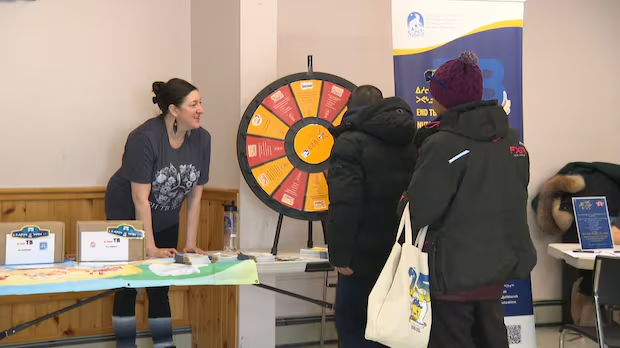
Agyemang says the key to further decreasing cases is public awareness, education and diagnosing early.
“Because of the historical trauma of TB, still there is fear around [the disease],” she said. “There’s still stigma around TB and it’s important that we come together as communities to help one another to understand that today if someone has TB in Nunavut, they don’t necessarily have to be taken out of the community.”
Agyemang says ending TB by 2030 is possible, but it would require various sectors like housing, food security, mental health services and health care working together to eliminate the illness.
“All those things need to come together to make that goal achievable,” she said. “As long as we can identify TB early before it becomes too infectious and expressed to other people, that means that it can be contained.”