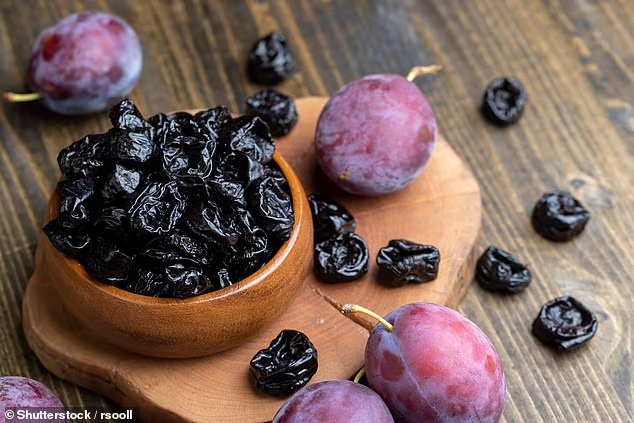
Prunes are – rather unglamorously – best known for helping relieve constipation.
The dried plums, often eaten on their own or with cereal or muesli, contain fibre and a natural sugar alcohol called sorbitol, which together help keep the bowels moving.
But experts say their ‘nature’s laxative’ reputation has unfairly overshadowed their wider health benefits.
Despite being packed with vitamins, minerals and antioxidants that may help protect against diseases of ageing, prunes remain overlooked – ranked just 46th among the UK’s favourite fruits in a recent YouGov poll, behind dried dates, apricots and figs.
According to Hanieh Vidmar, a nutritional therapist and chef, they may be particularly valuable for women’s health.
She said: ‘Prunes are nutrient-dense and should get much more credit than helping people go to the bathroom.
‘They’re surprisingly great for bone health – especially for women – and act as a mild prebiotic which feeds the good gut bacteria. This means they support the gut health long-term not just for quick relief.’
So what do prunes actually offer nutritionally – and how should we eat them to get the most out of them?
Experts say prunes reputation as ‘nature’s laxative’ has unfairly overshadowed their wider health benefits
What are prunes exactly?
Prunes are simply dried plums, usually from European varieties selected for their naturally high sugar content, which allows them to be dried without fermenting.
Plum trees take four to six years to mature, blossom in early spring and are harvested in late summer, when the fruit is dark, plump and sweet. Once picked, the plums are washed, dehydrated and pitted, creating the soft, chewy texture we recognise.
While around 40 per cent of the world’s prunes come from California, Britain has its own long-standing varieties, including the Aylesbury Prune and the Shropshire Prune, a type of damson cultivated for centuries.
Available year-round in supermarkets – typically for under £3 for a 250g pack – prunes are sold pitted, ready to eat or as juice, offering an easy and inexpensive way to boost fibre, vitamins and minerals.
Nutritionally, they pack a surprising punch. Four to five prunes provide around 280mg of potassium – about 12 per cent of your daily needs – alongside Vitamin K, soluble fibre and antioxidant compounds.
Potassium helps regulate nerve function and muscle contractions, while Vitamin K is essential for blood clotting and bone health. Prunes also contain copper, which supports red blood cell production and immunity, and small amounts of Vitamin C, which helps protect cells and improves iron absorption.
A typical handful of five prunes contains around 104 calories, 1g of protein, no fat, 28g of carbohydrates, 3g of fibre and 17g of natural sugars.

Prunes have been part of a healthy diet for decades
Do prunes help with constipation?
Prunes’ best-known benefit is their ability to keep digestion running smoothly.
Their high fibre content, combined with a natural sugar called sorbitol, helps draw water into the bowel and soften stools – giving them their gentle laxative effect.
Ms Vidmar said: ‘Sorbitol is a natural compound in prunes that draws water into the bowel, making them one of the most effective natural remedies for constipation.’
Studies suggest eating eight to 12 prunes a day (around 50-100g) can ease mild to moderate constipation, in some cases outperforming commercial fibre supplements.
Prune juice can have a similar effect, though experts advise sticking to a small glass a day to avoid excess sugar and calories.
Ms Vidmar recommends a simple daily ritual: ‘I like to add three to five prunes to hot water and drink it like tea. Then, when I’ve drunk the tea, I eat the prunes. It’s a great way to support digestion and boost daily fibre intake.

Hawaiian model Lili Maltese was the celebrity spokesperson for California Prunes
As well as this, studies indicate that eating prunes as a snack helps manage appetite better than other snacks, leading to reduced hunger and lower calorie intake at subsequent meals.
Regular consumption of prunes can help prevent bloating and discomfort, but like any fibre-rich food, it’s best to start slowly and drink plenty of water to allow your system to adjust.
‘The best time to have prunes would be first thing in the morning and drink plenty of water as well,’ she says.
‘Also, move your body as well to get things moving. For example, a short walk can help people who suffer from constipation or who want to get their bowels moving.’
Are prunes good for bone health?
The combination of antioxidants, anti–inflammatory compounds and Vitamin K found in prunes makes them a natural ally in the fight against bone-thinning disease osteoporosis.
Research suggests that regular consumption can help prevent hip bone loss, reduce inflammatory markers that break down bone and even improve bone formation.
In postmenopausal women, studies show that 50g a day (around five to six prunes) can prevent the loss of total hip bone mineral density over six to twelve months.
Ms Vidmar says: ‘Some studies have shown that daily prune intake can actually improve markers of bone density in postmenopausal women.
‘This is thought to be due to their polyphenols reducing osteoclast activity (bone breakdown), alongside nutrients like vitamin K, potassium and boron that support bone metabolism.’
Who should avoid prunes?
Prunes are safe for most people, but they aren’t a perfect fit for everyone.
For those with IBS or a tendency toward diarrhoea, the fruit’s high fibre and sorbitol content can lead to gas, bloating or worsened digestive upset.
People with chronic kidney disease or kidney failure should be cautious as prunes are high in potassium, which can be difficult to manage.

Plum and prune juices are widely known to aid digestion and help relieve constipation due to their natural fiber and sorbitol content
They also contain moderate to high levels of Vitamin K, a nutrient that promotes blood clotting and can interfere with anticoagulant medications like warfarin (Coumadin).
Anyone taking these medications should check with their doctor before adding prunes to their diet.
Additionally, individuals with stone fruit allergies or other digestive sensitivities should consume them sparingly.
While generally safe, prunes are best enjoyed thoughtfully by those with certain medical conditions or dietary concerns.
Can prunes reduce cancer risk?
While current evidence is limited and more human studies are needed, prunes may help reduce the risk of certain cancers, particularly bowel cancer.
This potential benefit is largely attributed to their high fibre and phenolic compound content, which promotes a healthy gut environment and provides antioxidant effects.
Prunes can promote the retention of beneficial bacteria and microbial metabolism throughout the colon, which is associated with a reduced incidence of precancerous lesions (aberrant crypt foci) in animal studies.
A healthy gut environment is a known factor in protecting against bowel cancer which is particularly important as those under 49 today are around 50 per cent more likely to develop bowel cancer than people of the same age in the early 1990s.
Prunes contain phenolic compounds that act as antioxidants. These compounds help to neutralise free radicals, which are unstable molecules that can damage DNA and cells, contributing to cancer development.

Sharon Stone is reported to be a big fan of prunes, saying they banish bloating… and wrinkles
Limited human studies show dried fruit consumption may reduce the risk of stomach, pancreatic and bowel cancer, though evidence is not yet conclusive for prunes specifically.
Why don’t young people eat prunes?
‘Prunes have long been associated with older generations, often seen as a remedy for constipation,’ says Ms Vidmar.
‘I think that’s mainly down to how they’ve been marketed historically. They’ve always been positioned as a food for older people with digestive issues, rather than as a functional, everyday food.
‘Yet most of us aren’t getting enough fibre – over 90 per cent of people fall short of the recommended 30 grams a day.
‘Prunes are a simple, natural way to boost fibre intake. Yet their old–fashioned reputation – and the association with bowel movements – puts many people off.’
Is it safe to eat prunes every day?
According to Ms Vidmar, eating prunes every day is healthy and is unlikely to cause any problems.
‘I’d recommend eating between three and five for general support and additional fibre intake,’ she says.
‘However, if you regularly eat more than 10 per day, you can start getting bloating or loose stools – this is because of the sorbitol content.
‘The best thing to do would be to pair prunes with proteins or fats to balance blood sugar, for example, yoghurt, nuts, porridge and seeds.
‘Always stay well hydrated when eating prunes as part of a healthy, balanced diet to ensure the fibre does its thing. On their own is fine but pairing keeps energy more stable.’