A ‘do not eat’ warning has been issued for a popular deli meat product sold in UK supermarkets amid fears it could be contaminated with deadly bacteria.
The Food Standards Agency (FSA) has raised the alarm after Listeria monocytogenes was detected in a turkey ham product sold at Sainsbury’s, Tesco, Morrisons and Ocado.
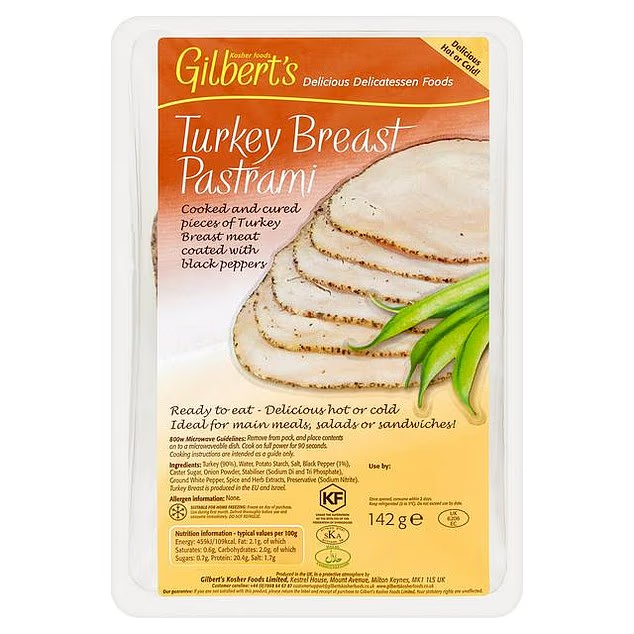
The recall affects Gilbert’s Turkey Breast Pastrami, which has been pulled from supermarket shelves over concerns it could pose a serious risk to health.
The recall applies to 142g packs with product codes CK016 and CK027 and a use-by date of April 9, 2026.
Customers who have bought the product are being told not to eat it and to return it to the store where it was purchased for a full refund.
Listeria is a type of bacteria that can cause listeriosis – a rare but potentially serious infection.
While symptoms may be mild for some, the illness can be dangerous for pregnant women, older people and those with weakened immune systems.
According to the FSA, symptoms can include a high temperature, muscle aches, chills and sickness.
The recall affects Gilbert’s Turkey Breast Pastrami, sold in UK supermarkets
In more severe cases, the infection can lead to life-threatening complications.
Health officials warn that listeria is particularly concerning because it can survive – and even grow – in refrigerated conditions, making ready-to-eat foods such as sliced deli meats especially high risk.
Listeriosis is typically contracted by eating contaminated food such as deli meats, unpasteurised dairy products and raw produce.
Symptoms often begin mildly, including fever, muscle aches and diarrhoea, but in more serious cases the infection can spread to the bloodstream or brain, causing meningitis or sepsis.
According to UK health data, there were 179 cases of listeriosis reported in England and Wales in 2024, with the highest rates seen in people aged 80 and over.
Pregnancy-related infections accounted for around a fifth of cases. Of those where outcomes were known, 43.7 per cent resulted in stillbirth or miscarriage.
Among non-pregnancy cases, 28 deaths were reported – nearly one in five – with listeriosis recorded as a cause of death in several instances.
Health officials investigated seven outbreaks in England and Wales in 2024, including cases linked to smoked fish, chocolate and strawberry mousse, garlic sausage and pre-packed sandwiches.

London recorded the highest number of listeriosis cases inn 2024 at 35, with an incidence rate of 0.39 per 100,000 people
Experts warn that while listeria infections may initially appear mild, invasive cases can lead to fever, headaches, stiff neck, confusion and loss of balance.
Unlike more common foodborne illnesses such as salmonella, listeria has a longer incubation period and can cause more severe complications, particularly in vulnerable groups.
Supermarkets are expected to display notices informing customers of the recall and advising on what action to take.
The alert comes amid growing concern over the safety of everyday food products, particularly pre-packed and ready-to-eat items.
Anyone who has consumed the product and feels unwell is urged to seek medical advice.