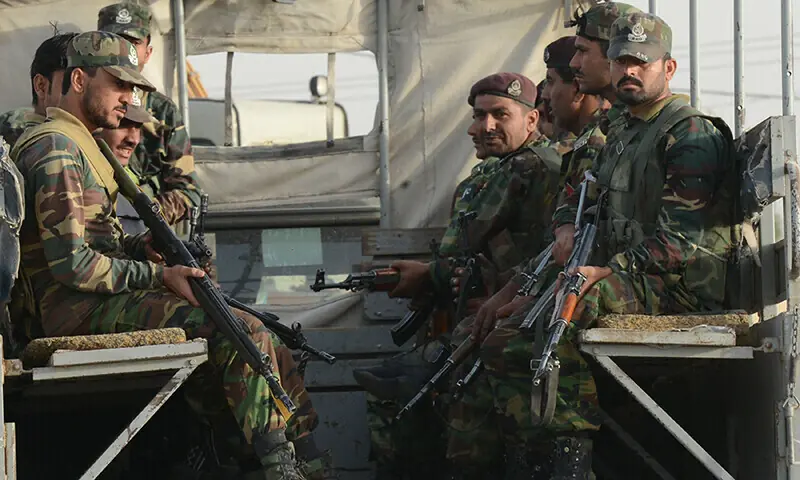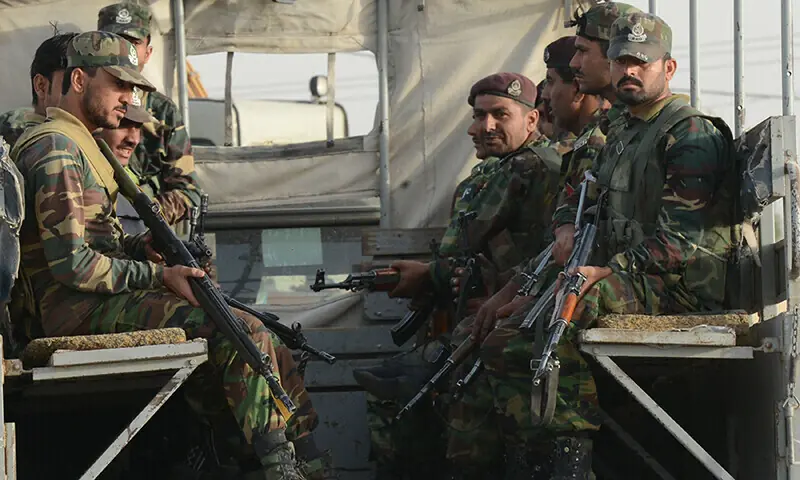
A significant reduction of 35 per cent in combat-related fatalities was recorded across Pakistan during the month of March, coinciding with Operation Ghazab lil-Haq, according to monthly statistics released by a think tank.
Data released by Islamabad-based Pakistan Institute for Conflict and Security Studies (PICSS) showed that a total of 331 people were killed in March compared to 506 in February, marking a 35pc decline in overall combat-related deaths.
PICSS also observed a decline in high-profile militant attacks, even as the overall number of attacks increased during the month.
It noted that the reduction in human losses coincided with Pakistan’s cross-border military strikes under Operation Ghazab lil-Haq, which began in the last week of February and targeted terrorist positions in Afghanistan.
“The timing suggests these operations may have contributed to disrupting militant capacity and reducing the lethality of attacks,” the report noted.
It added that in response to these strikes, groups including Tehreek-i-Taliban Pakistan (TTP), Jamaatul Ahrar, and Ittihadul Mujahideen — an umbrella alliance comprising Hafiz Gul Bahadur Group, Lashkar-i-Islam, and Inquilab-i-Islami Pakistan — announced an escalation in attacks against Pakistan.
“Despite this surge in militant activity, the overall impact remained comparatively limited, as reflected in the sharp decline in casualties,” PICSS stated.
Data collected by PICSS showed that civilian fatalities dropped sharply from 132 in February to 39 in March, reflecting a 70pc decrease.
Security forces’ fatalities declined from 80 to 59, a 26pc reduction, while militant deaths also fell from 294 to 228, representing a 22pc decline.
PICSS further reported a 37pc decrease in overall injuries, with 210 people injured in March compared to 333 in February. Injuries among security personnel slightly declined from 50 to 48.
At the same time, militant injuries rose significantly from 24 to 57, marking a 138pc increase.
“Civilian injuries saw the most notable improvement, dropping from 259 to 98, a 62pc decrease,” the think tank pointed out.
However, March also witnessed a rise in attacks on pro-government peace committee members, with five killed and seven injured compared to none in February.
“While the overall impact of violence against the state declined, militant groups increased the frequency of their activities, largely shifting towards low-intensity operations.
PICSS recorded 146 militant attacks in March compared to 83 in February. Suicide attacks dropped from five in February to just one in March.
During the month, security forces arrested 41 suspected militants, while militants kidnapped 19 individuals.
Province-wise breakdown
Providing a province-wise breakdown, PICSS said 189 overall combat-related deaths were recorded in Balochistan in March compared to 285 in February, reflecting a 34pc reduction.
Civilian deaths dropped from 82 to 17, marking a 79pc decline. Militant fatalities decreased from 176 in February to 145 in March, while security forces’ losses remained unchanged at 27 personnel.
The number of wounded security personnel increased from four to 19, while militant injuries also surged sharply from zero to 47, and civilian injuries increased from 12 to 19.
Militants kidnapped eight individuals in the province, while security forces arrested 26 suspected militants during the month.
The merged districts of Khyber Pakhtunkhwa (erstwhile Fata) recorded 55 combat-related deaths in March compared to 95 in February, a 42pc decline, the PICSS report said.
While security forces fatalities dropped from 23 to 16, the number of militants eliminated also declined sharply from 62 to 24, a 61pc decrease. Civilian deaths, however, rose from 10 to 13.
Similar to Balochistan, injuries in the region increased significantly, rising from 33 in February to 92 in March. Security personnel injuries increased from four to 15, militant injuries from three to eight, and civilian injuries from 26 to 69.
The region also witnessed seven abductions, and the only suicide bombing of the month was reported from the area.
In mainland KP, overall fatalities remained largely unchanged, with 83 deaths recorded in March compared to 81 in February.
While the number of security forces martyred dropped notably from 27 to 16, civilian deaths increased from six to nine. At the same time, militant deaths rose from 48 to 55.
Contrary to trends in Balochistan and erstwhile Fata, injuries in mainland KP declined significantly from 104 in February to 33 in March, PICSS observed.
Security forces’ injuries dropped from 35 to 14, civilian injuries from 48 to 10, and militant injuries from 21 to two.
“However, peace committee members suffered three deaths and seven injuries compared to none in February, indicating a shift by militants towards softer targets amid heightened security vigilance,” the report noted.
While Punjab reported no militant attacks in March, security forces killed four militants in an operation.
In comparison, February saw three militants and two security personnel killed, while one security personnel and four civilians were injured. No injuries were reported in Punjab during March.
Similarly, no militant attacks were reported from Sindh, though security forces arrested eight suspected militants.
In February, security forces had killed four militants and arrested one in the province.
In Gilgit-Baltistan, one attempted militant attack on a security check post near the Diamer-Bhasha Dam was reported. However, the attack was thwarted by security forces, and no casualties were recorded.
In 2025, Pakistan ranked number one on the Global Terrorism Index for the first time, recording a six per cent increase in terrorism-related deaths (1,139), a recent report showed.
The report noted it was the “sixth consecutive year” in which Pakistan witnessed a surge in terrorism deaths. It also observed a “slight decline” in the total number of terror attacks in 2025.