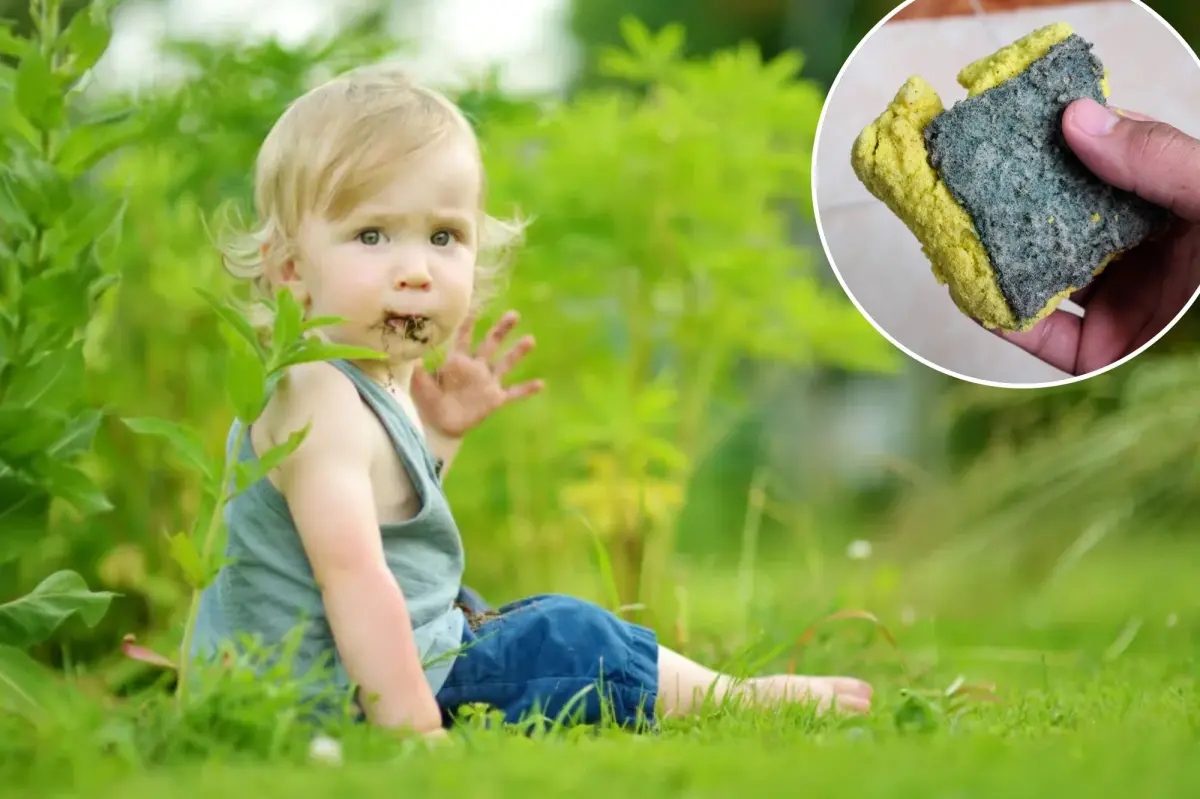
You are what you eat — and for those with pica, that can be downright dangerous.
Perhaps most famously seen on TLC’s reality show “My Strange Addiction,” the eating disorder drives people to consume things you’d never find on a menu.
And no, we’re not talking about the time your toddler snuck a bite of playdough.
“I worked with a patient whose family had to consistently hide their kitchen sponges, because even when they were dirty and foul-smelling, the affected patient would often consume them,” Dr. Erica Brody, a pediatrician at Mount Sinai Kravis Children’s Hospital, told The Post.
Pica, she explained, is the persistent craving and consumption of non-food items that have no nutritional value — like this UK woman’s habit of eating talcum powder, which has cost her more than $10,000.
The disorder’s name comes from the Eurasian magpie, called Pica pica in Latin, a bird known for eating just about anything.
To be diagnosed, a patient must have been eating non-food items for at least a month and be older than age 2, since babies often mouth objects as part of normal development.
The items must also fall outside cultural or religious norms — like the clay eaten for centuries by farmers in Peru’s Andean highlands.
The disorder usually begins in childhood, but it can appear at any age. Pregnant women are also more likely to develop it than the general adult population.
While pica is believed to be relatively common, experts aren’t entirely sure how widespread it is, as research remains limited and the condition is often missed by doctors, according to the Cleveland Clinic.
The causes are complex.
“In some cases, pica is linked to nutritional deficiencies, particularly iron or zinc,” said Dr. Corinne Catarozoli, a psychologist at NewYork-Presbyterian and Weill Cornell Medicine.
Other times, it may point to underlying neurodevelopmental conditions such as autism or psychiatric disorders like OCD.
“Behavioral reinforcement also plays a role,” Catarozoli noted. “If the behavior reduces anxiety or provides sensory stimulation, it can become habitual.”
Overall, she sees higher rates in populations where biological vulnerabilities, like nutritional deficiencies, intersect with environmental stressors, such as poverty or neglect.
The consequences can be deadly.
Catarozoli has treated patients who peel and eat drywall, putting themselves at risk of lead poisoning that can cause lasting damage, especially to a child’s developing brain and nervous system.
She’s also seen patients who consume paper products — think napkins, towels and tissues — as well as toys, crayons and clay.
Catarozoli has also worked with patients who compulsively chew and ingest hair and nails. which can clog the digestive system and pose serious health risks.
In a case outside of her care, a 9-year-old girl in Vietnam was hospitalized after several days of abdominal pain, vomiting, weight loss and a sickly pale appearance.
A closer examination revealed a massive hairball more than 3 feet long, tightly coiled and extending from her stomach to her small intestine, completely blocking her gastrointestinal tract and requiring surgery for removal.
“During the examination, we noticed that the child’s hair was unusually brittle and standing upright, which prompted us to take a more detailed medical history,” Dr. Le Duc Tuan, who works in the general surgery department at FV Hospital, where the girl was treated, said in a statement.
“Only then did the mother reveal that the child had developed a habit of pulling out and eating her hair since the age of 2 or 3.”
The good news: Brody and Catarozoli said pica is “very treatable,” especially when caught early.
“In children, it often resolves once underlying deficiencies or developmental factors are addressed,” Catarozoli said. The same goes for pregnant women.
“For individuals with more chronic neurodevelopmental conditions, it may require longer-term management,” she added.
For example, therapy, particularly techniques based on applied behavior analysis, has been shown to help curb dangerous habits and reinforce safer alternatives, especially for children on the autism spectrum.
“Pica is often misunderstood as a strange behavior, when in reality it’s a meaningful clinical signal,” Catarozoli said. “It can point to underlying medical, nutritional or psychological needs that aren’t being met.”
“Early recognition is key,” she noted, “not just to stop the behavior, but to prevent serious complications like intestinal obstruction, poisoning or infection.”