Muscle cars are among the most iconic vehicles of all time, immediately conjuring up a certain image even in the minds of non-gearheads. Loud engines, slick bodies, flashy paint, shiny chrome, and more defined the Muscle Era of the 1960s, giving rise to brands that are now household names. From the GTO to the Charger, the Mustang to the Barracuda, and everything in between, these cars are instantly recognizable and beloved classics. But while they are unquestionably distinctive, and arguably better looking than many modern cars to some eyes, their designs weren’t exactly timeless.
It may seem sacrilege to say that some of these vehicles aren’t particularly contemporary, granted. And it’s not a critique of the style — they still turn heads today and have a certain presence on the road that simply cannot be replicated. We’re not discussing the subjective aesthetics of these cars — rather, which designs actually held up over the years and look not only contemporary, but arguably even better by modern standards.
In other words, sensibilities change over time, and there’s nothing wrong with that. Yesterday’s ‘beautiful’ doesn’t always carry over; modern automotive design trends have changed so much that these cars, while gorgeous, are unquestionably dated. Or, well, some of them are — others are so beautiful that they simply transcend automotive trends, straying into the realm of art.
Obviously, art is subjective — people will all have their favorites. We could likely fill this list with dozens of examples of gorgeous muscle cars. But there are some that stand above the rest, and those will be our focus for today.
1. 1965 Buick Riviera Gran Sport
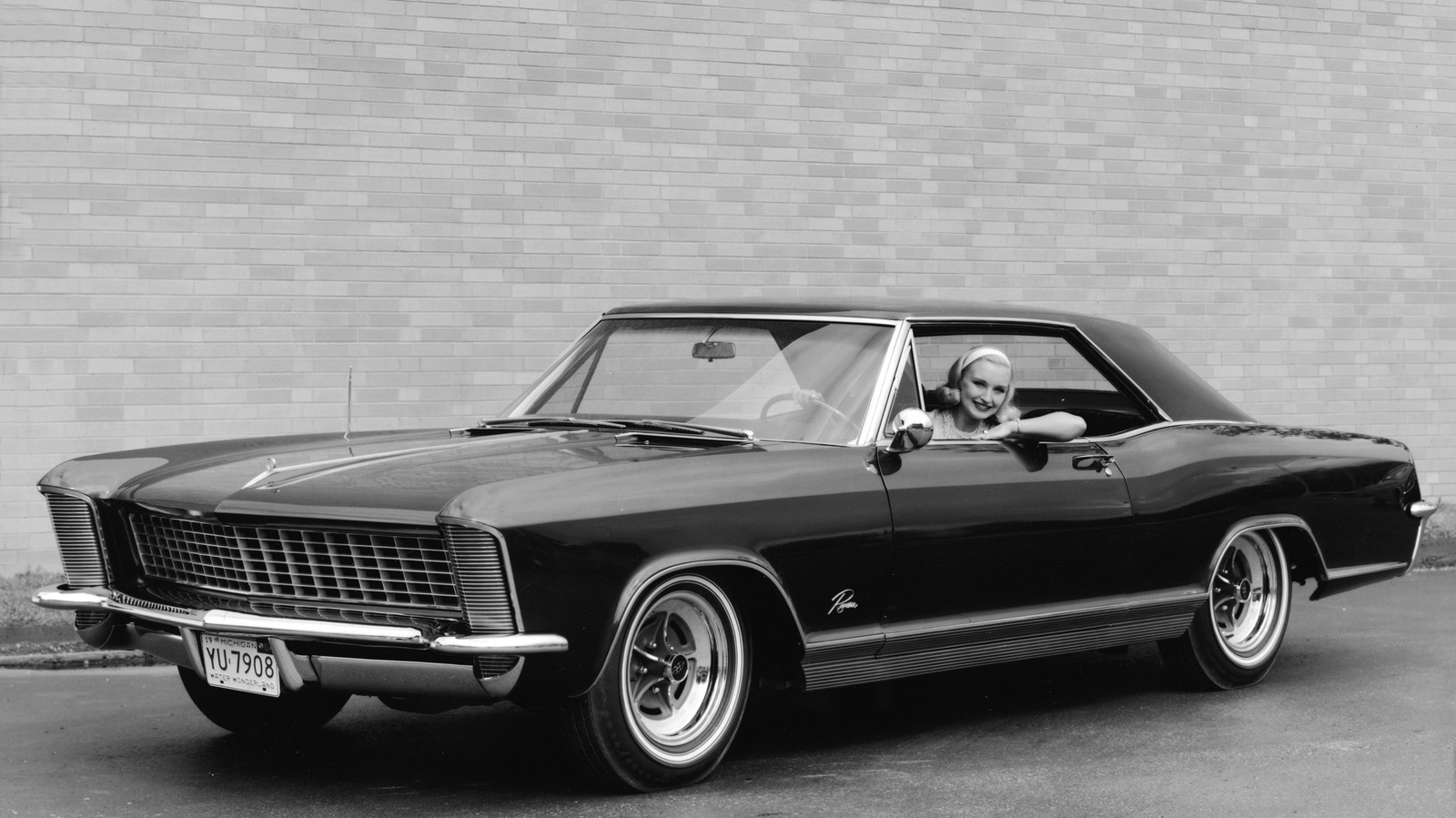
Admittedly, this vehicle stretches the definition of the term ‘muscle car.’ In the broader sense, a muscle car is a relatively cheap, everyday vehicle with a powerful engine. They’re typically midsize or full-size — cars like the Charger, Tempest, and GTO, or Torino GT, to name a few. The Riviera, however, stands firmly alone as a personal luxury car. And it was marketed as such, with the 1963 body style touted as America’s new “international classic car,” emphasizing its luxurious appointments and ride quality.
But times were changing, and by 1965, the Muscle Era had rocketed off the starting grid. Cars like the GTO started gaining traction, and Buick’s answer was the Riviera Gran Sport. This formidable machine was unquestionably muscular, boasting a 425-cubic-inch big-block nailhead V8 with 360 horsepower (yes, there’s a reason for the “nailhead” nickname). And all that powers what is arguably one of the best-looking cars of all time, period.
Bill Mitchell headed the design team for this iteration of the Riviera, distinctive for its front end. Initially, the 1963 and 1964 model years featured quad headlights on the egg-crate grille, before the team finally incorporated them into the mesh in 1965. The result is a set of hideaway, vertically stacked lights on an unobstructed front end that’s so prominent and menacing it resembles a Gothic cathedral on wheels. The general proportions and shape of the car fit virtually anywhere on modern roads, not out of place in the most luxurious spots on Earth. The ’65 Riviera is low, slick, and clean, as if a muscle car donned a sharp, fitted tuxedo, with subtle cufflinks and hand-stitched trim to boot.
2. 1966 Oldsmobile Toronado
Here’s another example of a car that pushes the boundaries of what defines a “muscle car.” The original Oldsmobile Toronado wasn’t particularly well-known, and at first glance, it wasn’t exactly muscle-car-ish. It had front-wheel drive, no manual transmission option, and it was loaded with features. Why this car over, say, a 4-4-2? Because the ’66 Toronado was actually a sleeper car, loaded with a 425-cubic-inch V8 producing 385 horsepower, and was indeed marketed as a sports car in that configuration right alongside the Starfire and 4-4-2.
Sure, it wasn’t the fastest Oldsmobile despite having the most powerful engine ever to see Olds dealerships. But the car was unquestionably a technological marvel, and it had the aesthetics to back it up. The body was undeniably striking and unique for the time, with the massive front and rear quarter-panel arches giving it a low-slung, aggressive stance. The front end was more wedge-shaped, with hideaway lights in 1966 giving it a more minimalistic, aerodynamic look for the day. The long hood line and pillarless fastback body is just as timeless and clean, featuring subtle chrome accents along the window openings and trim pieces.
All in all, this car is among the most modern vehicles to come out of the 1960s, arguably influencing several manufacturers to copy the formula with their own FWD designs. The flat floors, compact packaging, and efficiency were ahead of its time, making the Toronado among the most important and overlooked muscle cars of all time — and certainly one of the most handsome.
3. 1967-1969 Plymouth Barracuda Formula S fastback
This one’s another oddball for a different reason — it’s generally not what you think of when the phrase “Plymouth Barracuda” comes to mind. Usually, people jump straight to the 1970-plus models that shared the body with the Dodge Challenger, that quintessential E-body. But another distinctive look graced Plymouth showrooms in 1967, one marked by a sleek, sweeping fastback profile and aggressive new styling: the A-body Formula S.
The Formula S represented Plymouth’s performance option before the ‘Cuda package became a thing in 1969 — and yes, there’s a difference between a Barracuda and a ‘Cuda. These were on the smaller side of muscle cars; A-bodies were compact cars by the standards of the day. But they were compact cars with a 383 V8 boasting 280 horsepower and 400 lb-ft torque in 1967, so there’s that. And they’re rather underrated cars in terms of looks, not being as overly aggressive as their younger counterparts, but still having more than enough presence on their own.
The Barracuda gained its iconic mid- to late-1960s shape from a stacked design team, including John Herlitz, Irv Ritchie, Dave Cummins, and John Samsen. The final iteration before the 1970 platform changeover toned down some of the wilder components, namely the wraparound rear glass and wide-set front grille. These were traded off in favor of a more conventional, sportier style, with minimal chrome, tasteful hood vents, clean sides, a distinctive rear end with that long silver bar, and a pillarless-window design reminiscent of the Charger. This far cleaner aesthetic works extremely well, making the Barracuda Formula S both intimidating and sleek, even in modern traffic.
4. 1968-1969 Pontiac GTO
The GTO name is unquestionably one of the most important in American sports car history, and it supposedly started because of a “what if” scenario posed by the Pontiac LeMans design team, including John DeLorean (yes, that John DeLorean), Bill Collins, and Russ Gee. Together, they came up with the bright idea to shove a 389 under the hood of a midsize Pontiac, and lo and behold, the muscle car was born. Fast forward to 1968, and the Pontiac GTO had long since split off from its roots as an option package and into its own distinct model, marked by an unmistakable silhouette.
The late-’60s GTO is particularly standout because of its relative subtlety, which is an odd thing to say about the model that’s marked by the “Judge” trim with that Orbit Orange paint job. But let’s suppose you get it in Starlight Black, trimmed with the characteristic pinstripe along the side. It had no chrome front bumper — no chrome at all on the front end, in fact, apart from some trim along the grille and lights. The sides and rear were equally clean, with a deep rear bumper that blended with the body lines and thin, flush taillights. All that came with the same clean fastback lines and subtle add-ons, such as the rear wing and functional hood tachometer — an element of classic car dashboard design that’s gone for good.
Famous name aside and just looking at pure aesthetics, the GTO is incredibly well done, marrying the slick lines of that iconic GM A-body with remarkably understated design choices.
5. 1968 Shelby GT500 KR
When most people think of the classic Shelby Mustang, it’s likely that the image of a 1967 GT500 springs to mind, specifically because of its role as “Eleanor.” But that’s not actually the most influential Shelby Mustang design that we see today; from the factory, it resembled a beefier Mustang with extra bits like the characteristic central fog lights. The ’68 model year changed all that, however, introducing a bespoke front end that you might recognize on some of today’s Mustangs.
The GT500 KR, which stands for “King of the Road,” represented the top-of-the-line Mustang at the time, equipped with a stout 428 Cobra Jet producing 335 horsepower (supposedly). The engine was fed by twin ram-air vents on the front of the hood, giving the car a distinctive stacked look with the split front grille beneath it. That grille opened up like a trapezoid, extending down to the bumper; both that grille and the ram-air vents were reused on modern Shelby Mustangs dating back to 2007 with the Super Snake, arguably one of the best-looking Mustangs Ford has ever made.
Of course, all of those design choices were based on form following function. The GT500 KR was still fundamentally the same lithe pony car platform as the original 1964 ½ Mustang, just brought to within an inch of its life to fit that massive engine under the hood. This widened the car’s stance and gave it that timeless front and rear end, marking the GT500 KR as not just an amazing-looking car by 1960s standards, but one that still holds sway even in today’s Mustangs.