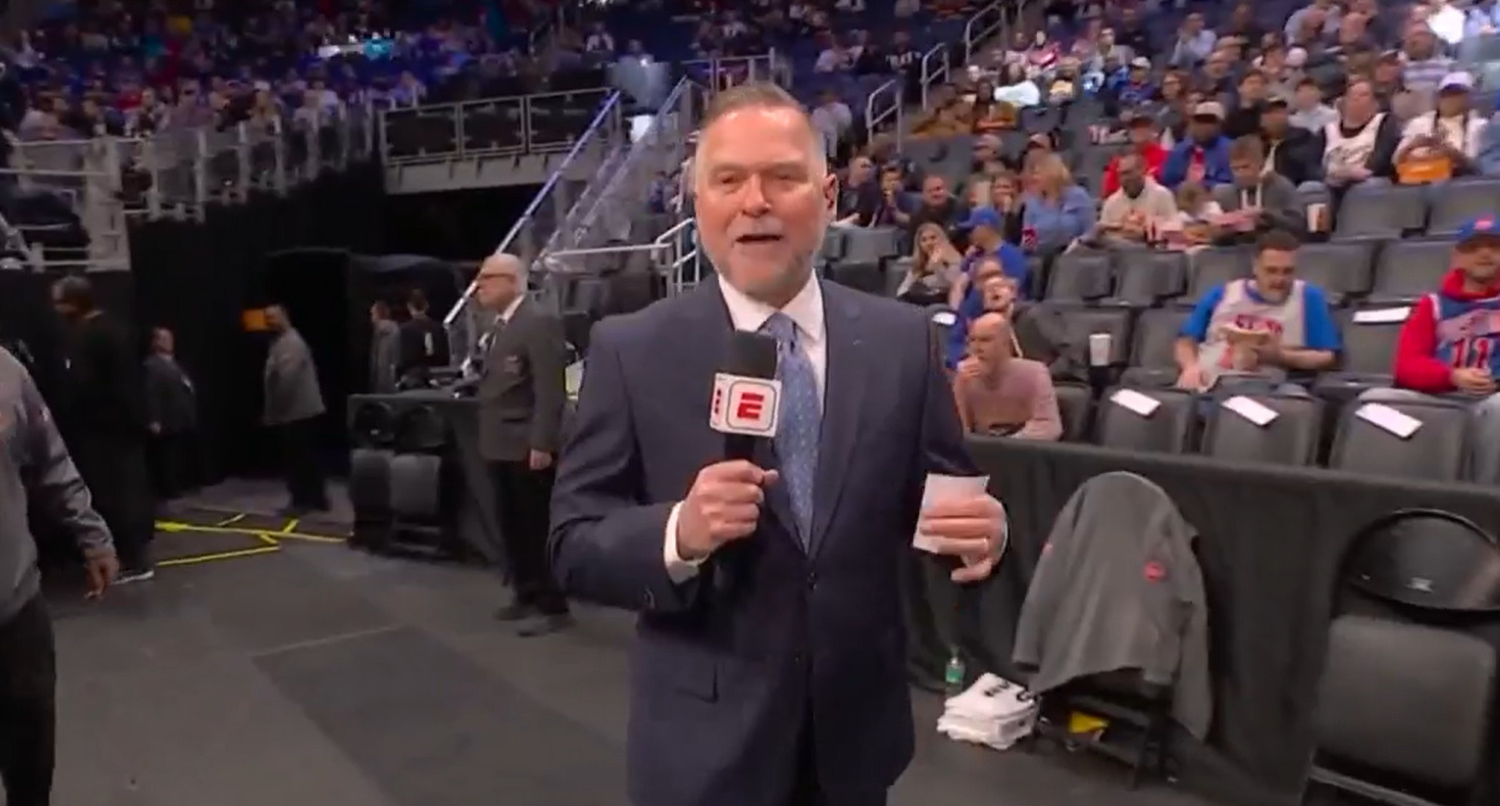
Before being hired as the next head men’s basketball coach at North Carolina this week, Michael Malone was one of the bigger surprises in NBA broadcasting to come along in recent years.
Malone jumped from the Denver Nuggets bench to ESPN studio coverage last postseason, then signed on with the Worldwide Leader on a more full-time basis this past season. Given that Malone’s dismissal in Denver was such a shock, he wasn’t on anyone’s list for the next great coach to enter the media.
After a strong season, filling in with the decision-maker’s perspective on ESPN studio coverage that previously came from Bob Myers, Malone began calling games earlier this year. All signs seemed to point to him effectively being the network’s No. 3 game analyst this postseason.
Now that he is apparently gone, ESPN can add him to a list that includes Myers, Doc Rivers, JJ Redick, and both Van Gundy brothers, all promising, influential game commentators who left to enter the coaching ranks.
The Malone departure creates a short-term headache for ESPN on the cusp of the playoffs, and adds to the long-term trouble the network has been in since it laid off Van Gundy and Mark Jackson three years ago.
The NBA Today crew reacts to NBA Champion, colleague and friend Michael Malone becoming @UNC_Basketball‘s next head coach 👏 pic.twitter.com/dCyBi39vWb
— NBA on ESPN (@ESPNNBA) April 6, 2026
While ESPN upped its spending to keep the top NBA package, including the Finals, as part of the league’s new broadcast rights package, it lost a fair bit of regular-season inventory (plus a portion of the Play-In Tournament) as Prime Video entered the fray. The pie had to be cut in three, so ESPN ultimately paid more money to air fewer games, though it negotiated increased international and digital distribution rights in return. This season also marked the first in which ESPN is licensing TNT Sports’ Inside the NBA as its top NBA studio show.
As a result, ESPN pared back its NBA talent fairly significantly. It let Michael Grady leave after just one season and kept Ryan Ruocco primarily on women’s basketball games. Myers left a hole in game coverage, while Udonis Haslem departed for Prime Video after a strong showing in the studio. Hubie Brown retired last February, and ESPN never replaced him. Malone was just about the only hire made to fill in for these departures.
With Malone gone now on the eve of the playoffs, ESPN is really going to feel thin this postseason. The easiest solution would be to split the top booth between Richard Jefferson and Tim Legler, but that means sacrificing valuable reps those two need to get ready to call their first NBA Finals together in two months. For Christmas Day, ESPN called up Marc Kestecher and PJ Carlesimo from the radio roster to call games on television. The same may be needed for early-round playoff games. Even Stephanie White is likely limited to the first game or two of the first round before duty calls as head coach of the WNBA’s Indiana Fever. Jay Bilas will likely get stretched even thinner this year.
After the first round, ESPN won’t need as many commentators, and roles will stabilize. But the fact that the departure of a newcomer like Malone would send such shockwaves across the talent roster for one of ESPN’s top properties is not a great sign.
The network finally solidified its troubling studio show by licensing Inside. Without Van Gundy and Jackson, though, it will trot out its third different NBA Finals broadcast booth in as many years this June. The biggest spotlight will be on ESPN’s top booth of Mike Breen, Jefferson, and Legler in its first Finals, but there is little to no consistency around them.
Malone was not likely to break through to that booth any time soon, but he was at the very least a strong option lower on the depth chart. Without him, the instability around coverage of the biggest names from the network’s top broadcast partner is put into stark relief once again.
We have long advocated for ESPN to pursue Chris Paul as a game analyst here at Awful Announcing. Paul worked in the network’s studio in 2024 and has a public friendship with outgoing Disney CEO Bob Iger. He is also a brilliant basketball legend, an eloquent speaker, and a very famous person. The Athletic reported in February that ESPN would be the front-runners for Paul, who retired last month.
Setting aside whether Paul would commit to the rigors of a No. 1 broadcast job, something his generation of NBA stars has been reticent to do (see: Dwyane Wade), there is also a financial question at play. ESPN traded Big 12 inventory for the right to air Inside. Besides that show, the most prolific NBA broadcaster on its roster is… Jefferson? It is hard to see whether ESPN is willing to spend up on NBA coverage. More often, it values innings-eaters like Kendrick Perkins, Chiney Ogwumike, and newcomer Danny Green, who it can work around the clock.
At ESPN right now, the NBA is not at the level where executives seem willing to pay top dollar for shiny contributors who don’t work much. If ESPN wanted to have its version of Joe Buck, Troy Aikman, or Nick Saban on NBA coverage, it likely would have happened. Instead, Prime Video and NBC stole megastars such as Wade, Blake Griffin, and Carmelo Anthony out from under ESPN’s nose, all while ESPN crossed its fingers that Malone of all people would stay put.
This NBA postseason will tell us a lot about whether intrigue around new star players and strong regular-season viewership trends can be sustained. Maybe that could convince ESPN to reinvest in long-term answers like Paul for its broadcasts.
Until then, it will watch as more Malones come and go.