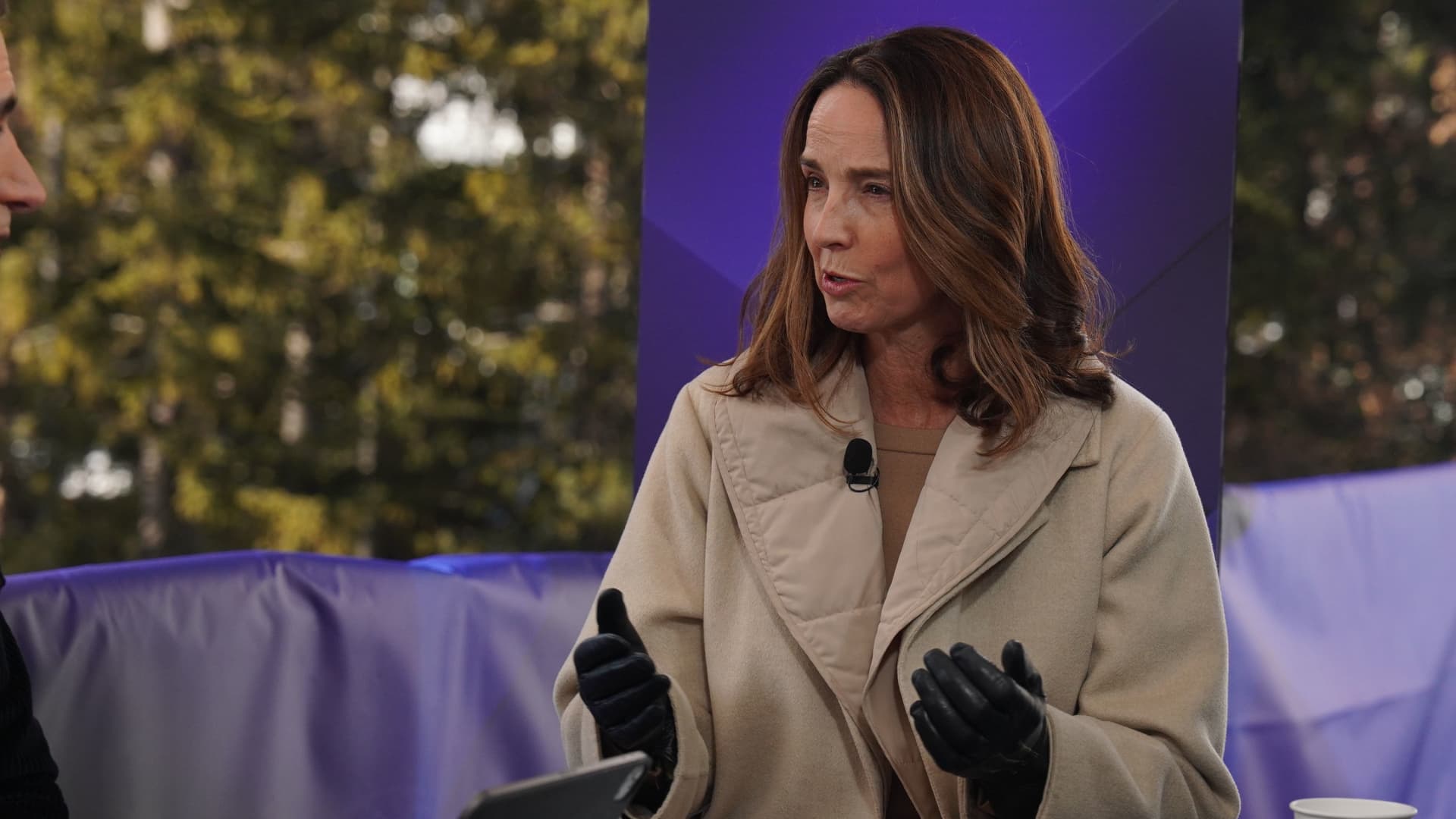
Sarah Friar, CFO of OpenAI, speaking on CNBC’s Squawk Box at the World Economic Forum in Davos, Switzerland on Jan. 21st, 2026.
Oscar Molina | CNBC
OpenAI plans to reserve a portion of shares for individual investors in what’s expected to be a blockbuster initial public offering.
Chief Financial Officer Sarah Friar told CNBC that the San Francisco-based artificial intelligence giant started testing the waters with retail in its latest funding round and saw “really strong demand” from individuals.
OpenAI will “for sure” hold a slice for retail when it goes public, Friar told CNBC on Wednesday.
“AI needs to garner trust in everything that we do. That is part of why retail particularly speaks to me,” Friar said. “It has to be that everyone partakes, that it isn’t just that a very small group, and everyone else gets left behind.”
She pointed to her time as CFO of Square, now known as Block, where the fintech company offered a direct selling program to small business owners and sellers in its IPO. She also highlighted OpenAI cofounder Elon Musk‘s model with Tesla and SpaceX.
SpaceX is expected to go public as soon as June and is reportedly holding almost 30% of its shares for retail buyers.
“Everybody wants to own part of a rocket company — I hope everyone wants to own part of ChatGPT. It helps when you’re a consumer brand,” Friar said.
OpenAI set out to raise $1 billion from individual investors through private placements with banks like JP Morgan, Morgan Stanley and Goldman Sachs in its recent round.
The company ended up raising three times that amount in the largest private placement those banks have ever done, according to Friar. One bank had its system break after opening up the window to investors to look at the data room and examine OpenAI’s finances.
OpenAI has been speaking to bankers about a public offering as soon as the fourth quarter, a source recently told CNBC. Friar wouldn’t comment on an IPO timeline, but said it’s “good hygiene” for a company of OpenAI’s size to “look and feel and act … like a public company.”
OpenAI was valued at $852 billion after closing a record-breaking $122 billion round, up from the $110 billion figure that the company announced in February. Unlike Silicon Valley companies like Stripe, OpenAI won’t stay private indefinitely.
“At our scale, raising equity forever doesn’t make any sense,” she said. You want to start moving down from equity.”
She pointed to other advantages of being public, noting that OpenAI can start tapping convertible debt and investment-grade debt to fund its endless need for compute. The company already plans to spend $600 billion over the next five years on semiconductors and data centers.
“Compute is the big competitive weapon,” Friar said, calling it the “most important asset you can have.”
“Being able to offer more compute is truly a customer experience outcome which will lead to more revenue, more cash flow. And I want to make sure we’re always ready to go tap big markets,” she said.
Enterprise growth
Part of OpenAI’s compute strategy comes down to serving enterprise customers.
Friar and Chief Revenue Officer Denise Dresser, who was previously CEO of Slack, said that slice of the business is on track to make up half of revenue by the end of this year.
“Enterprise is now 40% of our revenue. It’s on track to reach parity with consumer by the end of 2026,” Dresser, who just wrapped up her first 90 days at the company, told CNBC Wednesday. “I just have never seen this level of conviction spread so quickly and consistently within the industries.”
Companies that are furthest ahead have gone from using AI for “traditional productivity,” Dresser said, “to really managing teams of agents to do tasks for them.”
Dresser said Codex has now topped 3 million users. Friar added that the number was “almost zero” at the beginning of the quarter.