Just minutes before a self-imposed deadline — an unprecedented threat to wipe out “a whole civilisation” — was set to expire, US President Donald Trump announced early Wednesday a two-week ceasefire halting the war with Iran.
The development, anxiously awaited by much of the world, followed a long night of back-channel diplomacy spearheaded by Pakistan. Now, with a fragile ceasefire barely holding and tensions still flaring, Islamabad is set to host talks between the warring parties this Saturday.
In an earlier post on Truth Social, Trump said the US had received a 10-point proposal from Iran, which he described as “a workable basis on which to negotiate”. Similarly, Iran’s Foreign Minister Abbas Araghchi also mentioned a 15-point US proposal that negotiators said could end the conflict.
But neither of the proposals has been formally unveiled yet. Versions of both have been leaked and published online, and they seem to be poles apart, making the upcoming negotiations all the more critical.
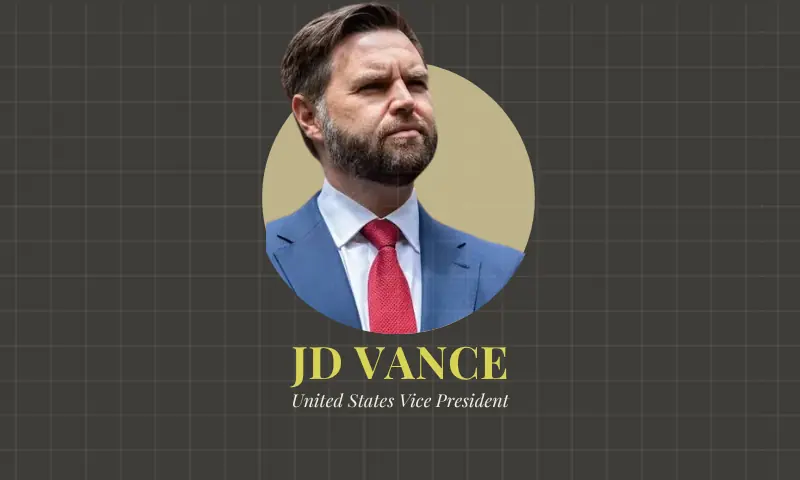
The ‘Islamabad Talks’, scheduled to begin on April 11, will see high-level teams from Washington and Tehran arrive in Pakistan this Friday. From what we know so far, both sides have chosen strong representation, from US Vice President JD Vance to Iran’s Araghchi.
Here’s a closer look at who is expected to be at the table, their roles, and the actions that have shaped the conflict leading up to these pivotal talks.
Team America
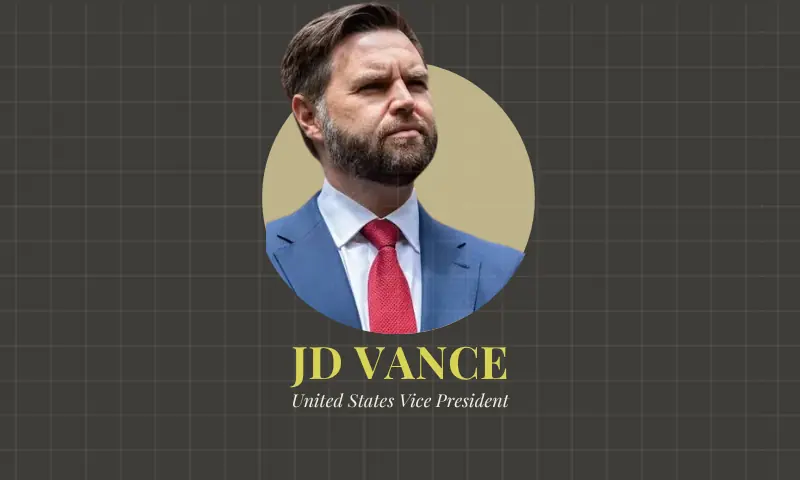
A top ally and potential heir to Trump’s ‘Make America Great Again’ movement, JD Vance, the 50th vice president of the US, is leading the American side.
Before entering politics, Vance served in the US Marine Corps and was deployed to Iraq, where he worked as a military journalist. The experience shaped his early worldview, turning him into a sharp critic of American military involvement overseas. After returning to civilian life, he worked in Silicon Valley-linked investment firms, connections that later helped fund his political campaign in 2022.
The 2016-era Vance was openly critical of Trump, positioning himself as someone focused on the economic uplift of his community — often described as the man who understood what “communities needed”.
His transformation since has been stark. Vance, once “never a Trump-guy”, is now firmly aligned with the president, standing beside him on decisions regarding American involvement overseas — an idea he had initially opposed.
Since the beginning of the US-Israel war on Iran, Vance has maintained a noticeably measured distance from Operation Epic Fury. But distance does not mean disengagement. In fact, in the past few days, Vance has quietly emerged as a central figure in Pakistan’s mediation efforts.
Vance held a call with intermediaries in Islamabad on Tuesday at Trump’s direction. During the conversation, he signalled that the US president was open to a ceasefire, provided certain US demands were met, and delivered what Reuters described as a “stern message” that the president was impatient, warning that pressure on Iranian infrastructure would intensify if Tehran failed to agree to a deal.
According to Al Jazeera, Field Marshal Asim Munir has been in contact with Vance as part of an intensive mediation effort that began in late March. Vance had prepared twice to travel to Islamabad for talks with Iranian counterparts, but both visits were cancelled at the last minute after Tehran requested more time for internal deliberations, and ultimately declined to participate.
Despite these setbacks, Iran appears to view Vance as a more credible interlocutor than other senior US envoys. According to The Telegraph, Iran refused to engage with Witkoff and Kushner following military strikes on Tehran that took place just hours after earlier rounds of talks.
“Vance is preferred,” a Gulf source said.
Similar dynamics played out earlier in June, when US officials were engaged in negotiations with Tehran shortly before Israel, followed by the US, launched strikes during the 12-day war. Another Gulf source noted that Iranian officials believe Vance will adhere to commitments made at the negotiating table, possibly due to his earlier positions on military restraint.
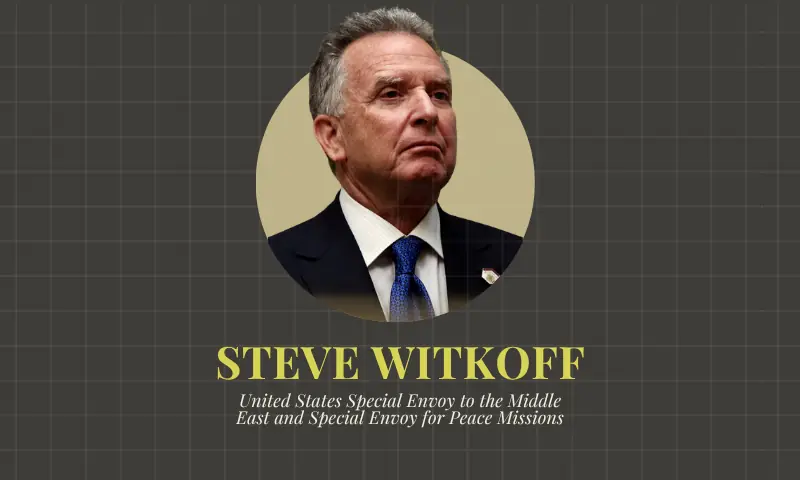
A real estate billionaire-turned-diplomat, Witkoff has emerged as one of the most consequential figures shaping Washington’s approach to Iran in the lead-up to and during the conflict. A longtime ally of Trump, Witkoff has served as the United States Special Envoy to the Middle East and Special Envoy for Peace Missions since 2025.
On February 26, 2026, Witkoff, alongside presidential adviser Jared Kushner, led high-stakes negotiations with Iran aimed at curbing Tehran’s nuclear ambitions and regional activities. The talks ultimately collapsed, culminating in the US-Israel war on Iran.
Diplomats later described Witkoff as a central player in the breakdown, with one Gulf official accusing him of pursuing “unorthodox” diplomacy that contributed to the escalation.
By late March, Witkoff had re-emerged as a central diplomatic figure, signalling a possible shift toward negotiations. He announced that Washington had presented Iran with a 15-point action plan to open talks, saying Tehran appeared to be “seeking an off-ramp” from the conflict. He also confirmed Pakistan’s role as an early mediator, marking the first concrete diplomatic effort since hostilities began.
As pressure mounted internationally, Witkoff continued working alongside senior US officials to prepare for direct talks. He was part of the core team tasked with negotiating key US objectives, including reopening the Strait of Hormuz and addressing Iran’s nuclear programme.
However, Witkoff is not so popular as a negotiator. Recently, Iran expressed strong reservations about US-linked figures involved in mediation efforts, telling intermediaries it does not trust Witkoff and Jared Kushner and does not want them involved in future negotiations, Middle East Monitor reported.
Citing a diplomatic source, the report said Iran considers the two envoys unreliable interlocutors, describing previous engagements with them as “not constructive”, and signalling a preference for alternative channels in any future diplomatic process.
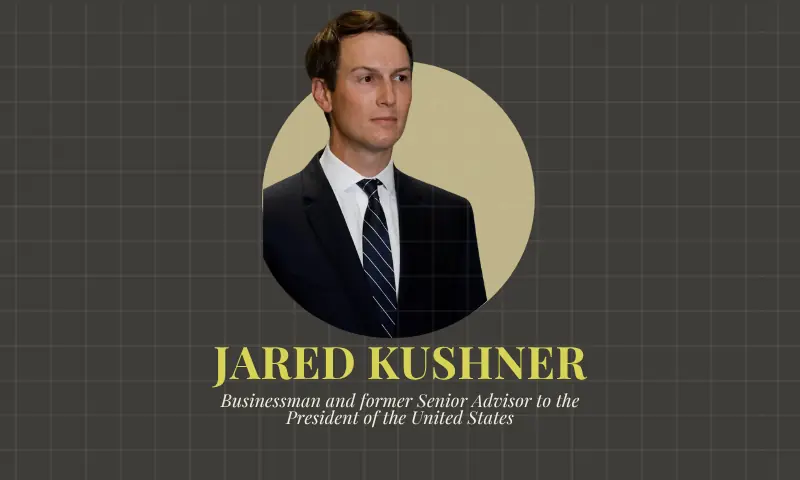
Jared Kushner is US President Donald Trump’s son-in-law and the founder of Miami-based private equity firm Affinity Partners. He launched Affinity in 2021, and the firm managed more than $5.4 billion in assets as of September 2025.
According to Forbes, the firm has raised $4.6bn from high-profile Middle Eastern backers, such as the Saudi and Qatari sovereign wealth funds, as well as Foxconn founder Terry Gou. From 2008 to 2017, Kushner served as CEO of Kushner Companies, the real estate company co-founded by his father and grandfather. He served as a senior advisor to Trump during the president’s first term from 2017 to 2021.
Since last summer, he has once again emerged as a high-level peace envoy for Trump and helped broker a ceasefire between Israel and Hamas in the Gaza Strip. He also steered negotiations to end the Russia-Ukraine war and had been directly involved in negotiations with Iran over Tehran’s nuclear programme.
On April 7, on the sidelines of an Easter Egg Roll at the White House, Trump told reporters that Vance, Witkoff, and Kushner were speaking with intermediaries in Pakistan. However, earlier in March, Iran had refused to negotiate with Witkoff and Kushner, accusing them of “backstabbing”.
Important note: Kushner still does not hold an official position in the US government.
Team Iran
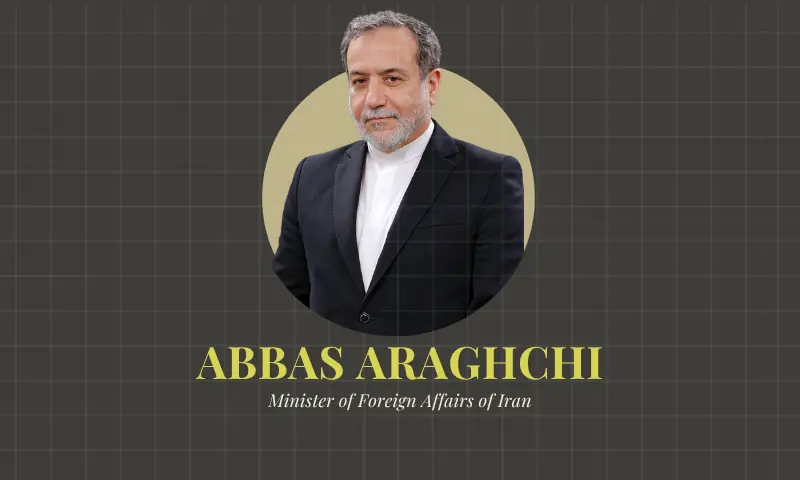
Abbas Araghchi is a diplomat and politician who has served as Iran’s foreign minister since August 21, 2024. He holds a PhD in political science (with an inclination towards politics and the state), earned from the University of Kent in the UK in 1996.
Araghchi began his diplomatic career in 1989 as an expert in the International Affairs Department at Iran’s Ministry of Foreign Affairs, later serving as deputy of the Islamic, Regional, and Non-Aligned Organisations Division from 1991 to 1993.
Araghchi has held several diplomatic posts over the years, including serving as Iran’s ambassador to Helsinki and, from 2000 to 2003, as accredited ambassador to Estonia. Between 2005 and 2008, he served as deputy foreign minister for legal and international affairs, followed by a tenure as ambassador to Japan from 2008 to 2011.
From 2013 to 2021, he also served as Iran’s chief nuclear negotiator, later working as an advisor to the foreign minister and as secretary of the Strategic Council on Foreign Relations.
Eventually, Araghchi — the scion of an Isfahan bazaar family, who joined Iran’s 1979 Islamic Revolution as a teenager and fought in the 1980s Iran-Iraq war — climbed up to the position of foreign minister. Over the years, the mild-mannered Araghchi has earned a reputation, as Reuters describes it, as a “master of tough negotiations”, especially after his role in talks that led to Iran’s nuclear agreement with the US in 2015.
The foreign minister has continued to play the same role, that of diplomacy and strategy, during the current conflict as well. Since the conflict began on February 28, he has consistently framed the US-Israeli strikes as “illegal” and “unprovoked”. At the same time, he has coordinated diplomatic outreach while acknowledging mediation efforts led by Pakistan.
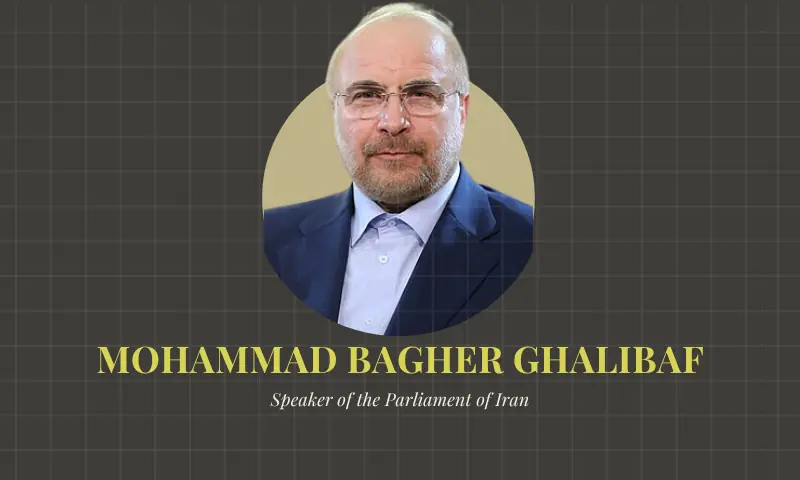
Mohammad Bagher Ghalibaf, the speaker of Iran’s parliament, is widely seen as a protégé of Ali Khamenei and a confidant of his son, Mojtaba Khamenei.
As a teenager, Ghalibaf founded the Islamic Students’ Association, which later grew into a national organisation, according to Press TV. At 18, he joined the Islamic Revolutionary Guard Corps (IRGC) following the outbreak of the Iran-Iraq war in the early 1980s, and remained on the front lines, playing a crucial role in the 1982 recapture of Khorramshahr from Saddam Hussein’s forces.
Ghalibaf’s rise within Iran’s security establishment was swift. By 1997, he had been appointed commander of the IRGC’s Aerospace Force before being selected by Khamenei as Iran’s national police chief.
A conservative, Ghalibaf has repeatedly sought the presidency, running in 2005, 2013 and 2024, and briefly entering the 2017 race before withdrawing in favour of Ebrahim Raisi. In 2020, he was elected speaker of parliament, a rise widely attributed to his loyalty to Khamenei.
Despite his formal political role, Ghalibaf remains deeply embedded within Iran’s security establishment and is considered highly influential within the IRGC. More recently, he replaced Ali Larijani following the latter’s reported killing in a US-Israel strike on Iran. His long-standing ties to Iran’s military elite run deep — he was also a close associate of Qasem Soleimani, the powerful commander assassinated by the first Trump administration in 2020.
During the US-Israel war with Iran, Ghalibaf positioned himself as an unlikely financial adviser, actively seeking to expand the battlefield into economic and financial domains, issuing pointed warnings to global investors and institutions tied to US military efforts. In the current Iranian political context, he has been described as “a rare figure whose portfolio crosses between military, security and political functions of the regime”.
According to Axios, Ghalibaf has been involved in backchannel discussions with US envoys, including Steve Witkoff and Jared Kushner, as Washington explores pathways to de-escalation. Within the United States, his emergence as a potential negotiating partner has triggered debate. One administration official described him as a “hot option”, while cautioning that no decisions had been finalised. “He’s one of the highest…But we got to test them, and we can’t rush into it,” Politico reported.
As ceasefire efforts gathered pace in early April, Ghalibaf’s stance at the time had reflected the broader Iranian approach of combining participation with pressure. He had publicly cast doubt on the viability of negotiations, arguing that continued strikes and violations had rendered talks “meaningless”.