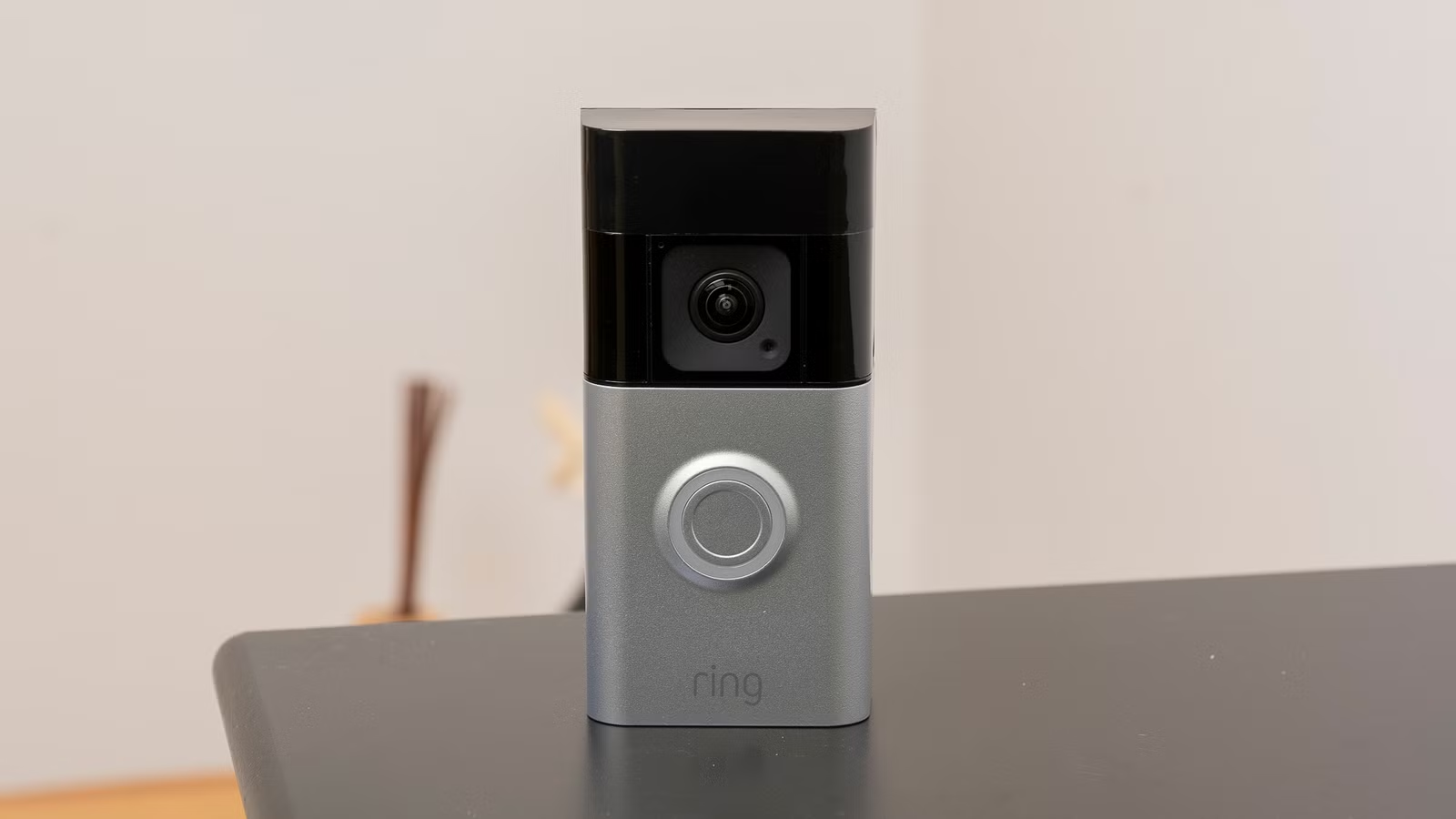
Ring is a name that’s become synonymous with doorbell cameras, swallowing up a huge chunk of the market. On the surface, these cameras are easy to use and offer reasonable protection against would-be intruders and porch pirates.
But there’s more to Ring than immediately meets the eye, and that’s why I’ll continue to stay well away.
Ring’s privacy record leaves much to be desired
Ring’s history of law enforcement relationships is well-documented. The company launched its Neighbors social network to accompany its cameras, making it easy for users to share and discuss goings on in their locale. What many didn’t realize was that the police also had a key to this map of Ring cameras via a specialized online portal.
To get the ball rolling, Ring’s law enforcement partnership tasked police in the U.S. with promoting and handing out Ring products in exchange for access to the portal. Agencies can then ask for a copy of footage via an expedited process, bypassing the legal avenues usually required to obtain recordings (like a warrant) by getting Ring users to volunteer it instead.
A 2019 article by the Electronic Frontier Foundation made for pretty scary reading, but in the almost-decade since then, Ring cameras have continued to sell and become more prevalent all over the world. The Neighbors app police portal remained active until January 2024, when Ring stopped allowing police departments to easily request footage using the system.
Though this might have seemed like a win, the company later partnered with companies like Axon and Flock Safety. The latter of these is battling something of an ongoing PR nightmare, as more cities part ways with the company following concerns stemming from how surveillance is used and who has access to it, to the company’s refusal to acknowledge unpatched security exploits exposed by YouTuber Benn Jordan.
In February 2026, Amazon parted ways with Flock on the grounds that integrating the two systems would take “significantly more time and resources than anticipated.” The news came 10 days after Ring’s disastrous Super Bowl half-time “Search Party for Dogs” campaign set the internet on fire.
In case you missed it, this involved allowing AI to analyze footage from connected Ring cameras in the neighborhood to identify and find missing dogs. Camera owners were spooked by what the advert left out about how this sort of technology could be used as a tool for automated mass-surveillance in the future, particularly given that it was turned on by default and required existing users to opt out.
I’d say that Ring’s colorful past demonstrates the company’s true colors. Anyone even mildly concerned about privacy might want to think long and hard before adding Ring products to their smart home.
Cloud-dependent and costly
Privacy concerns aside, there are more practical reasons you might want to ditch Ring. Chief among them is the fact that these cameras are designed solely with cloud connectivity in mind. They need the internet to do anything, whether that’s notify you that someone is at the door or record a crime in progress.
Ring cameras have no internal memory or other means of storing footage locally. Even if you connect your Ring camera to an offline smart home platform like Home Assistant, you still need an internet connection for the camera to stream or record anything.
Unfortunately, there are several weak links in this chain. The most obvious is your internet connection, which could go down and take your cameras with it. The other is Ring’s remote servers, which happened in 2025 and took down the entire ecosystem. Even network equipment can crash and malfunction in unpredictable ways.
There’s also the small matter of cost. Ring’s cameras are pretty well-priced, with a simple second-generation battery-powered doorbell costing $99 (though higher-end models can hit around $270 with a chime). For this price, you’ll get a camera that you can check whenever you like, two-way audio, motion and event detection, and alerts that let you know something is happening.
What you don’t get is access to recorded footage, at least not after your 30-day trial of Ring Protect expires. To review and store footage for a single camera, you’ll need to pay $5 per month or $50 per year. This rises to $10 and $100, respectively, for more than one device. For AI features, you can double the price again.
So, not only does Ring have a concerning track record when it comes to gathered footage and a dependence on the cloud that won’t play nicely with local platforms, but you have to pay an ongoing fee for the privilege.
Plenty of offline-friendly, private alternatives exist
One thing that makes Ring so popular is how easy the platform is to use, but so are many other brands. Most “consumer” doorbell and surveillance cameras are easy to operate, come with user-friendly apps, and many even go a step further and integrate with systems like Home Assistant.
There is no shortage of doorbell cameras that work offline and don’t require a subscription. Many of these rely on a simple microSD card to record footage, though be aware that battery-operated cameras will capture far less footage than always-on wired-in options.
On top of this, you can roll your own network video solution using tools like Scrypted and Frigate.
I haven’t got a camera setup yet, but when I do, I’ll be installing wired Power-over-Ethernet models that record to a server located in my house, not Ring.