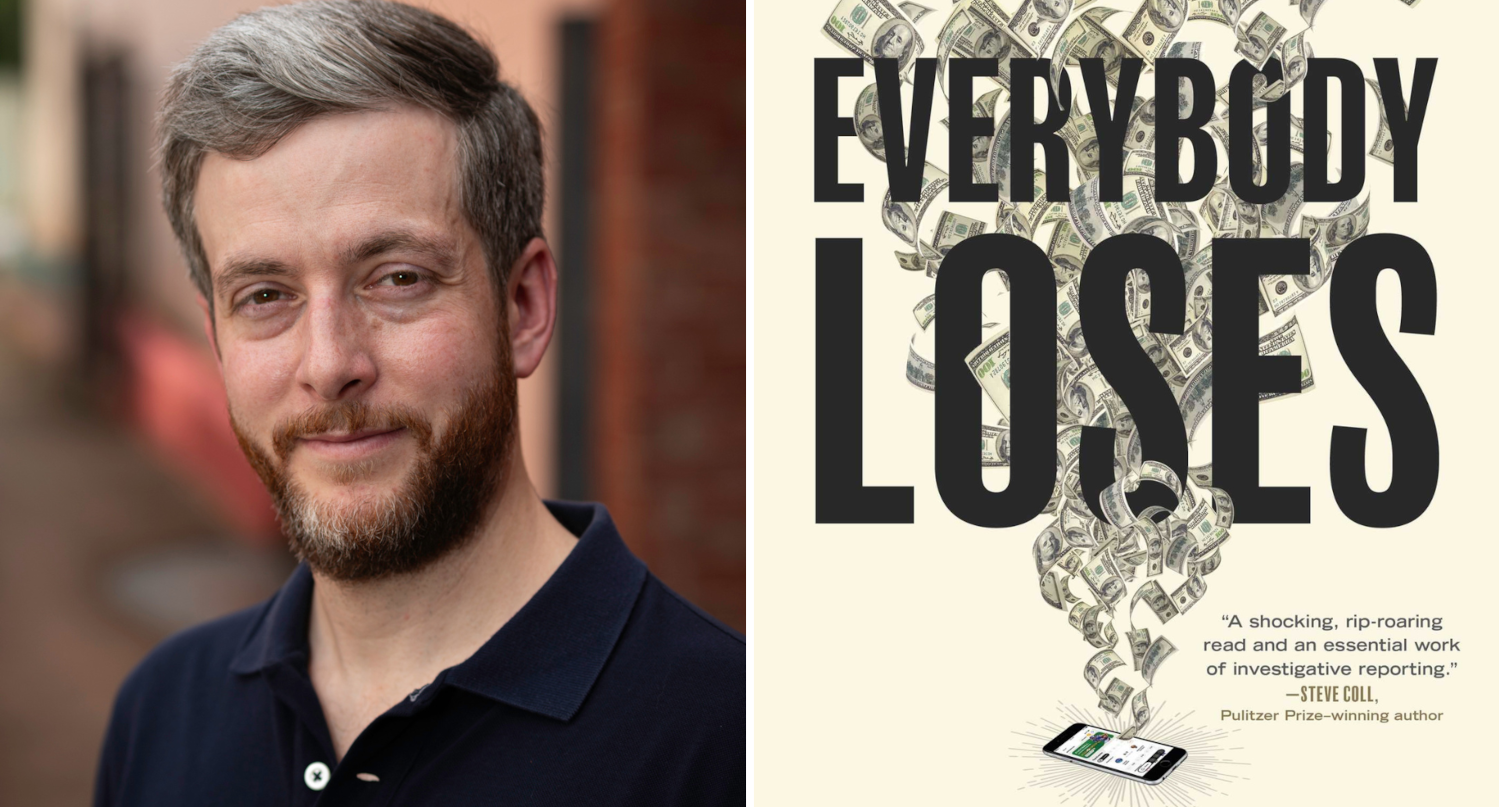
Not long ago, sports leagues avoided any direct ties to gambling. But since the 2018 Supreme Court ruling opened the door for legal betting, everything has changed. Now, sports leagues and gaming are intrinsically connected, and we’re bombarded with ads from these companies during almost every major sporting event.
Everybody Loses: The Tumultuous Rise of American Sports Gambling by Danny Funt takes an investigative look at America’s sports gambling industry. We spoke with him about his book and its impact on American sports.
Note: This interview has been edited and condensed for length and clarity.
Awful Announcing: What inspired you to write a book about gambling?
Danny Funt: “I had been covering the sports betting boom for a few years for the Washington Post. I felt like I was scratching the surface in two main ways. The first was just getting to the bottom of why the leagues did this profound 180 on gambling. I still felt like their answers weren’t satisfying, and me and other reporters hadn’t fully probed what changed their minds. The other thing I really wanted to understand was what it’s like inside these companies, what it’s like to work there, but also how they think about customers, how they think about their business and their competitors, and where they see the industry going.”
Is money the simple reason they did a 180?
“Yeah, but the more complicated answer is the money they would get from their TV rights. I learned that, in these meetings before the Supreme Court struck down the federal ban on bookmaking in 2018, they were still fighting New Jersey in court to preserve that law. But privately, they met with representatives of the gambling industry and learned how gamblers watch more than twice as many games as the average fan. They watch until the end of blowouts to see how a bet plays out. That was very persuasive because the leagues were worried long-term about whether young people would lose interest in sitting through a three- or four-hour game. Would people cancel cable subscriptions? Would the audience continue aging? This was a way to reverse those trends.”
One more clip from my interview with @chucktodd about EVERYBODY LOSES. At the end, he could only shake his head in dismay … pic.twitter.com/tMSBCXJ8hV
— Danny Funt (@dannyfunt) February 17, 2026
Could you give an example of the money at stake?
“For the NFL, in these meetings, they were presented with a study that projected that if you combine the direct revenue the league would get from partnerships with sportsbooks, but more importantly, the indirect revenue it would get from fans being so much more engaged thanks to gambling, legalization would make the NFL about 2.3 billion dollars every year. And that was hard to turn down.”
How did leagues defend changing their stance on gambling?
“The other thing that goes beyond just money is that it was explained to them that they could spin embracing gambling as a way of enhancing the integrity of games, which sounds nice and was convincing to a lot of lawmakers. The argument was that by legalizing this, we’ll be able to monitor betting trends and investigate if there’s a suspicious change in the odds or if an unusual bet is placed. That argument had been used in the English Premier League and elsewhere in Europe. And I think they knew better. They knew that you were inviting an unprecedented level of corruption by making it so easy to bet on so many things you could never bet on previously. Also, you’re not going to run the black market out of business. There are still going to be people who bet illegally.”
Why should someone buy your book?
“It has stories and insights that have never been published about how the industry works, how customers are targeted and at times exploited, why people inside sports are so concerned about what’s happening with gambling, particularly the risks that it’ll corrupt sports. And also, getting to the bottom, as I said, of why all of this happened, not just the leagues embracing gambling, but why states were persuaded so quickly to pass bills that the industry had drafted that got this off the ground in such a favorable way for the gambling business.”
Incredible to go on one of my favorite podcasts, @righttimebomani, and get this endorsement for EVERYBODY LOSES. Thank you, @bomani_jones. (Full episode dropped yesterday.) pic.twitter.com/ntXGS7riKa
— Danny Funt (@dannyfunt) January 29, 2026
Could you share some examples of the perks to encourage people to keep betting?
“Things like getting to throw out the first pitch in a Major League Baseball game, take batting practice on the field before the game, play pickup basketball on an NBA court, give the starting command in a NASCAR race, but also stuff that goes well beyond sports. On a very casual level, I heard one guy tell the host that he was a VIP, and these companies provided their VIPs with hosts who catered to their every need. He said, ‘Hey, by the way, my wife and I and our kids would really like Canada Goose jackets,’ which retail for about a thousand bucks. The host immediately was like, ‘No problem. What are your sizes?’ That sort of stuff just goes to show the sky is the limit when it comes to these perks.”
What else have you heard?
“I also heard about a FanDuel VIP who told me that they had heard that one of their customers had a dog who passed away, and they sent them a gift basket that included a blanket with the dog’s picture printed on the blanket. And the point he was making was it’s not just about giving you freebies. It’s about showing how much we care and how we’re your friend. And that way, if you’re ever thinking about dialing back your betting, just know that you’re not only going to lose all these perks, you’re going to lose a friend you’ve made.”
Do you have any stories about questionable conduct?
“I remember speaking with a guy in Connecticut who lost $100,000 in a year on FanDuel, and he told me, ‘I was addicted to the gambling, but I was also addicted to those perks. It made it a lot harder to quit because I liked that lifestyle.’ Remembering what I’d been told about how they vet these customers, I said, ‘So, what were you doing for a living when you lost all that money at FanDuel?’ He said, ‘I was a server at the Cheesecake Factory making $65,000 a year.’ FanDuel definitely did not vet him, and I confirmed that with the company.”
What worries you most?
“The issue that really sticks with me is that a lot of states have basically entrusted these operators to self-police. And yes, there are regulations on the minimum age to bet and on the ways you can deposit money to bet. But as far as the real customer experience goes, we’re depending on the industry to self-police. I just have very little faith in that after learning how the business works, how regulators oversee these companies, and how people are being taken advantage of. And again, hearing from someone who worked in responsible gaming at one of the top sports books tell me that anything beyond the lowest common denominator of consumer protections is viewed inside these companies as a competitive disadvantage. When you hear stuff like that, it just makes you really skeptical that self-policing is adequate.”
Why should sports leagues care?
“For many reasons, I think the well-being of their fans is something they should take seriously. And the fact that we’re seeing addiction rates go up, we’re seeing bankruptcies go up, credit scores go down, household savings go down. It’s hurting people on a financial and health basis in states where it’s legal. Beyond that, I think it’s clearly corrupting sports, as people feared when you make it so easy to bet.
“Certain types of bets that are so profitable for online sports books, like micro bets and single-game parlays, are also maybe the easiest thing to fix. That’s why we’ve seen indictments on practically a monthly basis. And who knows what we’re not hearing about that’s going on behind the scenes, that I think is really bad for sports.”