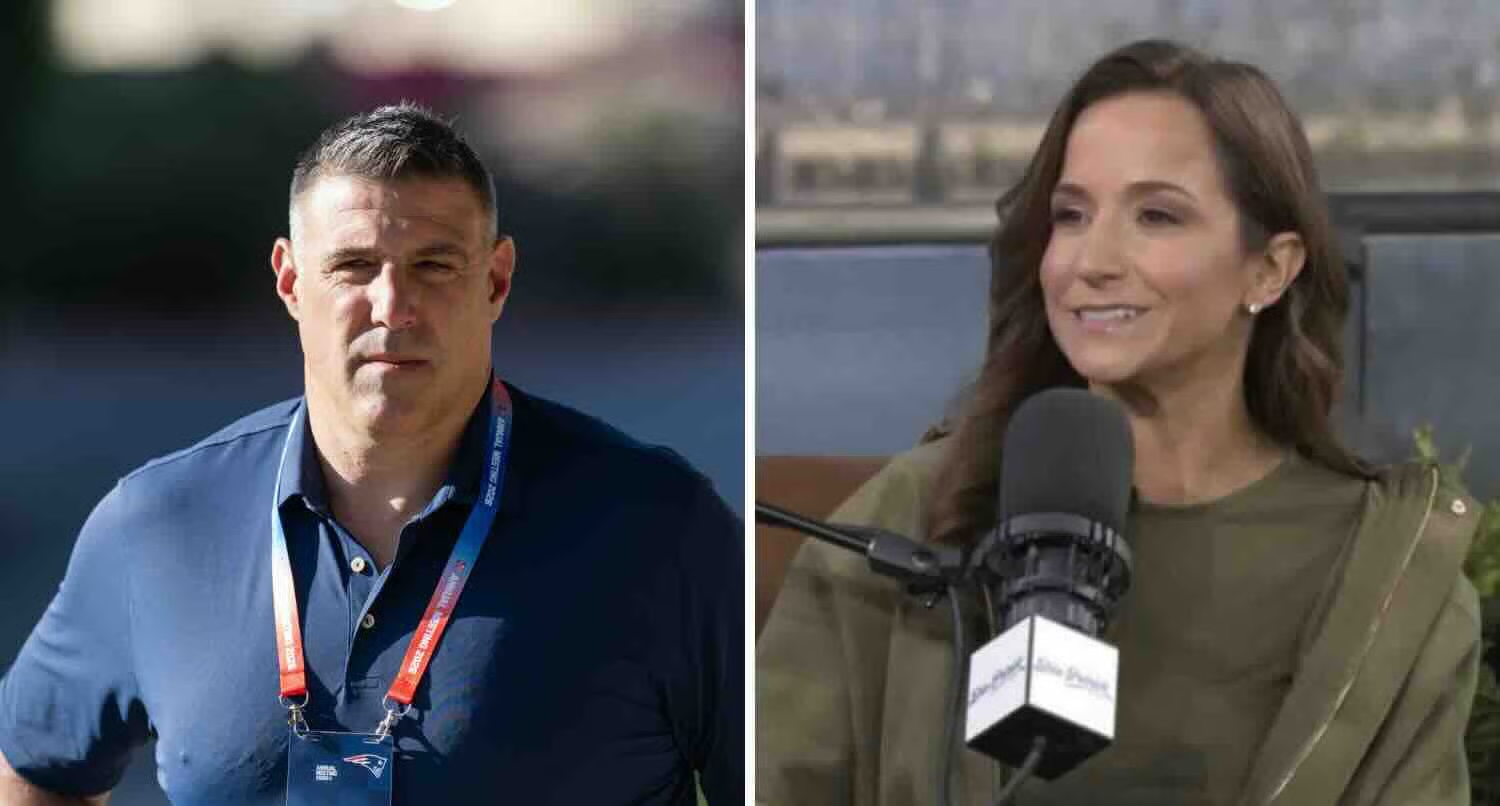
Tuesday night, The New York Post’s Page Six dropped a bombshell on the sports media world when it ran a story about The Athletic NFL insider Dianna Russini and New England Patriots head coach Mike Vrabel. The duo had been spotted together two weeks ago at the Ambiente, an adult-only resort in Sedona, Arizona. The series of photos in the article shows them holding hands, hugging, and lying side by side in a hot tub.
Objectively, the optics are not good. A reporter for a New York Times-owned outlet seen getting overly comfortable with the head coach of an NFL team, a prime subject of their reporting, sends up alarm bells. That Vrabel, 50, and Russini, 43, are both married and have a working relationship that dates back to Russini’s time with ESPN as the Tennessee Titans beat reporter when he was the head coach adds a whole other layer to the presumed salaciousness.
It’s easy to follow all of this down a rabbit hole, and in fact, much of social media spent Wednesday doing just that. Digging up old clips of Russini discussing her husband or sharing contextless comments about NFL coaches. Resurfacing old, unsubstantiated rumors about the female reporter. Pulling individual pieces of information out of the story to extrapolate. Assigning meaning to body language, clothing choices, and locations. Creating a correlation between facts that may or may not have any.
This is, of course, by design. The Page Six story was a masterclass in insinuation, in which just enough information was provided, leaving ample room for readers and online detectives to weave whatever narrative they wanted onto the scene.
Russini and Vrabel both offered explanations, with the reporter saying the photos were curated from a larger meeting of six people, and the coach saying the whole thing was “completely innocent.” The executive editor of The Athletic added that “these photos are misleading and lack essential context.”
It’s true that the pictures don’t tell a full story about Russini and Vrabel’s encounter. If you’re asking me for my opinion, I think whoever took these photos probably took 1,000, and these are the “best” ones. The fact that they don’t have a “smoking gun” photo of Russini and Vrabel canoodling or doing something far more incriminating implies they’ve cherry-picked what they do have to tell a story that probably isn’t true.
But even in saying that, I’m falling for the same trap that so many others are falling for, filling in the blanks based on my perceptions and assumptions in order to complete the story. And just like everyone else, I could be entirely wrong.
Unfortunately for Russini, even if evidence is eventually provided to vindicate hers and Vrabel’s accounts, the damage is done. Just look at the mentions on her first post back on X since this broke. The theories and connections have been made in the court of public opinion, and she has most certainly been judged. As many have stated, the frustrations and hardships that female sports media journalists face are already sky-high, and assumptions and accusations like these strengthen how detractors and critics already feel. There’s no redemptive arc in their eyes.
Page Six did its job and did it well. They knew exactly what they were doing. They even had a “Who is Dianna Russini?” SEO post ready to go to maximize its traffic impact. They knew that in the wake of their insinuating post, people would be desperate for as much information as they could get their hands on to fill in the gaps or confirm their preconceived notions. Whatever Russini and Vrabel did or did not do became irrelevant at that point.
Social media and the modern media ecosystem now own that truth, making it a case study for journalism professors and editors who need to scare rookie reporters straight. This story is already set in stone.
Even if the actual truth eventually comes out.
Subscribe to Awful Announcing’s “The A Block” newsletter here.