On Friday nights, IndieWire After Dark honors fringe cinema in the streaming age with midnight movies from any moment in film history.
First, the BAIT: a weird genre pick, and why we’re exploring its specific niche right now. Then, the BITE: a spoiler-filled answer to the all-important question, “Is this old cult film actually worth recommending?”
The Bait: A Pioneering Disappointment from Sam Levinson
Before helping HBO turn modern teen misery into a glittery, marketable aesthetic, writer/director Sam Levinson made his feature directorial debut with a mostly forgotten, deeply twisted indie film. Premiered at Sundance in 2011, the caustic “Another Happy Day” now plays less like a dark family dramedy — and more like a campy reminder of what to expect from Levinson and the upcoming “Euphoria” Season 3.


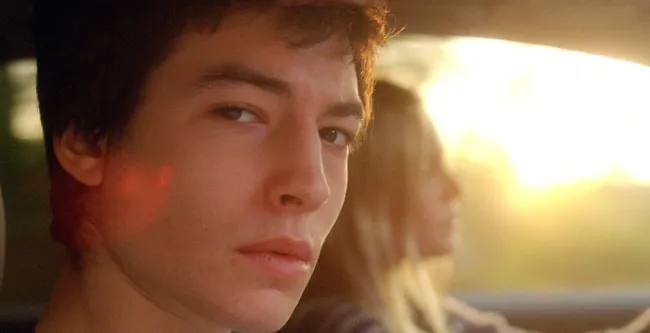
Stripped of the vibey, hip-hop style Levinson would later deploy in 2018’s “Assassination Nation,” this pitch-black comedy leaves its auteur with almost nowhere to hide. Set amidst a chaotic wedding in suburban Maryland, where troubled teen Elliott Hellman (Ezra Miller) wanders through a minefield of emotional violence, this simple scripts sees Levinson paint yet another portrait of young addiction.
The tense dynamic between Elliott and his mother Lynn (Ellen Barkin) feels like a rough draft for the witty resentment shared by Rue and her mom on “Euphoria.” But without Zendaya’s magnetic presence, and the dreamy production and costume design afforded to Levinson by that massive HBO budget, “Another Happy Day” spirals downward into a loud, nihilistic thud.

This wildly imperfect movie is worth revisiting only if you’re the kind of person who believes a cinematic oddity can double as a divisive filmography’s smoking gun. Oscillating between love and hate with remarkable volatility, the family members at the heart of “Another Happy Day” are truly awful to behold. That’s partly because their bleak ending feels like a foregone conclusion from the start, even as Levinson’s frequently funny script crackles with comic depravity.
The same could be said of “Euphoria,” which has struggled since Season 1 as much from a sense of tonal aimlessness and inconsistency as it has repeated production delays. For all its talk of shocking Gen-Z specificity, Levinson’s TV show has also ushered its mostly teen cast into adulthood without answering many questions that are key to the coming-of-age subgenre.

From Rue’s endless cycle of relapse and recrimination, to that profoundly humiliating hot tub scene in Season 2, “Euphoria” knows how to depict adolescent pain in a powerful and provocative way. But even at the beginning of his directing career with “Another Happy Day,” Levinson doesn’t seem to know what he wants all that pubescent suffering to mean. You can blame the filmmaker’s uneven trajectory in prestige television on behind-the-scenes hardships, or the pressure created by his series’ global success. But Levinson’s very first movie suggests there’s something more integral missing from his creative formula.
Frequently mistaken for Levinson’s debut, the internet age crime thriller “Assassination Nation” from 2018 feels like a jolt by comparison. That’s not because it’s deeper than this film, but because Levinson got smarter about covering up his emotional seams with spectacle. Rendered before the age of social media properly arrived, “Another Happy Day” sees Elliott and his younger brother Ben (Daniel Yelsky) document the wedding’s worst moments on a camcorder. That self-awareness reads more claustrophobic than kinetic here, and as an After Dark pick, the result sits in a strange but compelling pocket.
This isn’t a cult favorite, and it’s not “so bad” that it’s good. Still, “Another Happy Day” is too bizarre to be remembered as a straightforward affair, and plenty about it feels custom-made for the midnight crowd. The film opens on a taboo conversation about whether you can find a relative hot, then spends the rest of its runtime skirting similarly fraught edges with a shrugging, almost bored wit. It never reaches the transgressive heights of something like Todd Solondz’s “Happiness,” but it gets close enough to make you wonder why Levinson doesn’t (or can’t?) dig deeper.

A stacked ensemble, including Ellen Burstyn, Demi Moore, and Thomas Haden Church, gamely navigates a story that can’t quite balance their talents. Characters drift in and out with hazy importance, and emotional arcs stall or disappear entirely. The whole endeavor feels less intentional than it does unresolved — lending credence to complaints that Levinson has a habit of abandoning too many ideas mid-thought.
Which brings us back to “Euphoria.” The third and final season comes to HBO this Sunday night, and if nothing else, revisiting Levinson’s strange indie film debut from 2011 will make any possible disappointment that comes with it easier to stand. Wilson, what do you think? Is this a midnight movie worth rewatching, or just another lackluster project history should skip? —AF
“Another Happy Day” (2011) is streaming free on Tubi.
The Bite: The Director Who Won’t Grow Up
There are very few TV shows that feel as intertwined with a specific time and place in my life as Season 1 of “Euphoria” does with the summer of 2019. Released the month before I turned 20 and left my teenage years behind forever, Levinson’s moody high school drama (which I recall cheekily coining “‘Degrassi’ on valium” to a friend) hit me at a tender, liminal period of my pseudo-adolescence.
Spending my vacation as an (incompetent) intern in Washington D.C., my parents were going through the beginning stages of their divorce back home on Long Island. So, I wasted many nights wandering around an unfamiliar city where I had no connections to tether me. Every Sunday, I would retreat back to the George Washington University dorm room I had rented out and find escape in the neon-soaked glamor that enveloped Levinson’s messy cast of party kids, alt girls, rich bros, and broke slackers.
Even then, I recognized the abundant flaws in the writer/director’s artistic vision. For all the aesthetic accomplishments of the HBO series (the lush cinematography meticulously crafted as catnip for “One Perfect Shot” Twitter accounts), its grasp on basic plot and character development proved much shakier. The majority of the large “Euphoria” ensemble failed to rise above the base archetypes they embodied. I watched the series primarily for Zendaya’s Rue: a character who I didn’t share many biographical details with but who I nonetheless found a version of myself in. Both Rue’s detachment from the world and the yearning she felt for something more mirrored where I was entering the next decade of my life.
I remember watching the final scene of “Euphoria” Season 1 — which cast aside the shackles of its story in favor of a musical sequence that pressed even deeper into Rue’s emotional state — and feeling shaken afterwards. The sequence remains the peak of Levinson’s abilities as far as I’m concerned. It’s a moment that marries his talent for flashy set-pieces with palpable, burning feeling that’s typically out of his reach.

When Ali selected Levinson’s “Another Happy Day” for IndieWire After Dark this week, pitching it as a correction to those who believe “Assassination Nation” was Levinson’s first directorial effort (which, guilty!), she told me that Miller’s teen drug addict Elliott was essentially a prototype for Rue. That’s undeniably true. In his emotional breakdowns, Elliott buckles under his testy relationship with his mother Lynn and then wanders through gatherings and parties with a perpetually dazed expression. What he undergoes in “Another Happy Day” serves as a blueprint for Rue’s Season 1 storyline — although, the film premiered at a time when Zendaya was still just a bright, happy tween dancing on Disney’s “Shake It Up.”
And yet, despite that, I finished Levinson’s debut film curiously unaffected by Elliot and his story. That’s not just because Miller’s presence rings bittersweet given the actor’s real life struggles and controversies today, but also because this relatively modest affair lacks most of Levinson’s aesthetic and bombast. (That said, there is an artful oner of Lynn collapsing onto the lawn in despair that does her director’s eye for image composition proud.) The domestic drama lays bare many of Levinson’s weaknesses as a writer, and the script reveals fault lines and blind spots in Levinson’s craft that he hasn’t corrected in the years to come.
A tonally confused family drama that can’t decide if it wants to sneer and gawk at this exceptionally nasty clan of upper-middle DMV-area WASPs — or make us truly, profoundly pity them — “Another Happy Day” bundles together the slew of preoccupations that have appeared throughout Levinson’s movie career. Addiction. Depression. Generational trauma. White kids adopting street culture. Here, the weed-smoking rapper cousin who casually uses the N-word is the most classic Levinson trope, but the written material is as charged and soapy as ever. This 2011 indie debut feels like Levinson throwing emotional grenades on the floor but forgetting to take the pins out, and the plot rarely enters territory that’s truly compelling.

Levinson has been open about experiencing addiction as a teen and young adult, so it’s no surprise those themes double as his freshman film’s most affecting elements. An early scene where Lynn confronts Elliott about using drugs again feels born from Levinson’s lived experience, and the filmmaker went on to eventually restage that conversation several times during “Euphoria.”
Still, “Another Happy Day” starts at emotional bedrock and doesn’t know how to push upward. The end result is a tiring slog that circles Lynn, Elliott, and the rest of their toxic family’s oozing psychological wounds without knowing how to address or heal them — and the film concludes on a hazy note of ambiguity that feels more like a cop out than a symbol of life’s earnest and open-ended nature.
Levinson’s inability to go deeper than the surface, to make the pain he finds so artistically fascinating feel meaningful, is a major failing that’s tarnished every project he’s made since this one. After the mostly enjoyable excess of “Euphoria” Season 1, the series’ sophomore outing collapsed on itself, forgoing a strong examination of its imperfected characters in favor of a tangle of repetitive, half-formed subplots. Other works, like Netflix’s “Malcolm & Marie” and HBO’s “The Idol,” proved frustratingly shallow. Sure, they were provocative, but they neglected to find original ideas sincerely worth prodding.
Barkin, who was dating Levinson at the time of the film’s production, gamely strives to anchor the odd, histrionic film with her performance and wrings real pathos out of Lynn’s brittle and wounded demeanor. Of course, Barkin and the rest of the cast are underserved by an uneven film caught in an awkward place between arch black comedy and grounded, gritty drama. “Another Happy Day” is the type of feature that is neither funny nor affecting. But its blunt, inelegant dialogue is peppered with characters (metaphorically) vomiting up their darkest secrets. It leaves them at a strange plateau: effectively incapable of steadily rising in intensity while their words are constantly veering into melodrama.

It struck me, while watching “Another Happy Day,” how ill-equipped Levinson is when it comes to writing actual adults. His 2021 Netflix film “Malcolm & Marie” felt like two theater kids play-acting a version of “Who’s Afraid of Virginia Woolf?” sorely lacking real venom, while “The Idol” could only render its pop star Jocelyn (Lily-Rose Depp) as a little girl lost. “Another Happy Day” is ostensibly a film about adults ruminating on their pasts, but when it turns away from Lynn’s relationship with Elliot or her depressed daughter Alice (Kate Bosworth) to focus on her concern over her mother (Burstyn) or the resentment that simmers between her and her ex-husband’s new wife Patty (Moore), the film falters, never conjuring a real sense of history to spill out from within Elliott’s cynical and unlikable extended family.
Yes, Levinson was a young adult, only 25, when he made “Another Happy Day,” but it’s notable that his most successful projects have all been about teenagers, people who are half-formed or still discovering themselves, and those without inner lives for a writer to sketch and tease. Early in the 2011 movie, Elliott invokes Peter Pan in a mocking comment about his half-brother Dylan (Michael Nardelli), whose nuptials are what brought him and Lynn to this lawn-scaped circle of hell. Watching the scene, I couldn’t help but think that the boy who stayed a child forever was a fitting figure to have stand in for Levinson himself.
I have fond memories of “Euphoria” Season 1, but seven years, one pandemic, and a diploma later, I’m a different person. No longer the 19-year-old who felt seen by the angst of Rue and Jules, but someone who has grown up and put that life behind him. Having watched “Another Happy Day,” I’m not quite sure Levinson ever did the same. —WC
“Another Happy Day” (2011) is streaming free on Tubi.
Read more installments of After Dark, IndieWire’s midnight movie rewatch club: