Software stocks just recorded the worst relative performance against the S&P 500 in the sector’s entire recorded history. The iShares Expanded Tech-Software Sector ETF (IGV) cratered more than 24% in Q1 2026, its steepest quarterly plunge since Q4 2008. Salesforce, Adobe, Oracle, and even Microsoft are deep in correction territory right now.
The fear gripping investors centers on a single threat: artificial intelligence agents could hollow out traditional software platforms entirely. Short-selling volume across single stocks hit the highest level Goldman Sachs has recorded since 2016, a sign of genuine capitulation.
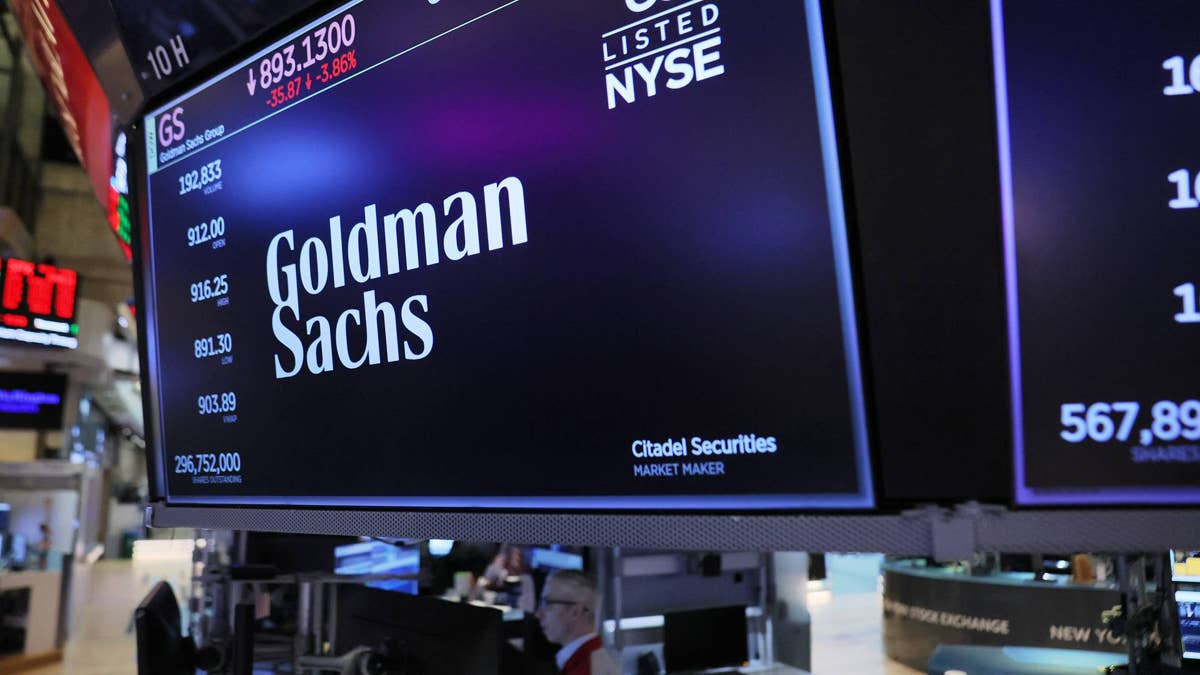
But one of Wall Street’s most powerful research desks is pushing back hard against the panic driving this historic selloff. Goldman Sachs has released a framework, a custom stock basket, and four specific buy-rated names that it says are being unfairly punished.
Goldman Sachs Research analyst Matthew Martino published a report in February 2026 that entirely reframes the AI-versus-software debate. The selloff reflects a rapid shift in investor sentiment rather than a sudden deterioration in fundamentals, Goldman Sachs Research reports.
The team created a repeatable “AI Impact Framework” that evaluates software companies across six dimensions that determine AI resilience.
“We recognize that rapid AI innovation creates legitimate uncertainty and warrants a higher risk premium…Even so, we believe the repricing has been applied broadly rather than selectively.”— Matthew Martino, (Goldman Sachs Research analyst.)
Those dimensions include orchestration risk, monetization exposure, system-of-record ownership, data integration moat, AI execution, and budget alignment. The goal is to help you distinguish between stocks that face genuine displacement and those that got sold off indiscriminately.
The scale of repricing becomes clear when you examine what the market now prices into software revenue growth. At their recent peak, software valuations implied a 15% to 20% medium-term revenue growth rate through 2028, Martino noted in his research.
Current multiples now correspond to an expected growth rate of only 5% to 10%, a dramatic downshift in investor confidence.
Relative to the SPDR S&P 500 ETF Trust (SPY), the software sector’s drawdown represents a 21% underperformance this calendar year. That figure exceeds what software experienced during the dot-com bust, the global financial crisis, and the 2022 rate-hike shock, individually making it the worst relative drawdown ever recorded for the software sector.