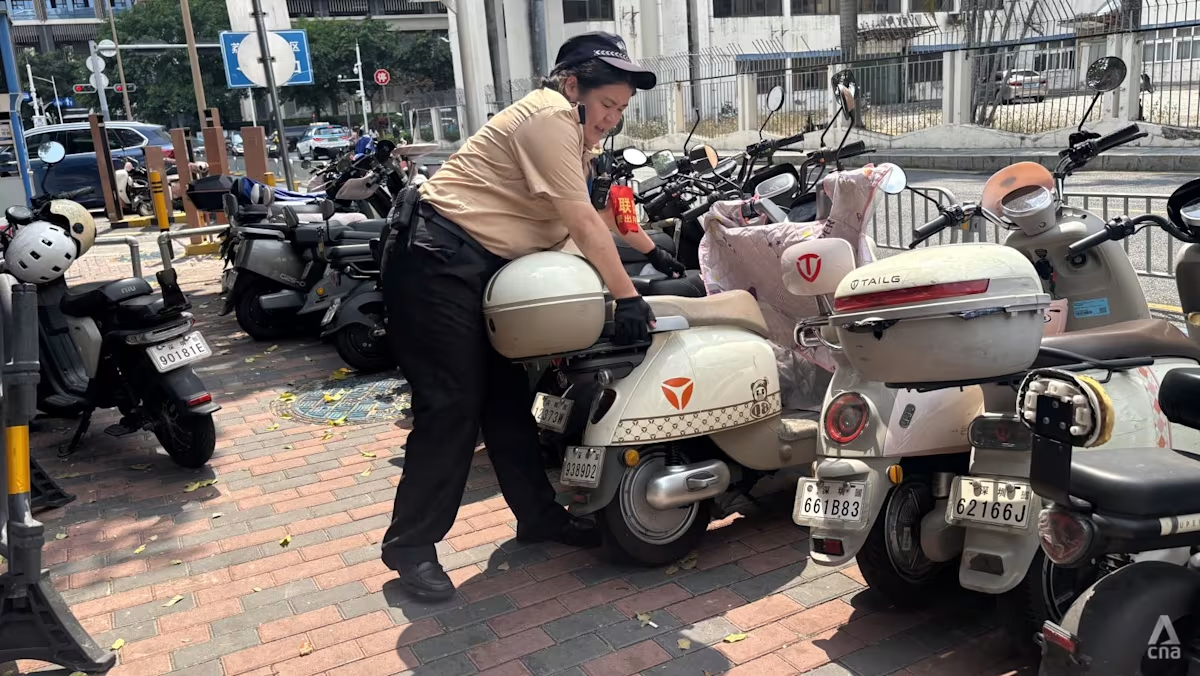
Shenzhen stands out for the sheer scale of usage and the central role of e-scooters in fast-moving commercial hubs like Huaqiangbei, where they are widely used for both commuting and goods transport.
The tally of electric two-wheelers in Shenzhen has boomed past six million, compared to about 800,000 in 2013, according to local transport authorities.
Wang Jianguo, a 58-year-old equipment repair shop owner in Huaqiangbei, said e-scooters are widely used for commuting and moving goods. He also relies on one himself.
“Normally, it takes about half an hour to get here (from home) by electric bike,” Wang Jianguo, a 58-year-old equipment repair shop owner in Huaqiangbei, told CNA.
“If you switch to other transport (such as the metro), it can take an hour.”
The relative affordability of e-scooters also makes them widely accessible. In Shenzhen, a basic model typically costs between 1,500 and 4,000 yuan, placing them within reach for delivery riders, migrant workers and commuters.
SAFETY CONCERNS
But the rapid growth of these nimble two-wheelers has far outpaced the development of dedicated lanes and parking infrastructure, while also raising safety concerns.
Last year, electric bikes were involved in 62 per cent of traffic accidents and 75 per cent of fatal accidents in Shenzhen, according to local traffic police data.
Dedicated lanes for e-scooters, bicycles and other non-motorised vehicles cover only about 36 per cent of Shenzhen’s roads, compared with more than 90 per cent in major cities such as Beijing and Shanghai, according to official municipal data.
With many roads lacking clearly separated lanes, e-scooters are forced to compete for space with both cars and pedestrians.