Thousands of Britons could be living with a painful jaw condition that leaves sufferers with chronic headaches, neck pain and permanently damaged teeth – yet it is frequently missed or misdiagnosed by doctors.
The condition – bruxism – is poorly understood, but it is thought a combination of stress, lifestyle factors and genetics causes some people to clench their jaw or grind their teeth together, most commonly while they sleep, with distressing, long-term effects.
The main symptoms are headaches, jaw pain and stiffness caused by the repeated overuse of the muscles that surround the mouth. While these problems are often dismissed as tension headaches or general stress, dentists say untreated bruxism can have devastating consequences.
Teeth can be ground down, exposing the sensitive layers beneath the enamel and causing them to crack and break. In worst-case scenarios, sufferers can be left with little more than stumps, requiring extensive dental work.
The condition can also lead to temporomandibular joint dysfunction, or TMJ – a jaw condition that causes clicking noises when moving the mouth and difficulty opening it fully.
However, many patients are being incorrectly diagnosed with other chronic pain conditions, and left managing symptoms rather than the underlying cause.
But the good news, according to experts, is that bruxism is usually easy to identify and treat once recognised – often with a simple mouthguard and lifestyle changes that can dramatically reduce pain and prevent permanent damage.
Dentists are urging anyone who wakes with persistent headaches, jaw stiffness, facial pain or unexplained tooth sensitivity to seek help early.
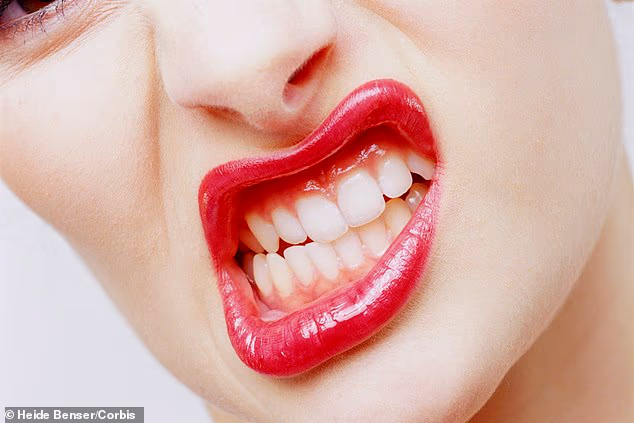
Dentists say untreated tooth grinding, or bruxism, can have devastating consequences

The main symptoms are headaches, jaw pain and stiffness caused by the repeated overuse of the muscles that surround the mouth
Ingrid Perry, prevention lead at dental provider mydentist, says: ‘Most people grind their teeth without knowing it, and often it’s a partner that picks up on it.
‘But it can cause really significant distress and pain. In my clinics we’ve seen people who’ve worn their teeth down so much they’ve ended up needing extensive restorative work. But you don’t have to live with it – see a dentist if you’re experiencing these kinds of headaches.’
To identify the problem dentists look for tooth surfaces that have been worn down by grinding, cracked or chipped enamel, and signs of sensitivity.
The most common solution is a custom-made mouthguard – a removable plastic device worn over the teeth, usually at night.
While this does not stop people grinding their teeth altogether, it reduces the impact on the teeth and jaw muscles, according to Dr Praveen Sharma, scientific adviser to the British Dental Association.
‘For most people that resolves the issue, because it stops the teeth from clenching together and protects against damage,’ he says.
Patients may have to pay for the guard, which costs from around £40 to £300. Other treatments may also provide relief. Jaw exercises can be recommended to release muscle tension.
Dr Sharma says: ‘These exercises – which include curling the tongue back in the mouth and slowly opening and closing the jaw – can help some people.’

‘See a dentist if you’re experiencing these kinds of headaches,’ says Ingrid Perry

The most common solution is a custom-made mouthguard – a removable plastic device worn over the teeth, usually at night

Deborah, a retired hypnotherapist from Biddenham, Bedfordshire, says wearing a mouthguard has changed her life
In cases where stress is a clear trigger, treatment may involve seeing a GP to discuss medication.
While antidepressants such as selective serotonin reuptake inhibitors (SSRIs) are known to trigger bruxism, others – such as amitriptyline – can have a sedating effect that may reduce grinding at night.
Cognitive behavioural therapy (CBT) may also help.
‘Anything that relieves stress could be beneficial, whether it’s CBT, antidepressants, or even yoga, meditation, tai chi or breathing exercises,’ says Ingrid Perry.
Botox has also been shown in some cases to provide relief, which can be administered by dentists trained in facial anatomy. In severe cases, patients can be referred to a maxillofacial specialist who may carry out TMJ (temporomandibular joint) arthroscopy to remove scar tissue.
Other advice includes avoiding alcohol and caffeine before bed.
Ms Perry adds: ‘Anyone waking up with headaches, pain in the side of the face or new tooth sensitivity should see a dentist. The sooner you treat it, the better.’
Deborah Bromley, 69, recalls that the pain caused by her bruxism was excruciating. It spread from her jaw joint, past her ears and culminated in a dull, thumping ache around her skull. Her shoulders seized up and her neck ached.
She says: ‘There was nothing like [the pain]. It was intense. And no painkiller would touch it.’
The condition first began when she was a teenager, and over the years two GPs told her the pain was fibromyalgia – a chronic pain condition – leaving her to manage the symptoms with painkillers.
But after pieces of her teeth began to fall off, a dentist finally diagnosed the cause. Deborah, a retired hypnotherapist from Biddenham, Bedfordshire, had been grinding her teeth in her sleep. The solution was a mouthguard, which she has worn overnight for the past 30 years. ‘It changed my life,’ she says.