In a television landscape increasingly defined by fragmentation, platform identity matters almost as much as the content itself. That’s why a recent crossover between Dropout — a progressive indie streaming platform, best known for the improv comedy hit “Game Changer” — and ABC’s police procedural “The Rookie” has become such a captivating flashpoint.
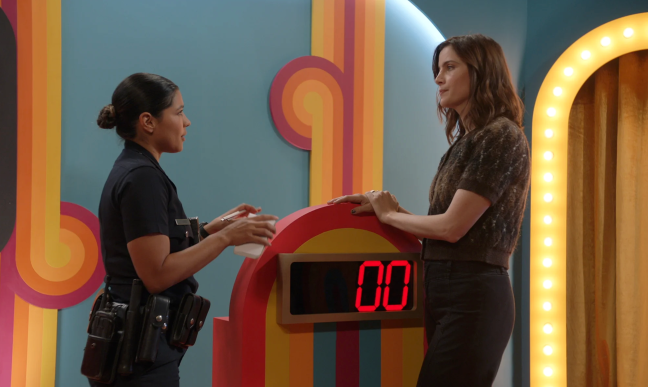
On Monday night, popular Dropout personalities Vic Michaelis, Jacob Wysocki, Zac Oyama, and Anna Garcia joined their service’s CEO and “Game Changer” host Sam Reich on the broadcast dramedy opposite Nathan Fillion. They’re in “The Rookie” for just a few scenes, but the announcement of the crossover sparked backlash that prompted a response from Dropout on social media before the episode aired.

Ten years ago, the collaboration would’ve been harmless enough. But today, it highlights a rapidly deepening tension shaping not just business models but audience loyalty across TV. The uneasy overlap between politically conscious independent media — and legacy network television built on a conservative-coded status quo — draws out existential questions facing Dropout viewers and consumers like them. These audiences increasingly treat subscription platforms as ideological spaces, and the backlash that’s emerged online is less about one mistake than long term trust.
Is Dropout a Streaming Service — or a Cultural Safe Haven?
For many subscribers, Dropout is less of a streaming platform than it is an ad-free refuge. Born from the remnants of CollegeHumor and rebuilt under CEO Reich, the indie service has cultivated an unusually intense fanbase by positioning itself as ethically transparent, diligently pro-artist, and structurally opposed to traditional Hollywood incentives. In theory, the company is not designed for revenue maximization, instead prioritizing employee profit-sharing and sustainable growth.
Those core values have hung on this long because Dropout exists largely outside traditional advertising ecosystems. The corporate network pressures that many viewers associate with conservative business norms in entertainment don’t apply here, and the programming has stayed daring during fraught times as a result. Shows like “Game Changer,” “Dimension 20,” and “Make Some Noise” thrive on comedic experimentation, queer talent, and politically aware humor — all aligned with progressive values.

Honesty has been central to that relationship so far, and when controversy around “The Rookie” crossover emerged, Reich addressed it directly during one of Dropout’s routine Q&A livestreams. Acknowledging that fans had “strong and mixed feelings” to the then-upcoming episode, Reich affirmed that viewers had “a right to light me up on social media” — without apologizing for the decision.
In theory, that openness reinforces Dropout’s brand. In practice, it demonstrates what actually happens when choices made by the top brass clash with fan expectations. That’s been underwhelming for some.
How Did “Game Changer” Even End Up on “The Rookie”?
According to Reich, the collaboration between “Game Changer” and “The Rookie” was not a ham-fisted attempt at synergy but real fandom flowing through the behind-the-scenes industry. Writers and producers from “The Rookie,” apparently Dropout viewers themselves, reportedly approached Reich about integrating his production and staff directly into an episode storyline.
The result, titled “Fun and Games,” features the Dropout gang appearing as themselves after a robber visits the “Game Changer” set. ABC’s production designer even recreated the game show’s backdrop “down to the last detail,” per Reich, who further described the experience as “surreal.” He admitted “The Rookie” afforded him and his team the chance to observe “how they do it in the big leagues.”

Also during the livestream, Reich said he was motivated toward the partnership because it could be a multiplier for Dropout. Network television still commands an audience scale that dwarfs most niche streaming platforms, and the CEO was candid that the crossover offered talent a chance to perform on broadcast TV while introducing the service to viewers who might otherwise never encounter it.
But the inverse scenario carries real risk. If “Game Changer” regulars who migrate over to “The Rookie” don’t like what they see, Dropout has effectively destabilized its audience — for no reward.
“‘The Rookie’ is quite distinct from Dropout’s style of humor,” said IndieWire’s Sarah Shachat, who has covered the ins-and-outs of the service for several years. “Clearly, they let the ‘Game Changer’ cast have some fun improvising, but you can feel them being dropped into a broadcast template and the edges clashing. Reich plays this bumbling salesman version of himself that is distinctly not his Dropout persona. Being on ABC kind of dilutes Dropout’s product.”
Unpacking “Copaganda” in the Age of I.C.E.
Yes, Reich also admitted that hanging out with “The Rookie” star Nathan Fillion was part of the cameo’s appeal. That kind of one-off remark either puts things in perspective or introduces more friction, depending on how you feel about cop shows culturally. On Dropout, the consensus around law enforcement has been so historically negative that its store sells an anti-police mug, currently sold out.
The term “copaganda” refers to any media that portrays law enforcement in ways that reinforce institutional legitimacy, normalize dangerous policing practices, or encourage public trust in authority structures. From “Law & Order” to “Blue Bloods,” police procedurals have long been studied for their role in shaping public perception. Simplifying systemic issues into solvable weekly crimes has been a major issue, particularly for Black Americans. And even well-intentioned series tackling the subject matter of crime can accidentally participate in its framework simply by centering police as protagonists.
For some Dropout subscribers, many of whom explicitly value the platform as a progressive alternative to mainstream TV, working with a police show feels like a slippery slope toward an ideological crossover. To be clear, this installment of “The Rookie” itself doesn’t overtly glorify the police, and Reich and his fellow comedians function more as live-theater participants than propaganda tools. But for viewers explicitly uncomfortable with the existing establishment — i.e. #BLM newly compounded by Trump 2.0 and ICE — seeing “Game Changer” share the frame with such notoriously problematic tropes reads less like a cameo and more like a concession.

Was the Risk Worth It?
Dropout declined IndieWire’s request for comment and would not provide subscriber data to illuminate whether their core consumer base had shifted following “The Rookie” experiment. Online reaction remains divided, but it’s dwindling, with many fans simultaneously expressing disappointment and signaling willingness to move on.
Reich himself suggested the response could influence Dropout’s future decisions. He emphasized during the livestream that audience feedback would continue to shape how the company proceeds, but left his opinion on this debacle in an ambiguous place. Maybe this was a harmless one-off attempt at exposure that went poorly — or maybe it’s an early indication that even the most ideologically curated streaming platforms eventually fall to the same pressures as everyone else. The truth remains to be seen, but under the circumstances, calling this mess a “clue” feels like the wrong metaphor. If not, a rookie mistake.