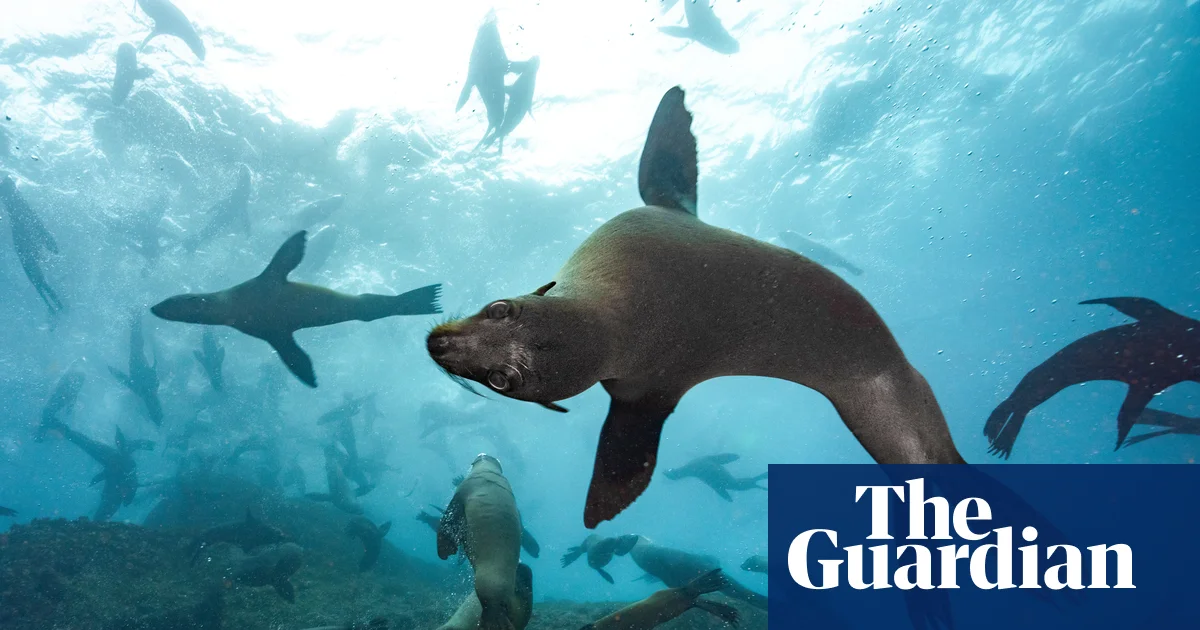
Six decades ago, pioneering oceanographer and conservationist Sylvia Earle made a bittersweet discovery while diving off Chile’s oceanic islands with the US National Science Foundation vessel, the Anton Bruun. She found the remains of a baby fur seal, one of the world’s most isolated aquatic mammals.
Endemic to the Juan Fernández archipelago, in the Pacific Ocean, and once prized for its fur and meat, the species, Arctocephalus philippii, was believed to have been hunted to extinction in the 19th century. But, Earle said: “A baby must have a mum and dad somewhere.”
A year after her find, a small colony of 20 endemic fur seals was confirmed on Robinson Crusoe Island, one of the archipelagos’ three islands, named after Daniel Defoe’s fictionalised tale of the real-life sailor Alexander Selkirk, who was marooned there from 1704 to 1709.
The discovery was, she says, a “message of hope” and with it “the beginning of the turn-around” to protect the archipelago, a haven for endemic wildlife and a biological hotspot, against other human-made threats including industrial fishing and the climate crisis.
Today, after decades of action by islanders and conservationists, including Earle who described it as a critical “Hope Spot” to protect marine life, the almost obliterated seal population has made a remarkable recovery. An estimated 200,000 fur seals now live around the islands, “returning them to their previous role as key members of the ecosystem” says Earle, now 90, who returned to the island to dive in December 2025.
Last week, Earle and the 1,000-strong community of mainly lobster fishers were celebrating a new conservation win: earlier this month, in one of his last acts as the president of Chile, before José Antonio Kast was elected on 11 March, Gabriel Boric signed a historic agreement to extend protection of 337,000 sq km (130,000 sq miles) of the waters around Juan Fernández and the nearby Nazca-Desventuradas marine park.
Once implemented, the “no take” zone would extend to almost 1m sq km, making it third-largest such marine protected zone in the world. By doing so, Chile would protect more than 50% of its waters, putting it in a rare category alongside countries such as Panama and French Polynesia. It would prohibit all fishing, except for 12km from the coast, to allow the community fishers to work.
“Now we have a country that exceeds what most countries are willing to step up and do” says Earle. “Although there is increasing commitment for global ocean protection, Chile is out in front.”
Three years ago, countries agreed that 30% of the world’s national and international waters, along with its land, must be protected by 2030, to protect biodiversity. This year, a landmark global agreement to protect the world’s oceans, known as the high seas treaty, came into force, a key part of the 30×30 goal.
“It is heartwarming to see the wishes of this unique and special community, many of whom I have known for over 20 years, rewarded for their commitment and perseverance by the Chilean government,” says Max Bello, global MPA specialist at Blue Marine Foundation.
The islanders and conservationists do have one more more hurdle to overcome: a tense wait to see whether the new Chilean government will agree to, or drop, the extension to the marine park under its ongoing assessment of the environmental laws put in place by the previous administration.
The Chilean ministry of the environment told the Guardian, however, that its intention is not to eliminate protections, and that as long as there are no legal or technical issues with its review of the new protected area, it will allow it to go forward as planned.
The proposed expansion of the Chilean no-take zone was prompted by the actions of the Juan Fernández islanders and conservation NGOs. The fishers, who have about 50 small boats between them, have for decades practised stewardship of their fishery. In the early 1990s and early 2000s, they witnessed the damage caused by the “gold rush” industrial fishing of the orange roughy, a slow growing fish that gathers on seamounts to reproduce.
Various NGOs including the Blue Marine Foundation, Pew Bertarelli Ocean Legacy, Island Conservation and Fundación Patagonia Azul were involved in supporting the community campaign.
Industrial fishers used large mid-water nets that damage corals, the conservationists say, and the community soon became concerned by other threats to the unique ecosystem. When a survey showed 98% of residents in favour of extended protections, the fishers presented a proposal to the president.
Julio Chamorro Solís, a lobster fisher and president of the Organización Comunitaria Funcional Mar de Juan Fernández, whose WhatsApp image shows a colourful tattoo of a lobster across most of his back, told the Guardian in a message: “We know the level of endemism we have and how fragile this ecosystem is. There’s a biological treasure here.”