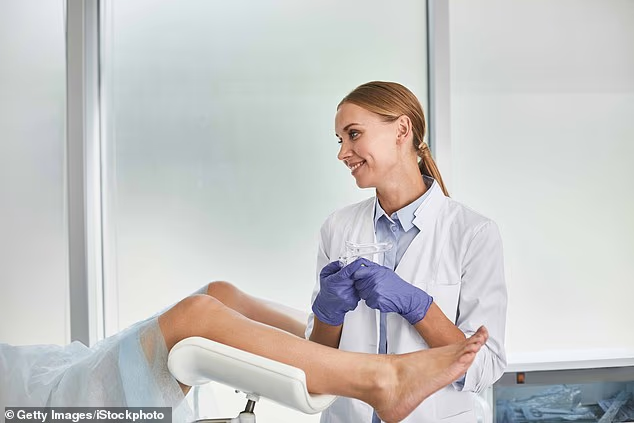
Women struggling with sexual dysfunction could benefit from having a treatment dubbed the ‘O shot’, a new study has found.
The procedure, commonly dubbed vaginal rejuvenation, uses platelet-rich plasma (PRP) derived from a patient’s own blood to stimulate tissue regeneration in the area to strengthen the muscle and improve lubrication, sensitivity and sexual function.
Experts claim the treatment could benefit thousands of women who experience debilitating symptoms such as vaginal dryness, pain during sex, reduced libido and recurrent urinary tract infections (UTIs), typically brought on by the menopause.
The current study, published in the journal Obstetrics & Gynecology, followed 52 sexually active premenopausal women aged 18-50-years old for six months.
Patients at the urology clinic were randomly assigned to receive either a one-time PRP injection or a saline placebo into the front wall of the vagina.
Injections were given at three points near the vaginal opening and around 3cm from the urethra – the tube through which urine leaves the body.
Crucially, the women did not know which injection they received.
Women treated with PRP showed a greater improvement in sexual function after six weeks and six months after having the injection compared with women who were given the saline shot.
Those treated with PRP also expressed greater sexual desire, arousal and lubrication and reported more orgasms than before treatment.
Also known as the ‘O shot’, the treatment involves injecting the vagina with a patient’s own blood to plump and tighten damaged vaginal tissue, increasing sensitivity during sex
However, the researchers noted, these changes were not statistically significantly different compared with the control group,
But just six weeks after treatment, nearly 70 per cent of women treated with PRP reported improved sexual function based on personal experience, compared with just 42 per cent of those who were given the placebo shots.
The researchers, from the University of Colorado Anschutz, concluded: ‘This randomised controlled trial provides compelling data demonstrating greater improvement in sexual function with PRP injections compared with control in sexually active premenopausal women without severe sexual dysfunction.’
To obtain platelet rich plasma, a syringe of blood is taken from a patient’s arm and spun in a centrifuge until the plasma separate from the red blood cells.
As well as platelets, the plasma is also packed full of growth factors that can stimulate cell regeneration when they are re-injected into the body – hence their growing use in beauty treatments and tweakments.
It is not uncommon for women to experience a drop in sex drive in the five to ten years leading up to the menopause, a period known as the perimenopause.
During this time, a woman’s sex hormones – including oestrogen – rapidly decline, affecting everything from mood to changes in the pelvic floor area and vagina.
There is also less blood flow to the area and tissue begins to thin, causing vaginal atrophy, dryness and tightness that can all lead to irritation, recurrent UTIs and pain during sex.
Whilst many women report PRP did increase sensitivity and boost sex drive, it is still considered experimental and therefore is not available on the NHS.
Sometimes referred to as the ‘O’ shot, PRP injections can cost anywhere from £250 for a single injection to upwards of £1,500 at private clinics.
And whilst many claim it can help improve sensitivity to make orgasms more likely, it doesn’t always help alleviate pain during sex, where a lack of oestrogen is more likely to be the problem.
It is currently estimated that the menopause market will reach £20bn by 2030, with many women now choosing not to take hormone replacement therapy (HRT), due to concerns that have now been disproven about increased breast cancer risk.
HRT artificially produces hormones the body no longer produces to alleviate menopause symptoms such as vaginal dryness and hot flushes.