A new Atlantis has emerged from the sands.
An amateur archaeologist has potentially made the discovery of a lifetime after uncovering the alleged ruins of a lost metropolis off Louisiana that predated modern US history.
“All I know is that someone built the city 12,000 years ago,” retired architect George Gelé claimed in a resurfaced WWLTV interview from 2022.
In the clip, Gelé claimed that for 50 years, he has been capturing sonar images of submerged structures off Chandeleur Islands, a chain of uninhabited barrier islands situated in the Gulf of Mexico around 50 miles east of New Orleans.
The mysterious buildings reportedly number in the hundreds and are located 30 feet below the water’s surface and are buried underneath an additional 100 feet of sediment.
The crown jewel of this so-called lost city is a so-called 280-foot pyramid jutting up from the ocean floor, which the architect claims emits a powerful electromagnetic signature that affects passing boats. In fact, he believes that these aquatic remnants are “geographically related to the Great Pyramid of Giza in Egypt.”
All together, these pieces form a former civilization, dubbed Crescentis, which dates back 11,700 years to the end of the last Ice Age when rising seas inundated the coast.
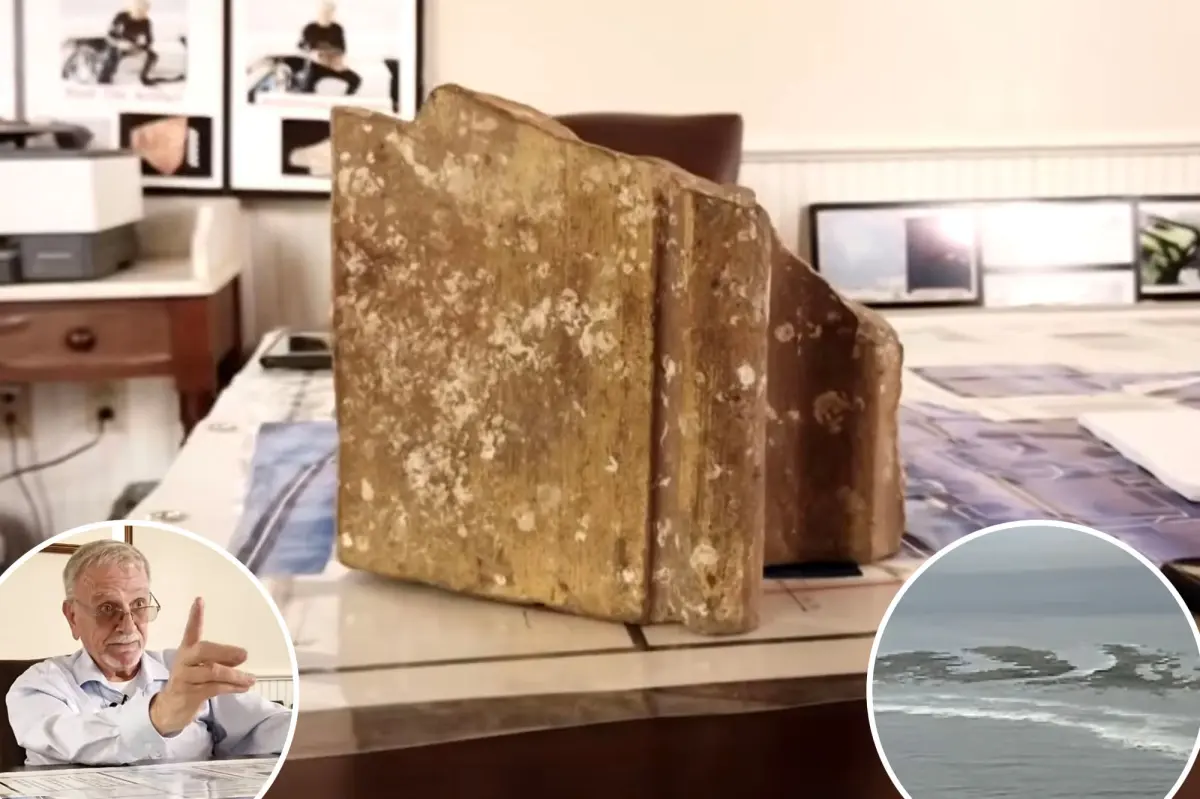
Gelé based his theory on mounds of mysterious granite stones found beneath Chandeleur Sound that are comprised of material not naturally found in Louisiana, leading the amateur archaeologist to believe that they were transported there.
“Somebody floated a billion stones down the Mississippi River and assembled them outside what would later become New Orleans,” declared the metropolitan forensics enthusiast, who has personally bankrolled and executed over 40 underwater research excursions in the region since 1974.
While this discovery has not been published in any peer-reviewed journals, Gelé is not the only one who things there’s something fishy going on beneath the sound.
Local shrimper Ricky Robin, who ferried Gelé to the site on numerous occasions, claims that his boat gadgets started behaving strangely when he passed over the location of the alleged pyramid.
“I thought right away it was pieces of the pyramid because it was right around where that compass spun,” the prawner claimed. “Everything will go out on your boat. All your electronics like you were in the Bermuda Triangle.”
He claimed that other anglers had also swooped up strange square rocks in their nets.
However, other researchers have suggested that the structures could have a simpler explanation.
A Texas A&M study from the 1980s asserted that the stones could’ve been ballast discarded by Spanish or French galleons so they wouldn’t be as cumbersome in the shallows, Ancient Origins reported.
Meanwhile, in 2011, archaeology professor Rob Mann postulated that the granite could be the remnants of an attempt to erect an artificial reef in the 1940s. Although he claimed that searching underwater wouldn’t yield any more answers.
However, Gelé is not convinced.
“This is a piece of architecture, this is not ballast,” he declared while examining one of the stones, which sported a groove that he claimed was a “rain gutter.”
“Whether or not they (the people of Crescentis) had somebody on their shoulder flew in with a UFO, I don’t know,” he said. “All I know is that they left a whole bunch of granite rocks out there.”