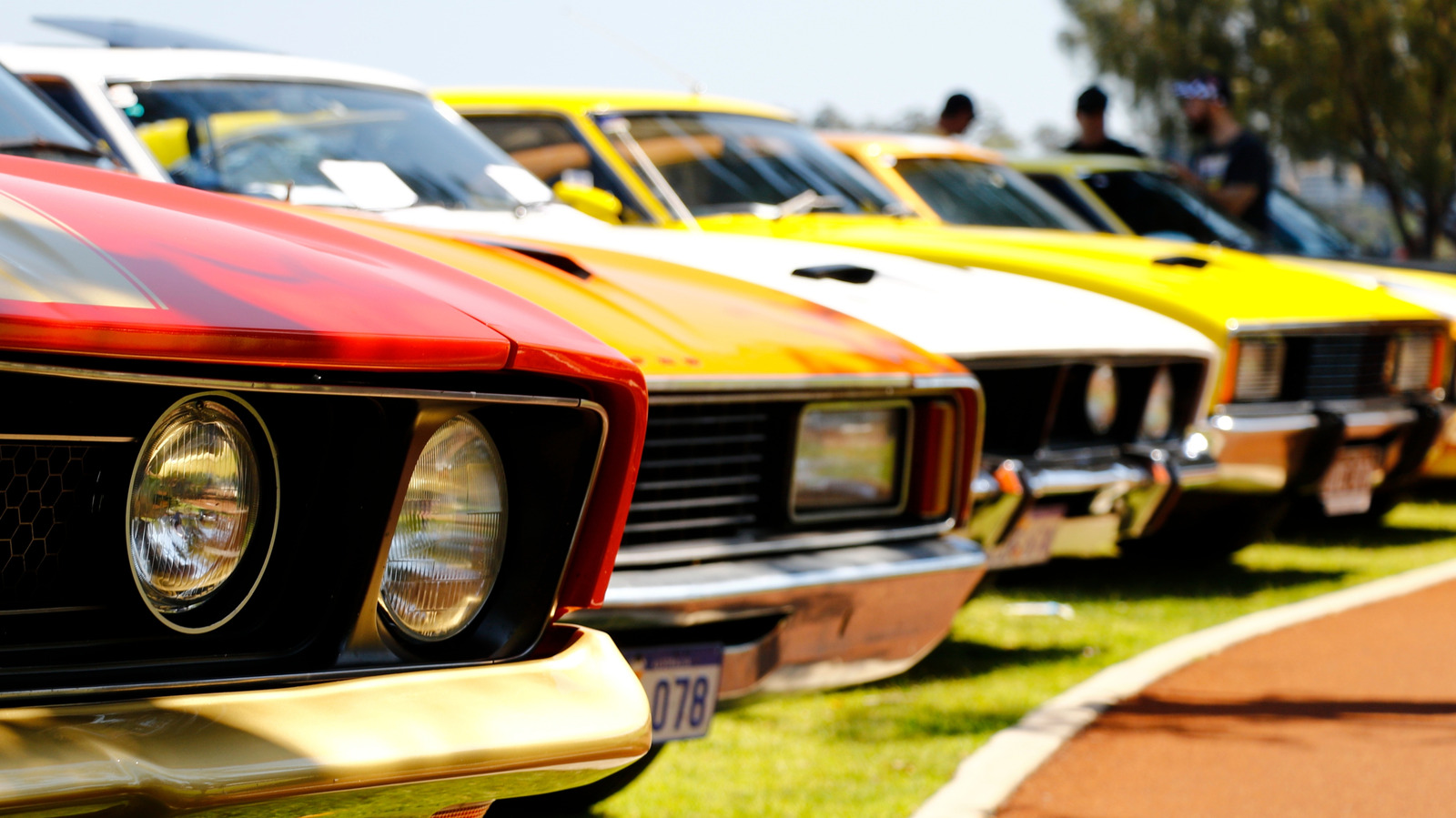
The 1970s were quite brutal for U.S. car culture. The oil crisis, tightening emissions regulations, skyrocketing insurance rates, and new federal safety standards conspired to strangle performance out of some of the most iconic nameplates in automotive history. Cars that should have been legends rolled off the line as shadows of themselves. They were often underpowered, overweight, and even mocked by enthusiasts accustomed to the 1960s abundance.
Here’s the twist. According to Hagerty’s 2024 “Future of Driving” survey, 60% of Gen Z respondents want to own a classic — nearly double the 31% of Baby Boomers who said the same. Additionally, data from ClassicsWorld show that the 1970s are the single most popular decade among both Millennials and Gen Z, accounting for 20% and 24% of their insurance quote activity, respectively.
The funny thing is that while everyday commuters bought these cars out of necessity, traditional automotive enthusiasts absolutely despised them. Despite some of these being hugely successful in sales, they were such massive disappointments in terms of performance that they became industry punchlines. However, they are now being rediscovered. A generation that never lived through the ’70s disappointment is falling in love with some of them. Here are five cars that flopped in the ’70s but younger generations love.
1. Ford Mustang II (1974 to 1978)
Few cars in American history have been as universally hated by enthusiasts as the Mustang II. Ford took one of the most beloved nameplates ever built, a car that had sold over a million units by 1966, and bolted that famous badge onto what was essentially a dressed-up Ford Pinto. The original 1974 model came with an 89-horsepower four-cylinder engine. Eighty-nine horsepower. In a Mustang.
As Hagerty noted, the Mustang II became “the pony car that enthusiasts love to hate.” Gone were the aggressive body lines and long hoods of earlier brawny Mustangs. They were replaced by a notchback design riding on Pinto underpinnings. While muscle car purists simply hated it, the general public actually bought them in droves to survive the gas crunch. However, in the decades since, the car has become a symbol of everything that went wrong with Detroit in the ’70s. It was the moment America’s sports car waved the white flag. So, does the worst Mustang really deserve its dire reputation?
First of all, the Mustang II kept the nameplate alive through the darkest years of the oil crisis, which is partly why there’s a Mustang at all today. That survival story seems to resonate quite deeply with younger collectors. In all actuality, younger buyers aren’t just tolerating the Mustang II — they want it. According to Hagerty data, Gen Z shows three times more interest in the II than in other Mustangs. This is also partly because it is the most affordable. As the saying goes, one man’s trash is another man’s treasure — and the Mustang II is finally out of the trash can.
2. Ford Pinto (1970 to 1980)
If we talked about the miseries of the Mustang II, we naturally have to pivot to one of its main reasons for existence — the 1970s Pinto. When rear-ended at low speed, its poorly positioned fuel tank could rupture and ignite. With the added rumors that Ford knew about this problem and calculated that paying lawsuit settlements would be cheaper than the fix, the story became one of the most infamous corporate scandals. With the dust settled, Pinto’s name has been synonymous with danger and cynicism ever since.
When we went through three of the most hated Ford models ever made, the Pinto took center stage. The Pinto was slow, viewed by many as ugly, and it was built with a disregard for quality. All of this came together to make the Ford Pinto a flop of such proportions that it rivals the sheer lack of common sense Ford showed when it actually offered the car to customers for money. So why is a 1978 Ford Pinto Squire Wagon now selling for over $33,000 at auction? This sale was such a surprise that it even stood out at the Monterey Car Week auction.
Maybe because younger buyers see the Pinto through an entirely different lens. According to The Classic Valuer, in recent times, 53 Pintos reached the auction stand, and 47 have sold. This means that 89% of Pintos offered at auction sell. Such a high sell-through rate supports the fact that Pinto is actually a car people are willing to spend “relatively” big money on. Sometimes the worst cars make for the best stories, and the Pinto is one of those cars.
3. Pontiac Firebird (1970 to 1981)
It’s hard to imagine it now, but the Pontiac Firebird was almost killed off in the early 1970s. 1972 was a disaster year for the Firebird because fewer than 30,000 Firebirds left showrooms that year, compared to 87,708 in 1969. Pontiac’s management seriously considered pulling the plug entirely. Beyond waning demand, the Firebird was being crushed by the same forces hammering every American performance car: new 5 mph bumper requirements, weight gains, soaring insurance rates, and fuel prices made buyers flee.
The big-block V8s that had defined the car were being strangled by emissions, and the Firebird’s identity as a performance car was evaporating rapidly. What saved it from complete demise is a combination of stubbornness and a bit of luck. Pontiac kept the car alive, and then Burt Reynolds drove one in “Smokey and the Bandit” in 1977, changing everything. Today, the Firebird’s comeback story is part of what makes it so compelling.
Hagerty notes that the second-generation Firebird is the sixth-most popular vehicle in its entire database. All generations of buyers actively quote it, the car that nearly died in 1972. For many enthusiasts, their love for cars is rooted in childhood nostalgia. Seeing these massive V8 cruisers in movies played a huge part in that. Nowadays, when generations born in the 70s, 80s, and 90s can afford a car, they want the one that sparked their love for cars. The Firebird, for many, is that car.
4. Chevrolet Corvette C3 — The Malaise Years (1974 to 1978)
The C3 Corvette had a split personality across its long production run. The early cars — big-block, chrome-bumpered, wide-open — were great. But by the mid-1970s, its performance vanished. At its worst, the C3 produced just 165 horsepower from a 350-cubic-inch engine. The decline was so dire that it made the C3 one of the lowest-horsepower Corvettes of all time. The man who had shepherded the Corvette’s performance ambitions for decades, engineer Zora Arkus-Duntov, retired from GM in 1975.
The ugly plastic bumpers arrived. The convertible was axed after 1975 due to poor sales and safety concerns. Enthusiasts were not satisfied. The mid-’70s C3 developed a reputation as a midlife crisis car. The kind of thing that appeared in a high school parking lot, prompting whispers about a divorce. It also became an artifact of everything wrong with American performance in the oil crisis era. Even so, that bad rap is now fading.
Buyers are increasingly recognizing the mid-’70s C3 for its iconic lines, respectable handling, classic V8 rumble, and affordability. Malaise-era cars represent one of the cheapest entry points into Corvette ownership, with solid drivers available for under $20,000. Being one of the cheapest ways to get yourself into a classic American Corvette, the C3 is back.
5. Datsun 280Z (1975 to 1978)
When the 280Z first arrived in 1975, the reaction from Z-car purists was not the best. The original 240Z had been lightweight and sharp, but the ’70s 280Z was not. The differences between the 240Z and the 280Z were apparent. First of all, the 280Z stopped being a sports car, it became bloated, soft, and also a victim of plastic bumpering. Enthusiasts who had loved the 240Z looked at the 280Z and saw a 1970s compromise. For years, a good 240Z was worth roughly twice as much as the later 280Z — the market’s verdict was as clear as day.
However, here’s where the generational flip happens in a big way. Younger buyers didn’t grow up with the 240Z as a benchmark. They came to the Z-car through Gran Turismo, through Fast and Furious, through a deep fascination with Japanese performance culture that is reshaping the entire collector market. Younger enthusiasts are driving a significant surge in Japanese classical car values — and the 280Z sits right in the sweet spot.
It’s still more affordable than a pristine 240Z, it’s analog and mechanical enough to appeal to DIY-minded younger collectors. Best of all, the fuel-injected 2.8-liter inline-six is now considered a feature rather than a bug. Values have been climbing steadily, with top examples now reaching well into big money. The car that got written off as the 240Z’s chubby little brother is also having its due.