Colorado recently enacted a law protecting criminal defendants arrested due to roadside tests for drugs, becoming the first state in the country to recognize widespread instances of wrongful arrests due to police departments’ use of unreliable drug field kits.
The Colorado House and Senate unanimously passed H.B. 26-1020 last month, and Democratic Gov. Jared Polis signed it into law on March 26. Under the new statute, police can no longer make arrests solely for misdemeanor drug possession based on the results of colorimetric field drug tests and instead must issue suspects a summons to appear in court. The act also requires courts, before a defendant enters a plea in a case where a field test was used, to inform defendants of the known error rates for the tests and their right to request testing from a forensics laboratory.
The first-of-its-kind law is part of a growing bipartisan recognition of a problem that news investigations and lawsuits have documented for years: Police officers’ use of unverified drug field tests is inevitably resulting in innocent people being arrested, jailed, and prosecuted.
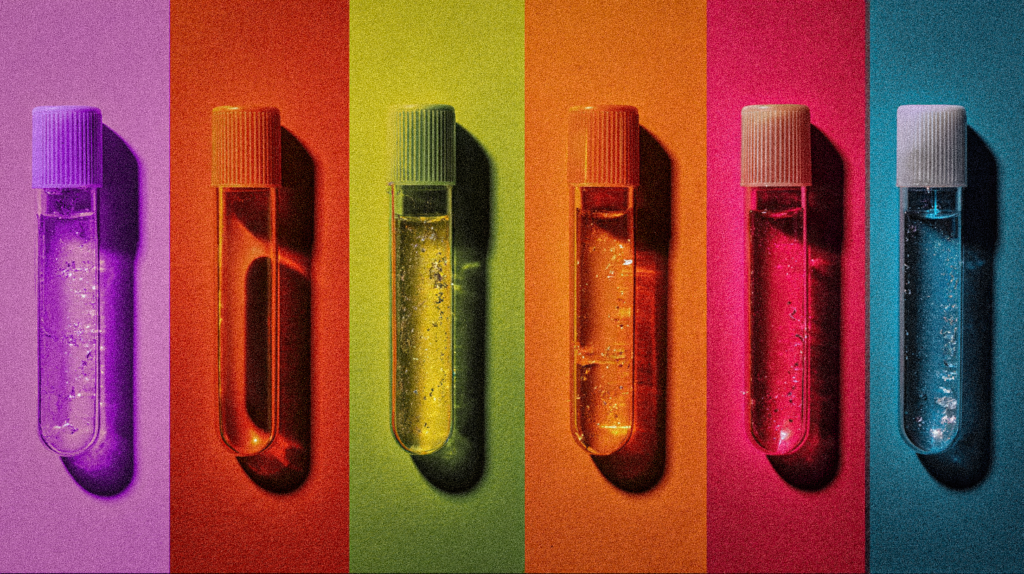
This type of test kit uses color reactions to indicate the presence of compounds found in different narcotics. Several different companies manufacture them, and they’re popular with police departments because they’re cheap and portable, allowing officers to test suspected drugs on the spot and get results near instantaneously. But the problem is that the compounds the kits test for are not exclusive to illicit drugs, leading innocent people to be arrested for innocuous items. Over the years, police officers around the country have jailed innocent people after drug field kits returned “presumptive positive” results on bird poop, donut glaze, cotton candy, and sand from inside a stress ball.
The manufacturers warn that the tests should be verified by a laboratory, and they’re not admissible evidence in most courts for that reason. But that’s done little to protect criminal defendants from arrest and prosecution.
For example, Reason recently profiled the case of Bryan Getchius, who was wrongly arrested and charged with fentanyl trafficking after South Carolina sheriff’s deputies ran multiple tests on a bottle of prescription pills in Getchius’ luggage. Getchius was jailed for 15 days and held on house arrest for seven months. It would take the state forensics lab more than a year and a half to get official results back to county prosecutors showing that the “fentanyl” was in fact what the label on the bottle and imprints on the pills said: prescription medication for irritable bowel syndrome.
Getchius is now suing the sheriff’s department and the county responsible for his wrongful arrest.
But it’s the scope of the problem that’s alarmed lawmakers and policymakers. The first effort to quantify how many wrongful arrests occur because of these tests—a 2024 study by the Quattrone Center for the Fair Administration of Justice at the University of Pennsylvania—put the number at 30,000 people every year. The report estimated that the tests were used in roughly half of the 1.5 million drug arrests in the U.S. each year from 2010 to 2019.
In a Washington Post op-ed, Tricia Rojo Bushnell, the executive director of the Quattrone Center, said other states should follow Colorado’s lead.
“While this reform may seem small and technical, for the people impacted, it is anything but,” Bushnell wrote. “For a person handcuffed, jailed or publicly accused because the field test got it wrong, the consequences are immediate and lasting. A false positive can cost someone their job, destabilize their family, interrupt their education and damage their standing in the community long before a laboratory corrects the record.”
The American Legislative Exchange Council (ALEC), which advocates for free-market policies at the state level, introduced a model policy in January for state legislatures limiting the use of colorimetric field tests.
“By adopting these standards, Colorado policymakers are reinforcing the foundational concept that the states’ burden of proof must be founded on accurate, verifiable evidence,” Nino Marchese, the director of ALEC’s judiciary task force, wrote in a blog post praising the passage of Colorado’s bill.
Several prison systems and police departments around the country have stopped using these kinds of field kits, but they still remain widely used by law enforcement and accepted by courts as probable cause to make an arrest.