It’s been nearly 15 years since NBC aired a pilot episode of Wonder Woman, but it’s hard to believe that it actually existed, buried in an internet archive and spread around like a secret you thought was all in your head. It wasn’t a failure, and it wasn’t even canceled; it just belongs in the realm of oddities.
In 2011, NBC wanted to make an episodic series based on Wonder Woman and commissioned a pilot. Adrianne Palicki was cast as Wonder Woman/Diana Prince, while David E. Kelley created the show to make an entirely new original story from the ground up. This complete story had great scope, contained ambition, and starred Pedro Pascal, yet it stilldidn’t make it past the gate.
The 2011 ‘Wonder Woman’ Pilot Had Big Ideas
There’s a version of this pitch that sounds like a guaranteed hit. A modern Wonder Woman operating out of Los Angeles, juggling crime-fighting with corporate leadership, all while trying to maintain some shred of a personal life. Diana is a superhero, but she’s also the CEO of Themyscira Industries, a multinational company that actively commodifies the Wonder Woman image. Branding, merchandising, public image control are all baked into the premise. Then, layered on top of that, she creates a third identity — Diana Prince — so she can sit at home, watch movies, and pretend she’s not a global symbol.
The show leans into moral gray areas, too. This isn’t a clean-cut hero story as Diana bends the rules, uses intimidation, and occasionally crosses lines that feel more like vigilante justice than traditional superhero ethics. Kelley’s fingerprints are all over it — legal drama energy bleeding into capes and lasso territory. It sounds like something you’d expect to see on streaming now; back then, it might’ve just felt like too much at once.
Why NBC Passed on ‘Wonder Woman’

NBC officially passed on the pilot in May 2011, and while networks rarely give a single, tidy explanation, the writing was sort of on the wall. For one thing, early reactions weren’t kind: some critics outright dismissed it, others pointed to tonal inconsistency — too serious in some places, oddly heightened in others. Even Kelley later admitted the show had issues, though he believed they could’ve been fixed if given the chance.
Palicki’s redesigned suit—featuring blue pants, altered boots, and a sleeker aesthetic—sparked immediate backlash online. Some thought it strayed too far from the character’s roots. Others just didn’t like how it looked, full stop. Warner Bros. even tweaked the design mid-production, which is… not usually a great sign.
The bigger issue might’ve been timing. In 2011, superhero television hadn’t fully clicked into place yet. The Arrowverse hadn’t launched, and streaming hadn’t reshaped audience expectations. A show that blended corporate satire, legal drama, and superhero action probably felt like a risk NBC didn’t need to take. And yet, that same risk is exactly what makes it interesting now. As Palicki later put it: “It was devastating when it didn’t go. It was so big. I feel like maybe if it had been made one or two more years later, it would’ve been a shoo-in.”
Pedro Pascal Was Right — It Was a “Very, Very Risky” Swing

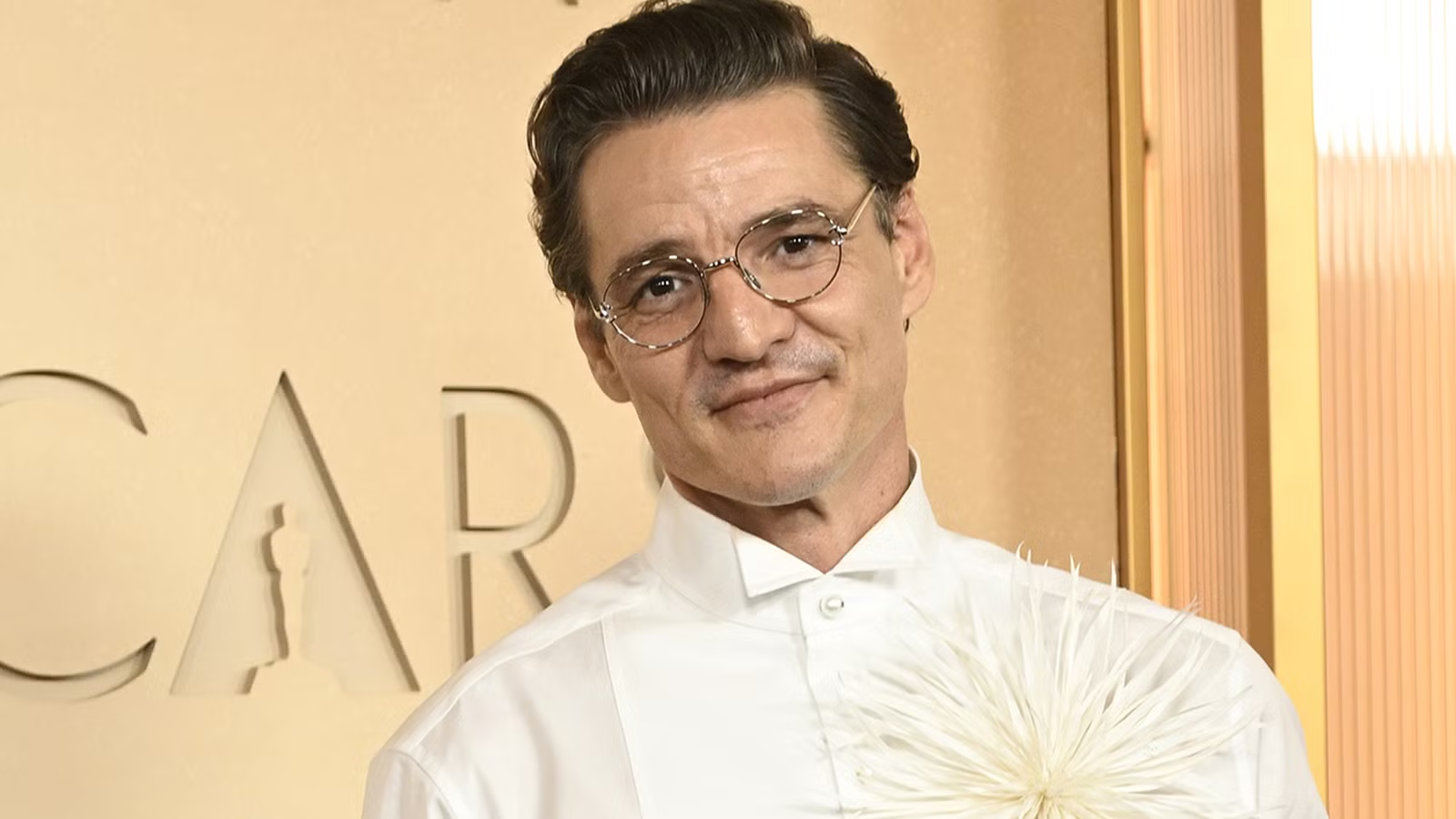
Looking back, Pascal’s take might be the cleanest distillation of what this pilot was trying to do — and why it didn’t quite land. At the time, he portrayed Ed Indelicato, a police liaison who was working with Wonder Woman. Though this was not the most prominent character in the show, Ed Indelicato was one of the few who grounded the story in some degree of realism. Years later, when he looked back on his experience on the show, he could honestly say he had no regrets, not because anything he did was smooth or glamorous.
“I love Adrianne Palicki. I love David E. Kelley, and I thought it was a very, very risky and interesting take in terms of what they were trying to do,” he said, adding that he was “devastated” when it wasn’t picked up.
This wasn’t a safe adaptation. It wasn’t trying to replicate the Wonder Woman (1975 TV series) version audiences already knew, nor was it aiming for the eventual blockbuster tone that Gal Gadot would help define years later on the big screen. It was something else entirely. If it had worked, the ripple effects could’ve been huge. A successful NBC series in 2011 might’ve reshaped how DC approached television altogether — possibly even preempting the rise of shows like Arrow or altering the trajectory of its cinematic universe. Instead, the pilot slipped into obscurity. Leaked online, quietly archived, occasionally rediscovered by fans who can’t quite believe what they’re watching.