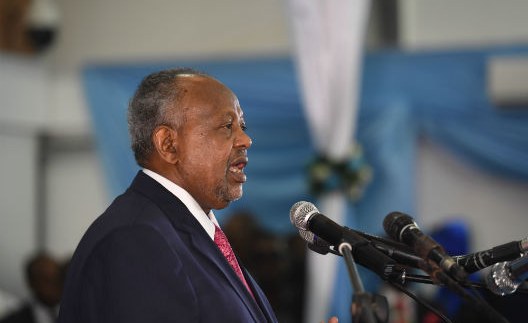
Djibouti’s long-serving president, Ismael Omar Guelleh, has secured another term in office after winning 97.8 percent of the vote, according to state broadcaster Radio Television Djibouti. The result grants him a sixth mandate and extends a rule that has now spanned 27 years in the strategically important East African nation.
78-year-old Guelleh, marked the moment of his re-election on Friday evening by posting an image of himself on X bearing the word “RÉÉLU” – French for “re-elected” – underlining the decisive nature of his victory.
The small nation of under one million people occupies a pivotal position on the Gulf of Aden at the entrance to the Red Sea. Its location has made it a key military and logistical hub, hosting bases from the US, China, France, Italy and Japan.
Keep up with the latest headlines on WhatsApp | LinkedIn
Since 2023, it has also served as a refuge for commercial vessels damaged in attacks by Yemen’s Houthi militants, further highlighting its growing geopolitical importance.
Guelleh’s win had been widely anticipated. He first came to power in 1999, succeeding his uncle, Hassan Gouled Aptidon, and has since maintained a firm grip on the country’s political institutions, with his party dominating public life.
To display this content from X (Twitter), you must enable advertisement tracking and audience measurement.
Accept Manage my choices Djibouti election unfolds at strategic shipping chokepoint
Opposition boycott and limited contest
Friday’s election saw Guelleh face just one challenger – Mohamed Farah Samatar, representing a minor party with no parliamentary presence. The absence of stronger competition was notable, with two of the main opposition parties continuing a boycott they have maintained since 2016, citing concerns over the impartiality of electoral authorities.
Official figures reported voter turnout at 80.4 percent. The result closely mirrors the 2021 election, in which Guelleh also secured more than 97 percent of the vote.
In the run-up to the election, parliament voted to remove the 75-year age limit for presidential candidates and eliminated the requirement for a referendum to approve a new constitution. These changes effectively cleared the path for Guelleh to stand again, reinforcing expectations of his continued leadership.
Macron champions France’s military role in Djibouti as key to Indo-Pacific strategy
Stability and criticism
Compared with several neighbours in the Horn of Africa, Djibouti has enjoyed relative stability in recent years. The government has channelled significant investment into port infrastructure, positioning the country as a vital gateway for landlocked Ethiopia and a key player in regional trade.
Yet this stability has come alongside persistent criticism. Human rights organisations accuse the authorities of repressing political opponents, activists and journalists. The government has consistently denied allegations of widespread abuses and dismissed concerns about the integrity of its electoral processes.
Tensions have occasionally surfaced. In 2020, security forces subdued rare anti-government protests that broke out following the arrest of a former air force pilot who had publicly criticised alleged corruption and clan-based discrimination.
(With newswires)